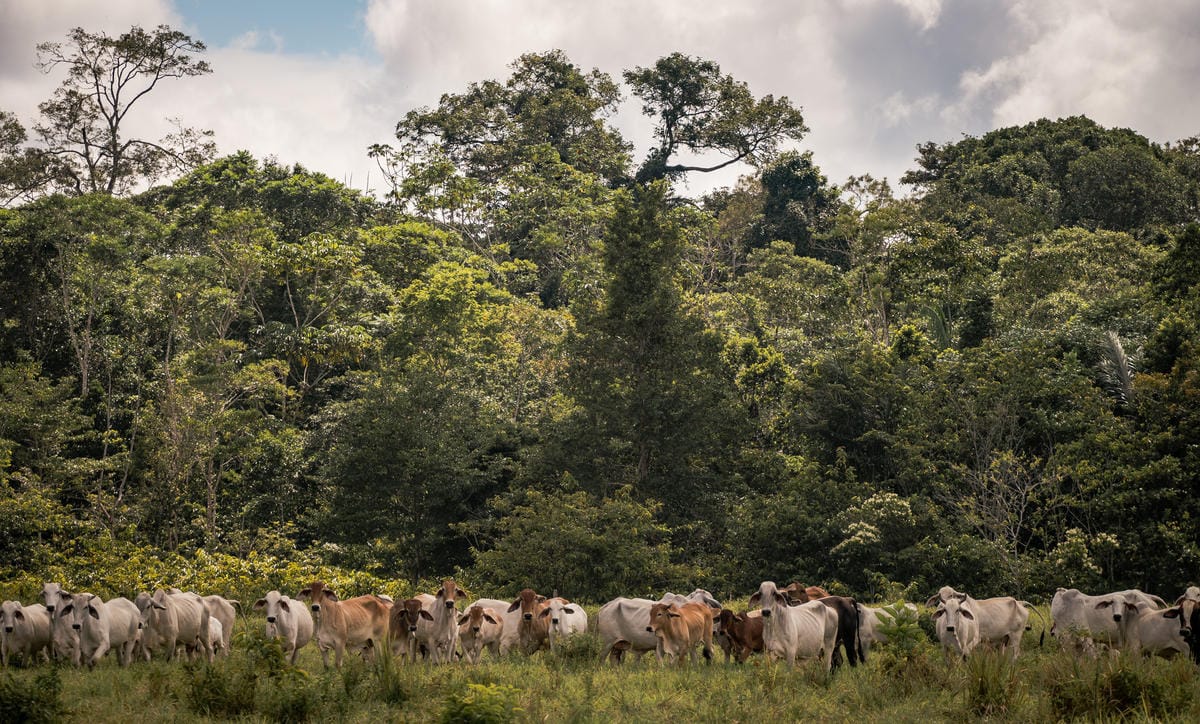
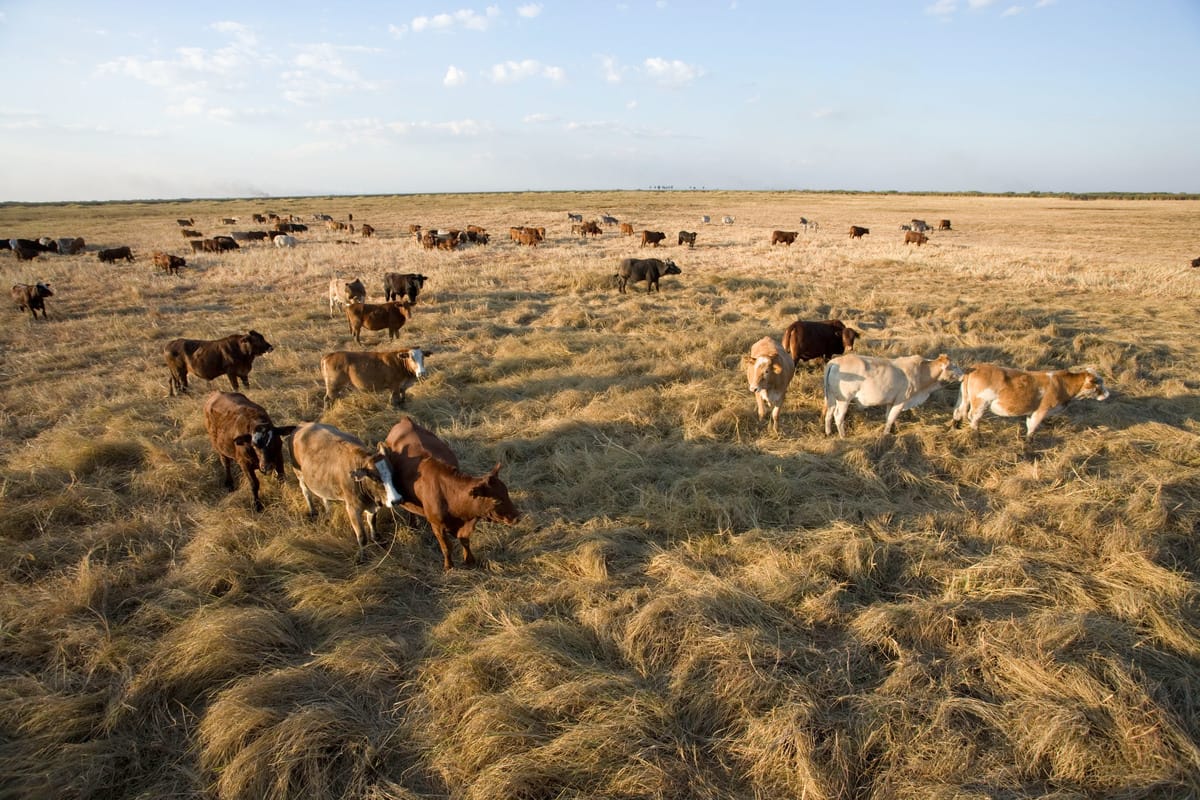
Conversion of natural habitats to agricultural land has been a major driver of global biodiversity loss, and of carbon emissions from natural ecosystems into the atmosphere. Therefore, reducing land-use change and conversion of natural ecosystems for food production is crucial for both climate change mitigation and biodiversity conservation. Ambitious policies are urgently needed to:
- Halt (gross) deforestation: Forests capture and store large amounts of CO2 and their protection is essential to achieving global climate and biodiversity goals. Forests house, for example, about 80% of amphibian species, 75% of bird species and 68% of mammal species. Halting gross deforestation means no further clearing of natural forests, irrespective of expansion of forest areas (e.g., through reforestation) elsewhere.
- Protect high-integrity forests: High-integrity forests are fundamental for ensuring climate and biodiversity goals. High-integrity tropical forests are estimated to remove around 1.8 billion tons of CO2 per year (net) from the atmosphere and store this carbon in their trunks, branches and roots. These forests are in areas that are far from deforestation frontiers and therefore considered not under immediate threat of clearance or degradation. These forests also support a large number of forest-dependent species, many yet to be discovered, and shelter their genetic diversity. However, they need proactive conservation actions to ensure their preservation in the long term.
- Halt conversion of grasslands and savannahs into cropland or other land uses. Grasslands and savannahs represent up to 80% of the world’s agriculturally productive land (e.g. as a source of feed for livestock) and face some of the fastest rates of conversion of any biome. They store a large amount of organic carbon in their soils and extensive root systems that, if exposed to the atmosphere (e.g. through tillage), would be mostly released in the form of CO2 emissions. Avoiding the conversion of grasslands into croplands is therefore the foremost strategy to avoid CO2 emissions from these lands. Grasslands are also biodiversity hotspots, with the Cerrado biome in Brazil recognized as one of the most biodiversity-rich of the planet. Species inhabiting grassy ecosystems are severely threatened by the conversion of these ecosystems. Avian diversity has been the most severely affected, with more than 60% of species already lost since the 1970s in North American grasslands.
- Protect wetlands: Wetlands (e.g. peatland, mangrove forests and other coastal ecosystems) have been long considered unproductive and therefore available for conversion into agricultural land. However, as they are among the most carbon-rich ecosystems, the drainage of even a small fraction of them releases massive amounts of CO2 into the atmosphere. Peat soils contain more than 600 gigatons of carbon, which represents up to 44% of all soil carbon, and exceeds the carbon stored in all other vegetation types including the world’s forests. These ecosystems also provide critical habitats for numerous species, including migratory birds and aquatic organisms, and play a vital role in maintaining water quality and flood control.
Most conversion of natural ecosystems is driven by expansion of agriculture. In the tropics, more than 90% of all deforestation is driven directly or indirectly by agriculture. International export demand for commodities is responsible for up to 25% of this tropical deforestation associated with agricultural production, making efforts to build deforestation- and conversion-free supply chains crucial to ending deforestation and ecosystem conversion.


Policy measures to address direct and underlying drivers of ecosystem conversion in order to deliver sustainable, equitable food systems include:
- Combine incentives and disincentives to protect ecosystems:
- Identify and address the direct and indirect drivers of ecosystem degradation and conversion from food production at national and subnational levels.
- Develop and adopt appropriate and context-specific (including both voluntary and mandatory) measures by combining incentives for more sustainable products with regulatory requirements (e.g. moratoria) that prevent commodity production practices linked to deforestation or conversion of natural ecosystem and degradation:
- Promote the adoption of sustainable food production certification schemes (such as Roundtable for Sustainable Palm Oil for palm oil, Roundtable for Responsible Soy for soy, Rainforest Alliance for coffee, cocoa, others) to support sustainability of operations and practices.
- Build national monitoring and traceability standards and systems (e.g., the monitoring system under the soy moratorium in Brazil) for commodity supply chains to enable full traceability of commodities to the production level.
- Ensure compliance with legal and regulatory frameworks.
- Expand and introduce new protected areas and areas covered by other effective conservation measures, particularly in areas with high carbon stocks and conservation value, that are equitably governed and managed and ensure recognition of rights of Indigenous Peoples (IPs) and Local Communities (LCs), including over their traditional territories, and that meet the conditions laid out in Target 3 of the Global Biodiversity Framework.
- Increase budgets and introduce trainings for relevant public authorities to enable adequate and equitable governance, enforcement and management of protected and conservation areas. Activities in protected and conservation areas should involve collaboration with IPs and LCs living in these territories.
- Create systems for gender-responsive, community-led forest monitoring and pasture management on grasslands and savannahs. Promote involvement of forest communities, pastoralists, IPs and LCs in the monitoring and conservation of protected and conservation areas.
- Implement policies and programs to reduce food loss and food waste to decrease demand for the expansion of cultivated land, and to free agricultural land for ecosystem restoration. See guidance on Reducing post-harvest food loss in agricultural supply chains and Reducing food waste in gastronomy sector, retail and at household level.
- Shift production to available degraded land:
- Define and map degraded land and introduce restoration practices that enable sustainable food production and enable the preservation and restoration of natural and semi-natural ecosystems.
- Develop equitable and accessible mechanisms to support the shifting of production to other land, including capacity building for producers, smallholder farmers and public officials, and enable access to technology and agroecological inputs and financial support.
- Ensure that the shift of food production to available degraded land and related policy development is underpinned by the full and effective participation of all relevant stakeholders, especially directly affected IPs and LCs, and the adequate application of free, prior and informed consent (FPIC).
- Where appropriate, promote sustainable intensification on existing agricultural land to increase productivity without expanding into natural ecosystems.
- Assess and prevent imported ecosystem conversion:
- Assess and address how deforestation and ecosystem conversion and associated emissions are embedded in imported agricultural commodities (e.g. soy, palm oil, cocoa, and cattle). Such an assessment should acknowledge the shared responsibility in addressing these challenges, with consumer countries regulating the import of risk commodities, and both consumer and producer countries increasing consumer awareness around sustainable commodities to reduce deforestation and conversion pressures in producer countries.
- Assess and address the impact of international and regional trade agreements on deforestation, conversion and degradation and associated human rights violations, and reform them to include environmental and social safeguards that exclude and mitigate these risks.
- Establish regulations for sustainable supply chains that are free from deforestation and conversion of natural ecosystems and implement legislations to dissuade import of products that have an impact of ecosystem integrity. The European Union Deforestation Regulation is a good example of such regulations. Such measures are vital first steps in establishing standards for deforestation and conversion-free sourcing and ensuring that respect for human rights in supply chains becomes the new normal – though these current plans must be more ambitious and comprehensive.
- Promote the import of products certified under sustainable food production certification schemes that ensure deforestation and conversion-free production through segregated and identity-preserved supply chains to support sustainability of operations and practices in producer countries.
- Adopt public procurement policies that favour sustainably produced commodities, based on robust sustainability standards and frameworks. See Integrate healthy and sustainable diets in public procurement.
- Conduct campaigns to raise awareness among consumers about the environmental impact of ecosystem-risk commodities, and promote the consumption of sustainably produced goods, helping to reduce demand-driven pressures on forests and other natural ecosystems in producer countries. See Increasing demand for healthy and sustainable diets.
- Reform, redirect and repurpose existing public finance and subsidies, and increase finance to enable sustainable, deforestation and conversion-free food production:
- In line with Target 18 of the Global Biodiversity Framework, identify, eliminate, phase out or reform harmful subsidies for food production in a just, fair, effective, and equitable manner.
- Conduct a thorough analysis of existing subsidies for food production. Understand the types and amounts of subsidies and identify which ones may be repurposed.
- Adopt best practices to enable sustainable food production through restoration:
- Design (repurposed) incentives and subsidies in a way to ensure improvement in soil quality and health to maintain long-term productivity.
- Repurpose the most harmful agricultural subsidies to promote sustainable agricultural practices that restore land, increasing the cost-effectiveness of these policies.
- Support national assessments of ecosystem services. Support the internalization of external costs, e.g. via true cost accounting. Support incentives based on the provision of ecosystem services.
- Ensure that large-scale restoration projects (e.g., restoration of forests and other carbon-rich ecosystems to sequester carbon) do not conflict with IPs’, LCs’ and smallholder farmers’ rights, their land use, food security and food sovereignty, and prevent other “green grabbing” practices by governments, investors, or business.
- Facilitate responsible public and private finance for investments that support sustainable agricultural production, such as lowering import duties for commodities complying with sustainable production standards and/ or explicitly embracing criteria on deforestation and ecosystem conversion.
- Deploy public nature-based funds and leverage other sources of funding to focus on systemic solutions at the landscape and jurisdictional level. Because deforestation and conversion drivers are mostly socio-economic in nature, addressing them requires promoting sustainable alternative economies that are not based on the exploitation of natural resources (e.g. supporting the transition to sustainable forest and grassland management).
- Provide and scale technical and financial support to smallholder farmers and producers for sustainable food production focusing on eliminating deforestation and conversion, promoting agroecological approaches and advancing sustainable forest management.
- Provide and increase funding to jurisdictions and sub-national governments that implement zero-deforestation and zero-conversion policies with ambitious and concrete implementation targets (e.g. with ecological fiscal transfers), and strengthening sustainable ecosystem management and land use planning, governance and law enforcement in all jurisdictions.
Enabling governance measures that build institutional capacity is critical for the reduction of land-use change and conversion of natural ecosystems for food production and can be achieved through the following measures:
- Inclusive and participatory governance:
- Adopt integrated land-use planning in coordination with all ministries and national and subnational agencies, including for the zoning and designation of land for conservation, afforestation, ecosystem restoration, sustainable forest and ecosystem management, agriculture and wildlife management.
- In line with Target 1 of the Global Biodiversity Framework (GBF), develop and implement spatial planning processes that ensure resilient communities through people-centred planning; integrating local knowledge into community-based and traditional management models; incorporating ecological connectivity data into spatial planning decision making; including protection of coastal ecosystems in overall disaster risk reduction frameworks; and ensuring inclusive, gender-responsive stakeholder engagement processes, with measures to ensure transparency and accountability.
- In line with GBF Target 22, ensure inclusive participation and access to justice and information related to biodiversity for stakeholder engagement processes.
- Adopt gender-responsive land tenure reforms and other measures that enhance women’s empowerment and decision-making role, as it relates to land access, management, inclusion, and sustainable use. In line with GBF Target 23, ensure gender equality and a gender-responsive approach for biodiversity action.
- Encourage implementation of the United Nations General Comment on Land and Economic, Social and Cultural Rights and the FAO’s Voluntary Guidelines on the Responsible Governance of Tenure of Land, Fisheries and Forests in the Context of National Food Security, to ensure equitable access, use, and control of land and natural resources.
- Adopt participatory and inclusive approaches to IPs & LCs, including to:
- Introduce inclusive and rights-based approaches to conservation, that strengthen and recognize the role of IPs and LCs as rights holders of their territories.
- Expand the recognition of IPs’ and LCs’ territorial rights, and ensure measures are taken to protect them from environmental crimes committed within their jurisdictions.
- Empower IPs and LCs by enhancing local control and removing institutional barriers preventing them from decision-making for their own ecosystems and natural resources; and ensure their right to land and resources, customary sustainable use and traditional knowledge and FPIC according to the UN Declaration on the Rights of Indigenous Peoples (UNDRIP).
- Invest in communities for sustainable livelihoods and economies, with particular emphasis on ensuring gender equity and enhancing women’s empowerment.
- Avoid “green grabbing” approaches to afforestation for carbon removal that negatively impact IPs, LCs and smallholder farmers’ land use, food security, and food sovereignty.
- Facilitate IPs’ and LCs’ access to funding mechanisms and enhance direct channels for accessing finance resources.
- Empower IPs and LCs to adequately engage and position themselves in global discourse.
- Enable the integration of IPs’ and LCs’ knowledge and practices into the design and implementation of nature-based solutions.
- Support and protect environmental human rights defenders.
- Coherent governance across scales (including aligning on goals across national and subnational levels, and integrated land use planning):
- Ensure inclusive governance for enhanced social agency, building institutional structures for co-responsibility by investing in local institutions for a stable network of citizens, communities and community-based organizations, and fair benefit sharing and progressive income distribution.
- Establish policies and governance systems across all scales, ensuring coordination between different sectors and levels of government to effectively implement forest and other relevant sectors’ mitigation and adaptation activities and control and enforcement measures, including in sectors like agriculture, urban and rural development, infrastructure, and mining, which can influence deforestation and conversion of other ecosystems.
- Seek alignment between national policies and subnational development plans to ensure coherent implementation across different levels of governance.
- Align and reform existent institutions and their goals with national ecosystem goals and for the implementation, financing, and monitoring of ecosystem-related policies, ensuring coherence and synergies between different sectors.
- International collaboration to increase finance and technology sharing:
- Adopt collaborative approaches to mobilize necessary financial resources for implementing mitigation and adaptation opportunities and explore support from international financial institutions or private sector entities, particularly for developing countries with constrained financial capacities.
- Promote finance and technology transfer to producer countries to spur innovation in traceability of products, forest monitoring, agroecological practices and supply chain sustainability.
Key tools and guides to support the successful reduction of land-use change and conversion of natural ecosystems for food production can include:
Tools
Accountability Framework Deforestation- and conversion- free supply chains and land use change emissions: A guide to aligning corporate targets, accounting, and disclosure
This document guides companies on how to take an integrated approach to managing and monitoring deforestation, ecosystem conversion, and greenhouse gas emissions from land use change using the Accountability Framework, along with guidance from the Greenhouse Gas Protocol (GHG Protocol) and the Science-Based Targets initiative’s Forest, Land and Agriculture (SBTi FLAG) project to set goals, measure land use change and related emissions, and disclose performance.
FAO Framework for Integrated Land Use Planning
This document developed by the Food and Agriculture Organization of the United Nations (FAO) provides an integrated land use planning approach to assist with inter-sectoral planning processes and implementation for the sustainable use of land resources.
Guides
FAO Guidelines for Integrated Land Use Planning- an update
The new FAO guidelines are based on paradigm changes in land use planning implementation, including optimization of land and water use across different planning scales, stakeholder participation, multidisciplinary technical support, and multi-level governance coordination. They promote the integration of agriculture and other sectors involved in land use planning.
GIZ Land in German Development Cooperation: Guiding Principles, Challenges and Prospects for the Future
This publication by the German Agency for International Cooperation (GIZ) offers the reader several principles, concrete tools and examples for dealing with land related problems.
GIZ Land Portal Digital Innovations Global Programme Responsible Land Policy
Recent digital innovations that enable more efficient, effective and transparent land management, with examples in Peru, Ethiopia and Laos.
GIZ Land Portal Systematic Approach – Global Programme Responsible Land Policy
This document provides a summary of the Global Programme Responsible Land Policy’s systematic approach implemented by the GIZ with examples.
IUCN Overview of Participatory, Integrated, and Biodiversity-Inclusive Spatial Planning and Target 1 under the Convention on Biological Diversity Kunming-Montreal Global Biodiversity Framework
The case studies presented throughout this report demonstrate key differences between Participatory, Integrated, and Biodiversity-Inclusive Spatial Planning and other types of spatial planning, but also emphasize commonalities in the types of data and tools used.
OECD Land-use Planning Systems in the OECD
This report provides a systematic overview of spatial and land-use planning systems across the OECD, from 32 OECD member countries, and is intended as a compendium for practitioners and academics interested in the structure of planning systems.
SPACES (Spatial Planning for Area Conservation in Response to Climate Change)
This initiative aims to advance the integration of remote sensing and biodiversity data in spatial planning. It provides valuable insights into the biodiversity implications of land-use change.
Reducing conversion of ecosystems for food production has multiple benefits for nature, climate, and food security, enabling global progress towards mitigation and adaptation goals under the Paris Agreement and helping advance the targets of the UAE Framework for Global Climate Resilience, the Kunming-Montreal Global Biodiversity Framework (KM-GBF), as well as those of the Sustainable Development Goals (SDGs).
Climate change mitigation benefits
Reducing land-use change and conversion of natural ecosystems for food production has a very high land-based climate change mitigation potential:
- The IPCC estimates that reducing deforestation and forest degradation represents one of the most effective options for climate change mitigation, with technical potential estimated at 5.8 GtCO2 per year, while forest management activities have the potential to mitigate up to 2.1 GtCO2 per year by 2050.
- Protecting existing marine and coastal ecosystems, including mangrove forests, seagrass meadows and tidal marshes, could avoid emissions of 304 million tons of carbon dioxide-equivalent (CO2e) per year, and large-scale restoration could remove an extra 841 million tons per year by 2030.
- The achievable soil organic carbon sequestration potential in global grasslands has been estimated as 2.3 to 7.3 billion tons of CO2e per year for biodiversity restoration, 148 to 699 megatons of CO2e year−1 for improved grazing management, and 147 megatons of CO2e year−1 for sown legumes in pasturelands.
Climate change adaptation benefits
Among the seven key thematic areas of adaptation targets put forward in the UAE Framework for Global Climate Resilience, reducing land-use change and conversion of natural ecosystems for food production can directly contribute to the following targets:
- Target 9a (Water & Sanitation): Natural landscapes like forests and wetlands regulate water cycles, maintain water quality, and reduce the risk of floods and droughts. By avoiding land conversion, watersheds and groundwater recharge zones can be protected, ensuring climate-resilient, reliable and clean water supplies.
- Target 9b (Food & Agriculture): Sustainable agricultural practices and restorative cultivation on degraded land can play a key role in limiting the conversion of forests, wetlands, and other natural ecosystems into farmland. This not only helps maintain soil fertility and ecosystem services but also ensures long-term food security and nutrition. Through appropriate measures, sustainable land management can also increase yields, supporting equitable access to food for all and enhancing the resilience of agricultural systems.
- Target 9d (Ecosystems): Natural ecosystems provide critical services such as carbon sequestration, water filtration, and habitat for biodiversity. Preventing their conversion helps conserve these services, supports ecosystem-based adaptation strategies, and maintains the resilience of both terrestrial and aquatic systems.
- Target 9e (Infrastructure): Natural ecosystems act as buffers against extreme weather events, such as storms, floods, and landslides. Protecting these areas reduces the risk of damage to critical infrastructure (roads, bridges, buildings) and human settlements. This lowers the costs of disaster recovery and increases the overall resilience of infrastructure to climate impacts.
- Targets 9f & 9g (Livelihoods and Cultural Heritage): Many communities, particularly Indigenous Peoples and smallholder farmers, rely on intact ecosystems for their livelihoods, whether through agriculture, fishing, forestry, or tourism. Reducing land-use change helps preserve these livelihoods, supports poverty eradication, and enhances community resilience to climate shocks by maintaining the natural resources they depend on.
Biodiversity benefits
Action under this policy option can contribute to delivering on several KM-GBF targets, in particular:
- Target 1 (Plan and Manage all Areas to Reduce Biodiversity Loss): This target requires integrating biodiversity considerations into spatial planning and policies addressing land-use change. Measures like agroecological zoning are key to managing land to preserve biodiversity-rich areas and minimize habitat destruction and biodiversity loss, by identifying (degraded or other) areas suitable for conservation, agricultural use, and/or restoration.
- Target 2 (Restore 30% of all Degraded Ecosystems): Measures to limit land conversion that contribute to restoring degraded ecosystems can range from monitoring and regulating supply chains for agricultural products, to cultivation on degraded land that integrates ecosystem restoration measures. Reducing land-use change and maintaining habitats also prevents further degradation of ecosystems, thereby decreasing the area of ecosystems demanding extensive restoration efforts.
- Target 3 (Conserve 30% of Land, Waters and Seas): Identifying areas suitable for conservation while ensuring food security can facilitate the establishment or expansion of protected areas networks and Other Effective Area-based Conservation Measures, helping reduce land-use change and conversion of natural ecosystems for food production. Implementing sustainable intensification practices in agriculture can help increase yields on existing farmland, reducing pressure to convert new areas for food production.
- Target 10 (Enhance Biodiversity and Sustainability in Agriculture, Aquaculture, Fisheries, and Forestry): Measures to reduce land-use change can include support for sustainable agriculture practices such as sustainable intensification, improving pasture management, restorative cultivation of degraded land, and agroecological practices, besides policies targeting food supply chains.
- Target 11 (Restore, Maintain and Enhance Nature’s Contribution to People): Reducing conversion and degradation of natural ecosystems while promoting their sustainable management directly contributes to restoring, maintaining, and enhancing nature’s contributions to people. This target specifically focuses on ecosystem functions and services, including the regulation of air, water, and climate, soil health, pollination, and reduction of disease risk.
- Target 16 (Enable Sustainable Consumption Choices To Reduce Waste and Overconsumption): Policy measures like establishing regulations or certification schemes for conversion-free supply chains, public procurement policies, and broader educational initiatives can promote sustainable consumption choices.
- Target 18 (Reduce Harmful Incentives by at Least $500 Billion per Year, and Scale Up Positive Incentives for Biodiversity): By redirecting subsidies and other financial incentives towards sustainable, deforestation and conversion-free food and commodity production, governments can reduce financial incentives for agricultural expansion into natural areas and support biodiversity conservation efforts.
Other sustainable development benefits
Deforestation- and conversion-free food production can support delivery of multiple SDGs:
- SDGs 1 (No Poverty) and 10 ( Reduced Inequalities): participatory and inclusive approaches to land tenure, land management, and agricultural policy reform (including financial policies) focussing on IPs, smallholder farmers, other LCs, women and similar vulnerable groups can reduce ecosystem diversion for food while reducing poverty and protecting livelihoods.
- SDG 2 (Zero Hunger): deforestation- and conversion-free food production can support agroforestry systems which provide food, feed, and livelihoods.
- SDG 5 (Gender Equality): gender-responsive sustainable forest management and agroforestry practices can create opportunities for women.
- SDG 6 (Clean Water and Sanitation): reducing deforestation and forest degradation can protect watersheds and maintain water quality.
- SDG 12 (Responsible Consumption and Production): deforestation- and conversion-free food production can encourage sustainable forest management and utilization of forest and agricultural products.
- SDG 13 (Climate Action): deforestation- and conversion-free food production can mitigate greenhouse gas emissions from deforestation and forest degradation.
- SDG 15 (Life on Land): deforestation- and conversion-free food production can preserve ecosystems and promote biodiversity.
- SDG 16 (Peace, Justice, and Strong Institutions): deforestation- and conversion-free food production can reduce environmental crimes and human rights violations in affected areas.
Interventions that reduce land-use change and conversion of natural ecosystems for food production may encounter implementation challenges, trade-offs and negative externalities in the form of:
- Livelihood risks: If not correctly implemented, measures to reduce deforestation and land degradation may pose risks to smallholder farmers, IPs, and others dependent on these lands, impacting economic sectors like agriculture, infrastructure, settlements and mining.
- Land use conflicts: Improving forest management, agroforestry and afforestation ecosystem restoration efforts may cause conflicts with other land uses.
- Net warming effect: Afforestation and other measures at high latitudes may cause a net warming effect due to changes in albedo (i.e., the amount of sunlight the earth surface reflects).
- Water and nutrient requirement: These measures could strain local water and nutrient resources, affecting both the environment and other land uses.
- Reduced water availability: Afforestation, especially with unsuitable exotic species and on areas which were not native forests before, may decrease water availability, leading to conflicts with other land uses and potentially displacing natural non-forest ecosystems.
- Trade-offs in economic development: Implementation of forest protection measures may limit opportunities for economic development, which needs to be carefully weighed against the benefits of such interventions.
Adopting a comprehensive and integrative strategy for reducing land-use change and the conversion of natural ecosystems in food production interventions can help to address trade-offs and implementation challenges through the incorporation of the following key measures:
- Carefully weigh trade-offs between environmental goals, such as forest goals and other SDGs, and consider adjustments in their planning to mitigate any impacts that cannot be avoided.
- Use field-based indicators to measure the impacts and track the progress of nature-based solutions against national and international commitments.
- Choose landscape-scale nature-based solutions that can provide a solid understanding of their social, economic and environmental context, and deliver multiple benefits for people and nature.
- Build technical capacity to design, implement and monitor nature-based solutions with social and environmental safeguards.
- Share experiences and progress in a regional context to help identify common challenges, gaps and best practices.
- Design, implement and monitor interventions in close collaboration with IPs, LCs and other groups directly affected by unsustainable food production.
Robust monitoring tools, clearly defined indicators, and well-structured frameworks are critical for tracking the implementation and outcomes of reduced land-use change and conversion of natural ecosystems for food production, including those related to biodiversity and climate objectives.
Indicators to monitor biodiversity outcomes
The Parties to the Convention on Biological Diversity agreed to a comprehensive set of headline, component, and complementary indicators for tracking progress toward the targets of the KM-GBF. The following indicators could also be functional for monitoring the implementation of this policy option:
| KM-GBF Target | Headline or binary indicator | Optional disaggregations | Component indicator | Complementary indicator |
|---|---|---|---|---|
| Target 1 | A.2 Extent of natural ecosystems 1.1 Percentage of land and sea area covered by biodiversity-inclusive spatial plans 1.b Number of countries using participatory, integrated and biodiversity-inclusive spatial planning and/or effective management processes addressing land- and sea-use change to bring the loss of areas of high biodiversity importance close to zero by 2030 | |||
| Target 2 | 2.1 Area under restoration | By ecosystem functional group (Global Ecosystem Typology levels 2 and 3 or equivalent) By indigenous and traditional territories By protected areas or other effective area-based conservation measures By type of restoration activity | ||
| Target 3 | A.CT.6 Protected Connected Index 3.CT.1 Protected Area Connectedness Index | |||
| Target 10 | A.3 Red List Index | A.CT.10 Living Planet Index 4.CT.1 Number of (a) plant and (b) animal genetic resources for food and agriculture secured in either medium- or long-term conservation facilities 4.CT.4 Proportion of local breeds classified as being at risk of extinction | 4.CY.1 Species Threat Abatement and Restoration metric | |
| Target 11 | B.1 Services provided by ecosystems | 11.CT.2 Proportion of bodies of water with good ambient water quality | ||
| Target 16 | 16.CT.2 Material footprint, material footprint per capita, and material footprint per GDP 16.CT.3 Ecological footprint | 16.CY.3 Human appropriation of net primary production 16.CY.4 CO2 emission per unit of value added 16.CY.5 Change in water-use efficiency over time 16.CY.6 Indicators from the Life Cycle Impact Assessment Programme | ||
| Target 18 | 18.1 Positive incentives in place to promote biodiversity conservation and sustainable use 18.2 Value of subsidies and other incentives harmful to biodiversity | For indicator 18.1: By type of incentive (taxes, fees and charges, subsidies, tradable permits, payment for ecosystem services programmes and offset schemes) For indicator 18.2: By sector (agricultural, fisheries, fossil fuels and other sectors) |
Tools to monitor biodiversity outcomes
GFW (Global Forest Watch)
GFW provides crucial data for biodiversity and climate outcome monitoring through its forest cover change detection and biodiversity importance maps.
Land Use Change Alert (LUCA)
The LUCA tool enables the exploration of forest disturbance alerts from 2018 to present.
MapBiomas
MapBiomas provides a time series of annual land use and land cover maps of the Amazon, as well as annual and monthly maps of water bodies in the region, which can help monitor the conversion of natural ecosystems.
Ramboll Galago
This tool provides high-resolution imagery for mapping and monitoring biodiversity. It offers features such as 3D modelling, object recognition, and change detection, which are particularly useful for tracking changes in species distribution, abundance, and habitat quality.
Thünen MonViA Land-use Monitoring
This system uses satellite remote sensing for recurrent and area-wide coverage of land surfaces, generating information on land use and its changes. It is particularly useful for monitoring biodiversity in agricultural landscapes.
Tools to monitor climate outcomes
Planet Global Tree-Scale Forest Monitoring for Climate Action
Global forest carbon data that captures nearly tree-scale forest change globally, providing quarterly updates of aboveground forest carbon at 3 meter resolution.
FAO Global Livestock Environmental Assessment Model (GLEAM)
The Global Livestock Environmental Assessment Model is designed to analyze multiple environmental dimensions, such as feed use, greenhouse gas emissions, land use and land degradation, nutrient and water use and interaction with biodiversity.
Agri-footprint 7.0
Agri-footprint is a comprehensive Life Cycle Inventory database about agricultural products. It can help calculate the Land Use Change (LUC) footprint for crops and improve the calculation of associated GHG emissions.
GLFI Global Feed LCA Institute
The GFLI database is a collection of feed ingredient datasets collected using Life Cycle Assessment (LCA) methodology, which helps evaluate the use of resources and emission of pollutants during the life cycle of an animal feed ingredient, including products ‘at farm’ (the environmental impact of cultivated feed products until farm gate) and ‘at plant’ (the environmental impact of processed feed materials until processing gate).
Ultimately, implementation costs are context-specific; however, global estimates range from about USD 40 to over USD 1,000 per tCO2.
A notable example of successful implementation includes:
- To protect Brazil’s Cerrado savannah, WWF is working to secure the habitat of endangered species like the giant armadillo and maned wolf. The aim is to promote sustainable land use through habitat restoration and rehabilitation of degraded pastures, including the effective management of protected areas. WWF also supports traditional communities in adopting sustainable practices to produce native goods, improving both livelihoods and conservation efforts. Additionally, WWF collaborates with public and private sectors, leveraging governance, international markets, financial interventions and advocacy to halt land conversion.
- Accountability Framework Initiative. (2022, September 29). Deforestation- and conversion-free supply chains and land use change emissions: A guide to aligning corporate targets, accounting, and disclosure. https://accountability-framework.org/resources/resource-hub/explainer-deforestation-and-conversion-free-supply-chains-and-land-use-change-emissions-a-guide-to-aligning-corporate-targets-accounting-and-disclosure/
- Bai, Y., & Cotrufo, M. F. (2022). Grassland soil carbon sequestration: Current understanding, challenges, and solutions. Science, 377(6606), 603–608.
- Bakhtary, H., Elbrecht, J., Scholl, C., Riecher, M.-C., & Haupt, F. (2022). Progress toward Ethical, Deforestation and Conversion-free Supply Chains: an assessment of German companies.
- Benton, T. G., Bieg, C., Harwatt, H., Pudasaini, R., & Wellesley, L. (2021). Food system impacts on biodiversity loss. Three levers for food system transformation in support of nature. Retrieved August 21, 2024, from https://www.chathamhouse.org/2021/02/food-system-impacts-biodiversity-loss.
- BIOFIN. (2022). Measuring and Addressing Potential Adverse Impacts on Biodiversity from Agricultural Subsidies. Retrieved from https://www.biofin.org/sites/default/files/content/knowledge_products/IDENTIFICATION%20OF%20POTENTIAL%20NEGATIVE%20IMPACTS%20TO%20BIODIVERSITY%20AND%20ITS%20COMPONENTS%20BY%20AGRICULTURAL%20SUBSIDIES.pdf
- Busch, J., Ring, I., Akullo, M., Amarjargal, O., Borie, M., Cassola, R. S., et al. (2021). A global review of ecological fiscal transfers. Nature Sustainability, 4(9), 756–765. https://doi.org/10.1038/s41893-021-00728-0
- Cabernard, L., Pfister, S., & Hellweg, S. (2024). Biodiversity impacts of recent land-use change driven by increases in agri-food imports. Nature Sustainability, 7(11), 1512–1524.
- CBD. (n.d.). 2030 Targets (with Guidance Notes). Retrieved December 10, 2024, from https://www.cbd.int/gbf/targets.
- Climate Focus. (2020). Enhancing Forest Targets and Measures in Nationally Determined Contributions (NDCs). Retrieved from https://climatefocus.com/wp-content/uploads/2022/06/enhancing_forest_targets_and_measures_in_ndcs-1.pdf
- Committee on Agriculture. (2024). Update on the Guidelines for Integrated Land Use Planning (Twenty-ninth Session, Rome, 30 September – 4 October 2024). Food and Agriculture Organization of the United Nations (FAO). https://openknowledge.fao.org/server/api/core/bitstreams/8e2fc4bc-086d-4294-95ba-f69ce18f03e9/content
- Conservation International. (n.d.). Achieving the Global Biodiversity Framework by Utilizing the Landscape Approach to Link Protection and Production. Retrieved from https://www.learningfornature.org/wp-content/uploads/2023/12/ENG_Achieving-the-GBF-by-Utilizing-the-Landscape-Approach-to-Link-Protection-Production.pdf.
- Donato, D. C., Kauffman, J. B., Murdiyarso, D., Kurnianto, S., Stidham, M., & Kanninen, M. (2011). Mangroves among the most carbon-rich forests in the tropics. Nature Geoscience, 4(5), 293–297
- FAO. (2012). Voluntary guidelines on the responsible governance of tenure of land, fisheries and forests in the context of national food security. FAO. https://doi.org/10.4060/i2801e United Nations General Assembly. (2007).
- FAO. (2022). Food balances 2010–2019: Global, regional and country trends. Retrieved from https://www.fao.org/documents/card/fr?details=cb9574en/
- FAO. (2022). Halting deforestation and maintaining forest ecosystem services would benefit climate, biodiversity, health and long-term food security. Retrieved January 21, 2025, from https://www.fao.org/3/cb9360en/online/src/html/deforestation-climate-mitigation-biodiversity.html.
- Fluet-Chouinard, E., Stocker, B. D., Zhang, Z., Malhotra, A., Melton, J. R., Poulter, B., et al. (2023). Extensive global wetland loss over the past three centuries. Nature, 614(7947), 281–286
- Forest Declaration Assessment. (2022). Overarching forest goals: Theme 1 Assessment. Retrieved from https://forestdeclaration.org/resources/overarching-forest-goals-theme-1-assessment/
- Forest Landscape Integrity Index. (n.d.). Retrieved February 6, 2024, from https://www.forestintegrity.com/.
- Forests, Land and Agriculture. (n.d.). Science Based Targets. Retrieved February 6, 2024, from https://sciencebasedtargets.org/sectors/forest-land-and-agriculture
- GFLI Database. (n.d.). Retrieved February 6, 2024, from https://globalfeedlca.org/gfli-database/
- GIZ (2019). Secure Land Tenure Rights for All: A Key Condition for Sustainable Development. Deutsche Gesellschaft für Internationale Zusammenarbeit (GIZ) Retrieved on June 19, 2024 fromhttps://www.giz.de/de/downloads/giz2023-secure-land-tenure-rights-policy-brief.pdf
- GIZ (2023). Agroecology: Making Ecosystem-based Adaptation Work in Agricultural Landscapes. Deutsche Gesellschaft für Internationale Zusammenarbeit. Retrieved on June 19, 2024 from https://www.giz.de/de/downloads/giz2023-en-EbA-agroecology-scientific-report.pdf
- Global Livestock Environmental Assessment Model (GLEAM). (n.d.). Food and Agriculture Organization of the United Nations. Retrieved February 6, 2024, from https://www.fao.org/gleam/en/
- Global Tree-Scale Forest Monitoring for Climate Action. (n.d.). Retrieved February 6, 2024, from https://learn.planet.com/forest-carbon-prerelease?_gl=16a3vtu_gcl_auODU3NzU1OTUyLjE2OTI2ODcxMDg
- Günther, P., & Ekardt, F. (2023). Balancing climate goals and biodiversity protection: legal implications of the 30×30 target for land-based carbon removal. Frontiers in Climate, 5. Retrieved January 22, 2025, from https://www.frontiersin.org/journals/climate/articles/10.3389/fclim.2023.1276606/full.
- Hinkes, C. V. M. (2021). Sustainability certification for deforestation-free supply chains: the cases of palm oil and soy (Doctoral Thesis) (Doctoral Thesis, Georg-August-University Göttingen). Retrieved January 22, 2025, from https://ediss.uni-goettingen.de/handle/21.11130/00-1735-0000-0005-15AD-1.
- HLPE (2023). Reducing inequalities for food security and nutrition. Rome, CFS HLPE-FSN. Available from https://www.fao.org/cfs/cfs-hlpe/insights/news-insights/news-detail/reducing-inequalities-for-food-security-and-nutrition/en
- Humpenöder, F., Karstens, K., Lotze-Campen, H., Leifeld, J., Menichetti, L., Barthelmes, A., et al. (2020). Peatland protection and restoration are key for climate change mitigation. Environmental Research Letters, 15(10), 104093
- Intergovernmental Panel on Climate Change (IPCC). (2022). Climate Change and Land: IPCC Special Report on Climate Change, Desertification, Land Degradation, Sustainable Land Management, Food Security, and Greenhouse Gas Fluxes in Terrestrial Ecosystems. Retrieved February 6, 2024, from https://www.cambridge.org/core/books/climate-change-and-land/AAB03E2F17650B1FDEA514E3F605A685
- IPBES. (2019). Global assessment report on biodiversity and ecosystem services of the Intergovernmental Science-Policy Platform on Biodiversity and Ecosystem Services. Retrieved February 6, 2024, from https://www.ipbes.net/global-assessment
- IPCC. (2019). Summary for Policymakers — Special Report on Climate Change and Land. Retrieved June 26, 2024, from https://www.ipcc.ch/srccl/chapter/summary-for-policymakers/.
- IUCN. (2021). Peatlands and Climate Change. Retrieved from https://www.iucn.org/sites/default/files/2022-04/iucn_issues_brief_peatlands_and_climate_change_final_nov21.pdf
- IUCN. (2024). An overview of participatory, integrated, and biodiversity-inclusive spatial planning and Target 1 under the Convention on Biological Diversity Kunming-Montreal Global Biodiversity Framework. Retrieved October 14, 2025, from https://pipap.sprep.org/pamt/overview-participatory-integrated-and-biodiversity-inclusive-spatial-planning-and-target-1
- Kamau, H., Roman, S., & Biber-Freudenberger, L. (2023). Nearly half of the world is suitable for diversified farming for sustainable intensification. Communications Earth & Environment, 4(1), 1–9.
- Lambin, E. F., Gibbs, H. K., Heilmayr, R., Carlson, K. M., Fleck, L. C., Garrett, R. D., et al. (2018). The role of supply-chain initiatives in reducing deforestation. Nature Climate Change, 8(2), 109–116.
- Land-use transition – Strategies and solutions for sustainable land use. (n.d.). oeko.de. Retrieved January 22, 2025, from https://www.oeko.de/en/blog/land-use-transition-strategies-and-solutions-for-sustainable-land-use/.
- LUCA Viewer. (n.d.). Retrieved February 6, 2024, from https://global-forest-structure.projects.earthengine.app/view/luca-viewer#alerts=1;lon=-42.384952;lat=4.987819;zoom=3
- Matthews, A., & Karousakis, K. (2022). Identifying and assessing subsidies and other incentives harmful to biodiversity: A comparative review of existing national-level assessments and insights for good practice. Retrieved February 6, 2024, from https://www.oecd-ilibrary.org/environment/identifying-and-assessing-subsidies-and-other-incentives-harmful-to-biodiversity_3e9118d3-en
- Maxwell, S. L., Evans, T., Watson, J. E. M., Morel, A., Grantham, H., Duncan, A., et al. (n.d.). Degradation and forgone removals increase the carbon impact of intact forest loss by 626%. Science Advances, 5(10), eaax2546
- Murphy, B. P., Andersen, A. N., & Parr, C. L. (2016). The underestimated biodiversity of tropical grassy biomes. Philosophical Transactions of the Royal Society B: Biological Sciences, 371(1703), 20150319. https://doi.org/10.1098/rstb.2015.0319
- Murphy, B. P., Andersen, A. N., & Parr, C. L. (2016). The underestimated biodiversity of tropical grassy biomes. Philosophical Transactions of the Royal Society B: Biological Sciences, 371(1703), 20150319.
- Nelgen, S., Charré, S., & Pacheco, P. (2024, September 3). Turning Harm Into Opportunity: Repurposing agricultural subsidies that destroy forests and non-forest natural ecosystems | Executive Summary & Policy Recommendations. unique land use. Retrieved January 21, 2025, from https://www.unique-landuse.de/en/news/2024/turning-harm-into-opportunity-repurposing-agricultural-subsidies-that-destroy-forests-and-non-forest-natural-ecosystems-executive-summary-policy-recommendations/.
- OECD. (2017). Land-use planning systems in the OECD: Country fact sheets. OECD Publishing. https://doi.org/10.1787/9789264268579-en
- Poore, J., & Nemecek, T. (2018). Reducing food’s environmental impacts through producers and consumers. Science, 360(6392), 987–992
- Rosenberg, K. V., Dokter, A. M., Blancher, P. J., Sauer, J. R., Smith, A. C., Smith, P. A., et al. (2019). Decline of the North American avifauna. Science, 366(6461), 120–124.
- Semenchuk, P., Plutzar, C., Kastner, T., Matej, S., Bidoglio, G., Erb, K.-H., et al. (2022). Relative effects of land conversion and land-use intensity on terrestrial vertebrate diversity. Nature Communications, 13(1), 615
- Seymour, F., & Harris, N. L. (2019). Reducing tropical deforestation. Science. Retrieved February 6, 2024, from https://www.science.org/doi/10.1126/science.aax8546
- The Wetlands Initiative. (n.d.). High Biodiversity. The Wetlands Initiative. Retrieved January 21, 2025, from https://www.wetlands-initiative.org/high-biodiversity.
- United Nations Declaration on the Rights of Indigenous Peoples (A/RES/61/295). https://www.un.org/development/desa/indigenouspeoples/declaration-on-the-rights-of-indigenous-peoples.html
- UNEP. (2025). Factsheet – Indicators for the Post 2020 Global Biodiversity Framework. Indicator Repository. Retrieved January 22, 2025, from https://www.gbf-indicators.org/metadata/headline/B-1.
- Wildlife Conservation Society. (2023). WCS High Integrity Forest (HIFOR) Investment Initiative: The Science Basisa. Retrieved from https://cdn.wcs.org/2023/08/11/15/53/25/7934623a-e9fc-4d18-b6ed-20f42bd4a885/HIFOR%20Science%20Brief%20v2.2_formatted_no%20reference.pdf.
- WRI. (2021). Repurposing Agricultural Subsidies to Restore Degraded Farmland and Grow Rural Prosperity. Retrieved from https://www.wri.org/research/farm-restoration-subsidies
- WWF and Climate Focus. (2024, February 20). Reducing land-use change and conversion of natural ecosystems for food production. Food Forward NDCs. Retrieved April 14, 2025, from https://foodforwardndcsnbsaps.panda.org/food-production/reducing-land-use-change-and-conversion-of-natural-ecosystems-for-food-production/.
- WWF Brazil. (2022). Deforestation and Conversion Free Commodities are Critical for 1.5°C Pathway: Summary and Technical Methods
- WWF. (2021a). Powering Nature: A Pathway to a Climate-Positive Future. Retrieved from https://wwfint.awsassets.panda.org/downloads/wwf_powering_nature_report.pdf
- WWF. (2021b). Rights-Based Approach (RBA) in the Post-2020 Global Biodiversity Framework. Retrieved from https://4783129.fs1.hubspotusercontent-na1.net/hubfs/4783129/NDNP/PDFs/WWF%20briefing%20%20The%20Rights%20Based%20Approach%20and%20the%20post-2020%20GBF-1.pdf