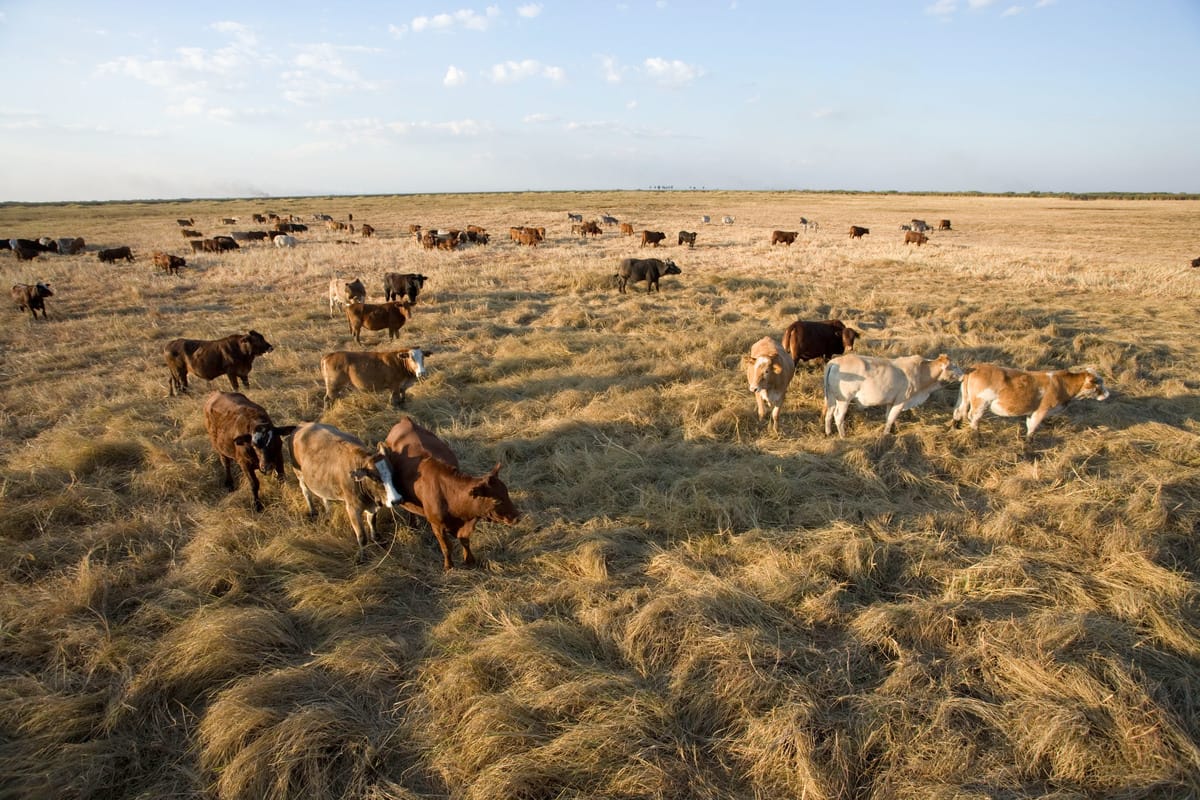
Livestock production appears to contribute about 12%–20% global greenhouse gas (GHG) emissions, and unsustainable management practices has contributed to the deforestation and conversion of natural ecosystems for large-scale industrial cattle ranches, or to grow maize, soy and other crops for animal feed in intensive production systems contributing to biodiversity loss and changes in land and water use, exploitation of organisms, pollution, and invasive species. Furthermore, livestock farming – and particularly factory-farm and feedlot systems – have a tremendous water footprint. The Water Footprint network estimates that a beef steak (170 grams) can have a water footprint of roughly 2500 liters.
Sustainable livestock management practices and measures not only help to mitigate climate change but also build ecological resilience and contribute to food security and health, economic and environmental wellbeing, and the sociocultural lives of local communities.
Improved livestock management practices can often yield climate mitigation benefits while also minimizing water footprint and biodiversity loss by reducing pressure on ecosystems. FAO has identified the following measures for farmers to take for reducing emissions from livestock production:
- Improve feeding strategies: One of the most promising options for limiting emissions within livestock management is improving animal production through dietary changes. This process can include integrating different diet additives (e.g. certain oils) to feed or improving the digestibility of low-quality forage, which ruminant animals have difficulties breaking down and which therefore increases the process of enteric fermentation, and enhancing the digestibility of feed.
- Adopt anaerobic manure management system: Anaerobic manure management is a process through which microorganisms break down manure in the absence of oxygen and produce a mixture of biogas (mainly methane and carbon dioxide) and digestate. Where production is carried out on a large, intensive scale and manure is stored under anaerobic conditions, methane can be captured with biogas collectors. The captured methane can be flared or used as a source of energy for electric generators, heating or lighting.
- Separate solid-liquid manure content: Manure processing technology can partially separate solid and liquid manure using gravity or mechanical systems such as centrifuges or filter presses. This process aerates manure storage conditions, which then limits the potential of emitted methane.
- Dry manure: Manure drying involves any of a variety of methods to reduce the liquid content of manure to achieve a solids content of 13% or more. Manure drying is commonly used to facilitate the transport or storage of manure. Solid manure is typically stored for several months in unconfined piles or stacks in open areas or in dedicated storage facilities that confine the dried manure, where the manure is confined within the walls of the facility. Drying manure reduces the amount of manure entering uncovered anaerobic manure lagoons and thereby reduces the volume of methane emissions from lagoons.
- Compost manure: Composting is the aerobic decomposition of manure or other organic material by microorganisms in a managed system. Composting requires air, moisture and high-nitrogen and high-carbon organic material. The process generally takes several weeks to months depending on the level of turning or aeration management. Composting manure produces fewer methane emissions than uncovered anaerobic lagoon or liquid/slurry manure management systems.
- Decrease manure storage time: The time manure is stored in anaerobic conditions can be reduced by processing or transporting it out of a storage facility using methods like slatted floor pit storage or spreading it on land consistently during periods of good weather and soil conditions. Daily spreading of manure results in the greatest reductions in methane production but reducing storage time from months to weeks can also have a significant effect. In a daily spread management practice, manure is removed from a barn and is applied to cropland or pasture daily.
- Improve pasture management: Adjusting grazing pressure can restore the quality of pastures, improving soil health and water retention. Properties that are collated with soil carbon sequestration potential. Adjustments to improve pasture management include: balancing the spatial and temporal presence of livestock (e.g. with new technologies like solar-powered electrical fences), improving fertilization and nutrient management, introducing species (e.g. legumes), inoculating plants, improving the mobility of animals in pastoral and agropastoral systems, and integrating trees, shrubs and pastures. See Implementing agroforestry practices and Implementing integrated crop-livestock systems.
- Adopt rotational grazing: Rotational grazing divides a large pasture into smaller fields and moves livestock between the smaller fields over time. This system allows livestock to get the nutrients they need and maintains the health of the grass and soil over the long term, increasing water retention and soil biodiversity,all while keeping carbon in the ground instead of releasing it into the atmosphere. Additionally, rotational grazing provides higher forage quality which is easier for livestock to digest, which may result in fewer emissions.
- Improve animal health and husbandry: Improving reproductive efficiency and extending the reproductive life of animals can extend the lifetime performance of individual animals and reduce GHG emission intensities. Reducing the incidence and impact of diseases, parasites and insect burdens results in higher productivity and efficiency with fewer losses and fewer unproductive animals that emit GHGs. Genetic improvements generate gains in productivity and decreases in emission intensity. Herd management is therefore an effective tool to adapt to local circumstances and reduce pressure on natural resources as well as improves resilience. Costs can be reduced from the economic point of view.
- Avoid conversion of forests, rangelands, grasslands, and other natural ecosystems for livestock production. Under natural conditions, soils store a large amount of organic carbon that, if exposed to the atmosphere (e.g. through tillage), would be mostly released in form of CO2 emissions. Furthermore, the conversion of these has devastating effects on species due to habitat loss and fragmentation, and it’s recognized as a major driver of biodiversity loss. See Implementing improvement management practices in grasslands and Implementing silvo-pastoral practices for more information about sustainable livestock practices in natural and semi-natural landscapes.
A transition to sustainable livestock management at the farm level requires several governance measures to enable farmers adopt improved practices, including:
- Promoting payment for ecosystem services (PES) for sustainable livestock and feed through public-private partnerships, conservation programmes that provide landowners incentive payments, and technical assistance for grassland restoration. Benefits should be equitable and focused on ensuring support for low income and marginalized communities.
- Implementing agricultural subsidies that shift finance from unsustainable practices to sustainable livestock and feed production that use less intensive, regenerative agricultural practices and recognize the rights of Indigenous Peoples and Local Communities. Include support for the sustainable use of locally adapted (often traditional) breeds, the conservation of animal genetic resources and their use in (participatory) breeding programs.
- Include different types of animals in livestock strategies. The inclusion of small animals such as chicken, goats, rabbits etc. ensures that women, who usually raise smaller animals, will be considered in trainings and other activities.
- Increasing funds channeled to research and innovation in reducing enteric fermentation.
- Providing incentives for innovative feed, feed management and alternative feeds that reduce enteric emissions from livestock.
- Providing resources for training and technical assistance to ensure adequate capacity to provide support and education in sustainable grazing, feed management and feed innovations by producers. Incorporate behavioural insights into the policymaking and programming process.
- Ensure capacity building for livestock farmers specially for women, youth and Indigenous Peoples.
- Promote participatory monitoring and early warning systems to manage natural resources.
- Directly involve livestock keepers and their customary institutions in natural resource management decision-making. Include conflict prevention and resolution mechanisms such as dialogue platforms.
- Promoting product certification and labelling schemes for nature-positive agricultural management practices in the production of sustainable livestock and feed.
Addressing drivers of grassland loss and conversion by prohibiting subsidies for crops grown on recently converted grasslands, making biofuel crops from recently converted grasslands ineligible for biofuel programmes and ensuring risk mitigation policies between crop production and grazing/livestock do not create economic imbalances that drive conversion. See Implementing improvement management practices in grasslands.

Some key tools and guides to support the reduction of emissions from livestock through sustainable management practices can include:
Tools
Evaluating Greenhouse Gas Emissions from Dairy Manure Management Practices Using Survey Data and Lifecycle Tools
This study applies survey-based data and lifecycle assessment methods to quantify and compare greenhouse gas emissions from different dairy manure management practices, offering a scientific basis for selecting strategies that reduce environmental impacts.
Guides
Rutgers University Storing Manure on Small Horse and Livestock Farms
A Cooperative Extension fact sheet offering guidance on how small-scale livestock operations can safely and effectively store manure to prevent health, odor, and environmental issues.
SARE Building Soils for Better Crops
Chapter 12 of Sustainable Agricultural Research and Education’s (SARE) book provides specifics for Integrating Crops and Livestock.
University of Minnesota Manure Timing
A practical guide on the optimal timing of manure application.
University Of Missouri Grazing and Pasture Management Best Practices for Cattle
Provides guidance on using grazing systems to lower feed costs, utilize marginal cropland, and maintain productive, high-quality pastures, while emphasizing the need for a grazing plan and backup strategies to prevent overgrazing and protect pasture quality.
University of Missouri Land Application Considerations for Animal Manure
Provides guidance on optimizing land application of animal manure to minimize nutrient losses, reduce pollution, and protect water quality, highlighting the importance of uniform application, timely incorporation, and proper application rates.
U.S. EPA AgSTAR Project Development Handbook
A comprehensive compilation of the latest knowledge in the industry on best practices for anaerobic digestion (AD)/ biogas systems aimed to ensure long-term project success for AD/biogas systems by providing background and a framework for project development.
USDA Manure Storage: Small Scale Solutions for Your Farm
Brief document outlining small scale solutions for your farm.
Sustainable livestock management practices support several goals and targets under the UAE Framework for Global Climate Resilience, the Kunming-Montreal Global Biodiversity Framework (KM-GBF), and the Sustainable Development Goals (SDGs).
Climate change mitigation benefits
FAO found that sustainable livestock management practices reduce CH4 generated during digestion as well as the amount of CH4 and nitrous oxide (N2O) and CO2 released by decomposing manure. FAO also identified the following examples of emissions reduction potential associated with sustainable livestock management practices:
- In South Asian mixed dairy farming systems, GHG emissions could be reduced by 38% of the baseline emissions (120 million tonnes CO2eq).
- In industrial pig production systems in East and Southeast Asia, emissions could be reduced by 16 to 25 percent of baseline emissions for these systems (21 to 33 million tonnes CO2eq).
- In specialized beef production in South America, emissions could be reduced by 19 to 30 percent of baseline emissions (190 to 310 million tonnes CO2eq).
- In the West African small ruminant sector, emissions could be reduced by 27 to 41 percent of total annual baseline emissions (7.7 to 12 million tonnes CO2eq).
Climate change adaptation benefits
Among the seven key areas of adaptation put forward in the UAE Framework for Global Climate Resilience, reducing environmental impacts of livestock farming through sustainable management practices can directly contribute to:
- Target 9a (Water & Sanitation): Sustainable practices include efficient irrigation, rainwater harvesting, and proper manure management (such as composting and biogas production). These reduce water use, prevent contamination of groundwater and surface water, and improve sanitation in rural communities.
- Target 9b (Food & Agriculture): Sustainable livestock management improves the efficiency and resilience of food production systems. By adopting practices such as rotational grazing, improved animal nutrition, and integrated crop-livestock systems, farmers can increase productivity while reducing vulnerability to climate shocks. This ensures a stable supply of meat, dairy, and other animal products, supporting food security.
- Target 9c (Health): Sustainable practices emphasize animal welfare, biosecurity, and reduced antibiotic use, lowering the risk of disease transmission to humans. Cleaner air and water, along with safer food products, directly benefit public health.
- Target 9d (Ecosystems): By adopting practices like silvo-pasture, protecting riparian zones, and restoring degraded rangelands, farmers can enhance ecosystem health. These measures support pollinators, improve soil carbon storage, and maintain ecosystem services essential for both people and wildlife.
- Target 9f (Livelihoods): By making livestock systems more sustainable and resilient to climate change, farmers can maintain or increase their incomes, reduce losses from climate-related events, and access new markets (such as those for organic or certified sustainable products). This supports rural development and poverty reduction.
For more information about common benefits, see Implementing agroforestry practices and Implementing integrated crop-livestock systems.
Biodiversity benefits
Action under this policy option can help to deliver on several KM-GBF targets, in particular:
- Target 2 (Restore 30% of all Degraded Ecosystems): Sustainable livestock management practices, such as rotational grazing and silvo-pasture, can contribute restoring degraded pastures while sustaining the livelihood of local communities. These practices aim to enhance soil health, to prevent overgrazing, and can promote the regeneration of native vegetation, improving the ecological balance in grazing areas.
- Target 7 (Reduce Pollution to Levels That Are Not Harmful to Biodiversity): Sustainable livestock practices reduce pollution from manure and fertilizers, decreasing the risk of nutrient runoff into water bodies. Efficient fertilizer management in feed crop production increases nitrogen application efficiency, reducing nitrous oxide emissions associated with the livestock sector. Several livestock mitigation options also help reduce ammonia ( NH3) emissions, which contribute significantly to air pollution and eutrophication. These practices collectively contribute to minimizing pollution risks and impacts on natural ecosystems.
- Target 8 (Minimize the Impacts of Climate Change on Biodiversity and Build Resilience): Sustainable livestock management plays a crucial role in mitigating climate change impacts by reducing greenhouse gas emissions from the sector. For instance, practices such as improving feed quality, optimizing breeding, and enhancing animal health can significantly reduce methane emissions from enteric fermentation. These practices support minimizing climate change impacts on biodiversity and ecosystems.
- Target 10 (Enhance Biodiversity and Sustainability in Agriculture, Aquaculture, Fisheries, and Forestry): Sustainable livestock practices aim to minimize impacts of the sector on the environment. Given the central role of livestock farming in the agricultural sector, implementing sustainable practice in the sector is necessary for making progress towards this target.
Other sustainable development benefits
This article provides an overview of how sustainable livestock management can support delivery of multiple SDGs:
- SDG 1 (No Poverty): Sustainable livestock management can increase employment opportunities by diversifying rural incomes, creating new roles in technology and advisory services, and responding to market demand for sustainably-produced animal products. Such management enhances the economic viability and resilience of farming communities, resulting in a broader range of agricultural and related jobs.
- SDG 2 (Zero Hunger): Sustainable livestock management enhances crop productivity and yield, supporting food security by improving soil fertility, nutrient cycling, and overall farm resilience through integrated crop-livestock systems, better manure management, and effective pasture practices. For instance, the integration of livestock and crop production allows the use of manure as an organic fertilizer, enriching soils and increasing crop yields.
- SDG 3 (Good Health and Well-Being): Sustainable livestock management boosts the nutrient content of foods primarily by enhancing soil fertility and nutrient cycling, which raises essential nutrient concentrations in both crops and animal products. In integrated systems, the use of livestock manure as organic fertilizer can significantly increase the availability of key minerals like nitrogen, phosphorus, and potassium, leading to crops with higher nutrient densities, thereby supporting the health and well-being of consumers.
- SDG 5 (Gender Equality): Women constitute up to two thirds of low-income livestock farmers globally, and sustainable livestock management empowers them by creating employment and diverse income opportunities, particularly in rural and developing regions. In developing countries, where women comprise about 43% of the agricultural workforce, they often lead animal husbandry tasks such as feeding, milking, and healthcare. This engagement strengthens women’s financial autonomy and supports gender equality – for example, in sub-Saharan Africa, 66% of women’s employment is in agrifood systems, much of it in livestock-related roles.
- SDG 8 (Decent Work and Economic Growth): Sustainable livestock management creates diverse employment opportunities across the entire livestock value chain and boosts farm productivity and profitability. It supports rural economies and related sectors, enhances resilience and sustainability in food production, and opens broader market opportunities, increasing competitiveness. Together, these factors drive economic growth in rural communities and the agricultural sector through job creation across the value chain.
- SDG 12 (Responsible Consumption and Production): Sustainable livestock management can promote efficient resource use and reduce waste by integrating circular economy principles, which focus on creating closed-loop systems that minimize waste and maximize the reuse and recycling of resources within agricultural systems (e.g. manure recycling).
- SDG 13 (Climate Action): Sustainable livestock management can reduce the dependence on fossil fuels by utilizing biogas from manure, which can yield substantial volumes of biogas that can be used to generate heat, electricity, or fuel, thus replacing conventional fossil fuels. For example, in Pakistan alone, manure production in 2018 had the potential to generate about 26,871 million m³ of biogas, equating to significant heat energy and electricity outputs.
- SDG 15 (Life on Land): Sustainable livestock management supports biodiversity conservation and sustainable land use through integrated practices that promote ecosystem health, restore degraded lands, and balance livestock production with wildlife and habitat preservation. Key approaches include restoring ecosystems and soil health, implementing silvo-pastoral systems, maintaining wildlife-livestock balance, integrating ecosystem services, and applying agroecological land-use practices.
- SDG 17 (Partnerships for the Goals): Sustainable livestock management can foster multi-stakeholder partnerships as finding solutions that fit each context requires partnerships between the public and private sectors, governments, nongovernmental organisations, civil society, community-based organisations, research, academia, and intergovernmental organisations, with animal health services represented in each stakeholder group. The Global Agenda for Sustainable Livestock, a multi-stakeholder partnership, which mobilises and shares knowledge, provides robust evidence, develops cutting-edge tools, and promotes an integrated approach to enhance policy coherence for sustainable livestock production, provides one such inclusive partnership at all levels.
The success of interventions and projects that reduce emissions from livestock through sustainable management practices depend on their design and effective implementation which can be hindered by both technical and non-technical challenges, including:
- Changes in livestock diets and management approaches are often costly and demand high skill levels by farmers.
- Many high-technology mitigation options (like dietary manipulation) may be limited by their high economic costs and their difficulties for use in non-intensive systems.
- Installing anaerobic digesters can be expensive and require substantial upfront funding. Operating and maintenance costs are also high, posing challenges for farmers. Moreover, anaerobic digesters are only practical for larger farms.
- Certain manure management measures like solid-liquid separation can increase ammonia production, resulting in the possibility of indirect nitrous oxide emissions.
- Shorter manure storage times provide less time for the manure to break down and produce methane emissions, but nitrous oxide emissions may increase.
- The implementation of several techniques and technologies may require in-depth knowledge and skills by farmers.
The following comprehensive measures can help reduce trade-offs and address challenges when combatting emissions from livestock through sustainable management practices.
- Continuous and inclusive dialogue with farmers, scientific organizations, and both government and civic leaders to:
- increase capacity building (e.g. through workshops with farmers), and
- increase access to technology at lower costs.
- Lifecycle analysis may be necessary to estimate net GHG emission reductions.
Robust monitoring tools, clearly defined indicators, and comprehensive frameworks are essential for effectively tracking and evaluating emission reductions from livestock through sustainable management practices, including progress on biodiversity and climate-related outcomes.
Indicators to monitor biodiversity outcomes
The Parties to the Convention on Biological Diversity agreed to a comprehensive set of headline, component, and complementary indicators for tracking progress toward the targets of the KM-GBF. Some of these indicators could also be used to monitor implementation of interventions for sustainable livestock management. These indicators are:
| KM-GBF Target | Headline or Binary Indicator | Optional disaggregations | Component indicator | Complementary indicator |
|---|---|---|---|---|
| Target 2 | 2.1 Area under restoration | By ecosystem functional group (Global Ecosystem Typology levels 2 and 3 or equivalent) By indigenous and traditional territories By protected areas or other effective area-based conservation measures By type of restoration activity | 2.CT.1 Proportion of land that is degraded over total land area | |
| Target 7 | 7.CT.2 Proportion of domestic and industrial wastewater flows safely treated | 7.CY.1 Trends in loss of reactive nitrogen to the environment. 7.CY.2 Trends in nitrogen deposition | ||
| Target 8 | 8.b Number of countries with policies to minimize the impact of climate change and ocean acidification on biodiversity and to minimize negative and foster positive impacts of climate action on biodiversity | B.1 disaggregation: Total climate regulation services provided by ecosystems and by ecosystem type | 8.CY.2 National greenhouse gas inventories from land use, land-use change and forestry | |
| Target 10 | 10.1 Proportion of agricultural area under productive and sustainable agriculture | For indicator 10.1: By household and non-household sector farms By crops and livestock | 10.CY.1 Agrobiodiversity Index 10.CY.2 Soil organic carbon stocks 4.CT.4Proportion of local breeds classified as being at risk of extinction 2.CT.1Proportion of land that is degraded over total land area |
Tools to monitor biodiversity outcomes
BMLEH National Monitoring of Biodiversity in Agricultural Landscapes (MonViA)
MonViA is a comprehensive monitoring program produced by the Federal Ministry of Food and Agriculture (BMLEH) in Germany, which is focused on assessing insects and biological diversity in agricultural and forestry areas. Its primary objective is to develop national indicators that track changes in biodiversity and evaluate agri-environmental policy measures.
Biodiversity Performance Tool (BPT)
This tool assesses biodiversity performance on farms, including livestock farms. It captures the current situation using figures and indicators covering biodiversity management, landscape elements, and agricultural practices.
Tools to monitor climate outcomes
FAO EX-ACT
EX-Ante Carbon-balance Tool which provides users a consistent way of estimating and tracking the outcomes of agricultural interventions on GHG emissions.
FAO GLEAM-i
The Global Livestock Environmental Assessment Model is a GIS framework that can be used to quantify production and use of natural resources in the livestock sector and to identify environmental impacts of livestock in order to contribute to the assessment of adaptation and mitigation scenarios to move towards a more sustainable livestock sector.
While implementation costs are inherently shaped by local conditions and sectoral needs, representative estimates include:
- An example from the US National Resources Conservation Service shows the costs for implementing rotational grazing in a 40-acre pasture can include:
- A 40-acre pasture divided into 4 pastures: USD 200 for single strand fencing.
- Water distribution: about USD 0.5/foot of water line.
- Portable watering trough: about USD 100 to 160.
- Another study shows that reducing grass maturity as a feeding strategy is more cost-effective (EUR 57/t of CO2e) when compared to EUR 241/t of CO2e for nitrate supplementation and EUR 2,594/t of CO2e for linseed supplementation.
Some key examples of interventions related to this policy include:
- A study showed that Jalisco, Mexico could produce 5.5% of its electricity needs by processing all its livestock waste in centralized anaerobic digestion units. This could also yield 49.2 Gg of nitrogen and 31.2 Gg of phosphorus, while reducing carbon dioxide emissions by 3012.6 Gg.
- The World Bank supports sustainable livestock management practices that aim to reduce greenhouse gas emissions, protect biodiversity, and improve overall environmental sustainability. Some country examples of World Bank-supported projects with positive impacts on biodiversity include:
- Argentina: Farmers in Patagones switched from cereal cultivation to improved pasture for grazing, combating desertification and adapting to climate change.
- Uruguay: The government implemented climate-smart livestock practices, improving carbon sequestration in grasslands, and enhancing energy efficiency in beef and dairy supply chains.
- Colombia: The Mainstreaming Sustainable Cattle Ranching Project converted nearly 32,000 hectares of degraded land to silvo-pastoral systems, capturing 1.05 million tons of CO2 equivalent and conserving 50 native species.
- Vietnam: Over 151,000 livestock farmers benefited from a project implementing good animal husbandry practices, reducing negative environmental impacts and improving waste treatment systems.
- Assessing the sustainable potential and cost of feedstocks for biogas and biomethane – Outlook for Biogas and Biomethane – Analysis. (n.d.). IEA. Retrieved February 16, 2026, from https://www.iea.org/reports/outlook-for-biogas-and-biomethane/assessing-the-sustainable-potential-and-cost-of-feedstocks-for-biogas-and-biomethane
- Baronti, S., Ungaro, F., Maienza, A., Ugolini, F., Lagomarsino, A., Agnelli, A. E., et al. (2022). Rotational pasture management to increase the sustainability of mountain livestock farms in the Alpine region. Regional Environmental Change, 22(2), 1–12.
- CDFA. (2022). Report of Funded Projects (2015 – 2022): 2022 Report to the Joint Legislative Budget Committee. Retrieved from https://www.cdfa.ca.gov/oefi/ddrdp/docs/2022_DDRDP_Legislative_Report.pdf.
- Cheng, M., McCarl, B., & Fei, C. (2022). Climate Change and Livestock Production: A Literature Review. Atmosphere, 13(1).
- Díaz-Vázquez, D., Alvarado-Cummings, S. C., Meza-Rodríguez, D., Senés-Guerrero, C., de Anda, J., & Gradilla-Hernández, M. S. (2020). Evaluation of Biogas Potential from Livestock Manures and Multicriteria Site Selection for Centralized Anaerobic Digester Systems: The Case of Jalisco, México. Sustainability, 12(9).
- Discuss the advantages and disadvantages of pasture establishment. (2009, June 1). Forage Information System. Retrieved February 7, 2024, from https://forages.oregonstate.edu/nfgc/eo/onlineforagecurriculum/instructormaterials/availabletopics/esablishment/advantages.
- Erickson, P. S., & Kalscheur, K. F. (2020). Nutrition and feeding of dairy cattle. Animal Agriculture, 157.
- FAO. (2013). TACKLING CLIMATE CHANGE THROUGH LIVESTOCK. Retrieved from https://www.fao.org/4/i3437e/i3437e.pdf.
- FAO. (2017). Livestock solutions for climate change. Retrieved from https://openknowledge.fao.org/handle/20.500.14283/i8098en.
- FAO. (2018). Transforming the livestock sector through the Sustainable Development Goals. Retrieved from https://www.fao.org/3/CA1201EN/ca1201en.pdf.
- FAO. (2022). Greenhouse gas emissions from agrifood systems. Global, regional and country trends, 2000–2020. Retrieved from https://www.fao.org/3/cc2672en/cc2672en.pdf.
- FAO. (2024). World Food and Agriculture – Statistical Yearbook 2024. Retrieved January 15, 2025, from https://openknowledge.fao.org/handle/20.500.14283/cd2971en.
- FAO (n.d.). From Farmer to Planner & Back. Retrieved February 16, 2026, from https://www.fao.org/4/y0354e/y0354e06.htm
- Florez, J. F., Louhaichi, M., Yigezu, Y. A., Abdrahmane, W., Worqlul, A., Hassan, S., et al. (2023). Ecosystem services and environmental benefits in livestock systems: Definition of terms, and valuation methods. Retrieved March 6, 2026, from https://hdl.handle.net/10568/135852
- Gao, Z., & Wang, S. (2025). Mitigating Gas Emissions from the Dairy Slurry Management Chain: An Enhanced Solid–Liquid Separation Technology with Tannic Acid. Agronomy, 15(5). Retrieved February 16, 2026, from https://www.mdpi.com/2073-4395/15/5/1202
- Garcia, E., Ramos Filho, F. S., Mallmann, G. M., & Fonseca, F. (2017). Costs, Benefits and Challenges of Sustainable Livestock Intensification in a Major Deforestation Frontier in the Brazilian Amazon. Sustainability, 9(1).
- Global Agenda for Sustainable Livestock. (2022). Embracing change and harnessing diversity: the roles of livestock in future sustainable food systems: 2022-2024 GASL Action Plan (AP). Retrieved from https://www.livestockdialogue.org/fileadmin/templates/res_livestock/docs/2022/GASL_Action-Plan_2022-11-27.pdf.
- Grossi, G., Goglio, P., Vitali, A., & Williams, A. G. (2019). Livestock and climate change: impact of livestock on climate and mitigation strategies. Animal Frontiers, 9(1), 69–76.
- HLPE (2023). Reducing inequalities for food security and nutrition. Rome, CFS HLPE-FSN. Available from https://www.fao.org/cfs/cfs-hlpe/insights/news-insights/news-detail/reducing-inequalities-for-food-security-and-nutrition/en
- Hussein, A. H., Puchala, R., Gipson, T. A., Tadesse, D., Wilson, B. K., & Goetsch, A. L. (2020). Effects of water restriction on feed intake, digestion, and energy utilization by mature female St. Croix sheep. Veterinary and Animal Science, 10, 100132.
- Hulvey, K. B., Mellon, C. D., & Kleinhesselink, A. R. (2021). Rotational grazing can mitigate ecosystem service trade-offs between livestock production and water quality in semi-arid rangelands. Journal of Applied Ecology, 58(10), 2113–2123.
- Natural Resources Conservation Service. (2009). Rotational Grazing: Small Scale Solutions for your Farm. Retrieved from https://www.nrcs.usda.gov/sites/default/files/2023-01/Rotational%20Grazing-%20Small%20Scale%20Solution%20for%20your%20Farm.pdf.
- Nisbet, E. G., Fisher, R. E., Lowry, D., France, J. L., Allen, G., Bakkaloglu, S., et al. (2020). Methane Mitigation: Methods to Reduce Emissions, on the Path to the Paris Agreement. Reviews of Geophysics, 58(1), e2019RG000675.
- Piñeiro, V., Arias, J., Dürr, J., Elverdin, P., Ibáñez, A. M., Kinengyere, A., et al. (2020). A scoping review on incentives for adoption of sustainable agricultural practices and their outcomes. Nature Sustainability, 3(10), 809–820.
- Rivera, J. E., & Chará, J. (2021). CH4 and N2O Emissions From Cattle Excreta: A Review of Main Drivers and Mitigation Strategies in Grazing Systems. Frontiers in Sustainable Food Systems, 5, 657936.
- Sánchez, A. C., Kamau, H. N., Grazioli, F., & Jones, S. K. (2022). Financial profitability of diversified farming systems: A global meta-analysis. Ecological Economics, 201, 107595.
- Schneider, F., & Tarawali, S. (2021). Sustainable Development Goals and livestock systems. Revue Scientifique Et Technique (International Office of Epizootics), 40(2), 585–595.
- Step Up. (2024, April 4). Sustainable Livestock and Climate Change – STEP UP project. Retrieved January 7, 2025, from https://horizon-stepup.eu/livestock-climate-change-sustainable-livestock/.
- Ti, C., Xia, L., Chang, S. X., & Yan, X. (2019). Potential for mitigating global agricultural ammonia emission: A meta-analysis. Environmental Pollution, 245, 141–148.
- UNFCCC. (n.d.). Sustainable livestock management. Policies and Technologies for Mitigation. Retrieved February 7, 2024, from https://unfccc.int/technology/sustainable-livestock-management.
- US EPA, O. (2022, May 26). Practices to Reduce Methane Emissions from Livestock Manure Management [Overviews and Factsheets]. Retrieved February 7, 2024, from https://www.epa.gov/agstar/practices-reduce-methane-emissions-livestock-manure-management.
- US EPA. (2014, December 12). The Benefits of Anaerobic Digestion [Overviews and Factsheets]. Retrieved February 7, 2024, from https://www.epa.gov/agstar/benefits-anaerobic-digestion.
- US EPA. (2021, January 14). Anaerobic System Design and Technology [Overviews and Factsheets]. Retrieved February 7, 2024, from https://www.epa.gov/agstar/anaerobic-system-design-and-technology.
- Van Middelaar, C. E., Dijkstra, J., Berentsen, P. B. M., & De Boer, I. J. M. (2014). Cost-effectiveness of feeding strategies to reduce greenhouse gas emissions from dairy farming. Journal of Dairy Science, 97(4), 2427–2439.
- Water Footprint Network. (2020). Food’s Big Water Footprint. Water Footprint Calculator. Retrieved January 14, 2025, from https://watercalculator.org/footprint/foods-big-water-footprint/.
- WWF, & BCG. (2021). Deforestation and Conversion-free Supply Chains – A Guide for Action. Retrieved January 14, 2025, from https://wwflac.awsassets.panda.org/downloads/wwf_bcg_deforestation_and_conversion_free_supply_chains_a_guide_for_action3.pdf.