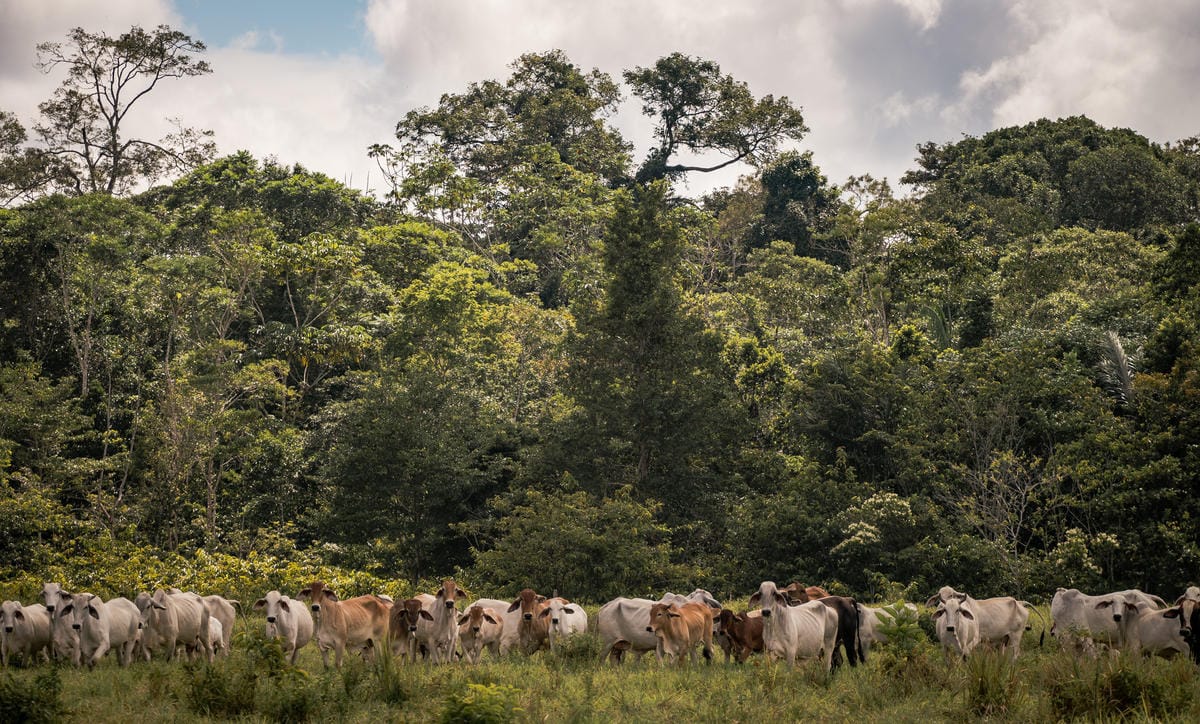
Integrated agricultural production systems such as integrated crop-livestock systems (ICLS) are mixed systems in which by-products of one component of the system serve as resources for another component. In ICLS, crop and livestock production are mutually supportive and mutually dependent. ICLS are distinct from specialized systems, where crops and livestock production are decoupled and depend on external inputs. ICLS close the loop in nutrient and energy cycles. For example, livestock transform plant residues and by-products into edible high-quality protein for human consumption and manure, which is used as an organic fertilizer, replacing dependency on mineral fertilizers. Re-coupling crop and livestock systems at farm and/or territorial scales can help to reduce environmental externalities associated with conventional commercial farming (e.g. GHG emissions from production of mineral fertilizers, soil degradation, water pollution, biodiversity loss) and increase the resilience of smallholder farmers (e.g. by diversifying income and diet).
As integrated systems are diverse, at the landscape level, they can also be developed in a range of habitats and enhance agricultural biodiversity. In fact, when compared to specialized production systems, ICLS promote higher biodiversity both directly – through diversification of crop varieties and livestock species – and indirectly – by diversifying productive landscape elements. Farms implementing ICLS are therefore likely to provide, among other ecosystems, important habitats for wild species, including beneficial ones such as bees and other pollinators, as well as regulatory services like pest and disease control, improved water retention and soil biota (e.g. through improved crop rotation and the application of farmyard manure), carbon sequestration, and the production of diverse crops and livestock that support food security and livelihoods.


To manage ICLS at the farm scale, FAO recommends farmers focusing on the following measures:
- Improve cycling and reduce losses of nutrients:
- Use animal manure and slurry for organic fertilization of crops and trees, reducing dependency on externally sourced fertilizers. Note that the amount and timing of manure application should be carefully planned to avoid detrimental impacts on environment and groundwater and food safety. See Implementing sustainable livestock management practices.
- Feed livestock using crop residues (e.g. weeds, straw, stover stubble, green regrowth of crop or fallen grain), and crop processing by-products (e.g. bran, molasses or pulps). Note that it is important to balance the use of crop residue for animal feed and for soil cover.
- Cover soil with “catch crops,” which are secondary crops grown in the time interval between two main crops or planted between the rows of a main crop. Catch crops can retain potentially leached resources (e.g. nutrients and water), prevent erosion, improve soil fertility and also be used for animal feed or mulch.
- Take all farm system demands into account, including the needs for animal feed. Instead of selecting crop varieties only for higher yield, use varieties that have, for example, better quality straws, more straws or higher ratooning rates (i.e., post-harvest regrowth of the crop).
- Improve cropping patterns:
- Implement integrated grazing management, which involves rotation of annual crops and pasture, and when possible, leaving land fallow or using cover crops to help restore soil fertility.
- Use leys. A ley is a field in which crops are grown in rotation with grass for pasture or legumes. The mix of rotational cropping and organic fertilization through livestock accelerates soil fertility restoration.
- Integrate companion cropping to improve soil quality and yields. For example, one companion crop combination could involve tropical forage grasses combined with cash crops like coffee, citrus, or soy.
- Integrate cereal-legume intercropping into crop rotations, which provide staple cereal yields and high-quality forage for livestock (e.g., alfalfa or cowpea with oats).
- Implement landscape mosaics where different areas are reserved for different purposes, including crops for human consumption, forage crops and grassland. Combining grass and arable cropping lands is “an essential foundation” for integrated crop-livestock systems.
- Integrate a greater variety of crops, animals, and plants that can potentially provide transformative market opportunities for farmers.
- Use livestock for energy provision: Switch from unsustainable fuel sources (e.g. wood, charcoal, kerosene or oil) to manure-based biogas or dung cakes for powering household (e.g. cooking and lighting) or rural-industry (e.g. mills or water pumps) activities.
- Establish sustainable Integrated-Agriculture-Aquaculture (IAA) systems (e.g., rice-fish cultivation systems) to offer small-scale producers in rural areas greater productivity, income diversification (while reducing costs for feed) and nutrition security. See guidance on Implementing sustainable aquaculture management.
ICLS face barriers that limit their adoption. To support farmers transitioning to ICLS, governments can:
- Support local communities, smallholder farmers, social movements, and marginalized groups that seek self-sufficiency and/or promote holistic and agroecological movements, which include reducing reliance on external inputs. Adopt equitable, participatory land management and governance for more long-term ICLS at landscape scale.
- Support development of business models for ICLS to showcase economic advantages of the integration of agricultural production systems. Internalize all costs but also social and ecological benefits.
- Increase research investments in sustainable livestock production technologies and management that are tailored to local conditions.
- Support transformative, equitable market opportunities from the integration of crop rotations that produce additional marketable crops.
- Provide access to finance, especially to de-risk initial investments, as lack of access to finance is one of the major barriers to ICLS uptake.
- Provide subsidies to reward sustainable practices, such as crop diversification. Examples include the European Common Agricultural Policy (CAP) subsidy to maintain grasslands and seminatural areas; Brazil’s ABC programme that subsidized loans for ICLS adoption; and New Zealand’s policies to improve nutrient management.
- Provide appropriate education, training, and capacity-building for agricultural producers and extension officers to recognize the benefits of ICLS. The diversification of the farm structure can contribute to the diversification of diets and thus can lead to improved food and nutrition security.
- Secure clear tenure and resource rights, especially for smallholders, women, Indigenous Peoples and Local Communities. Land managers and farmers are more likely to invest in soil management measures if their land rights are sufficient and secure.
- Improve equitable access to resources such as markets for inputs, outputs, and financial services, or government support for smallholders, women, Indigenous Peoples, Local Communities, youth and other disenfranchised groups.
- Invest in the expansion of decent rural farm employment, non-farm employment, and livelihood opportunities, especially for women and youth, by investing in entrepreneurship, small and medium enterprises, smallholder, and family operations to ensure equitable, inclusive, and decent opportunities for income.

Key tools and guides to support the successful implementation of integrated crop-livestock management systems can include:
Tools
Climate-ADAPT Climate Risk Planning & Managing Tool for Development Programmes in Agri-Food Systems (CRISP)
An interactive tool supporting the mainstreaming of climate adaptation options, including recommendations on crop-livestock management, for agricultural farming systems.
Collect Earth Online
A free, open-source system developed by NASA and USAID and hosted by FAO for viewing and interpreting high-resolution satellite imagery. Users can collect up-to-date information or conduct assessments related to land cover, land use, forestry and agriculture.
Data For ‘Global Trends in Grassland Carrying Capacity and Relative Stocking Density of Livestock
Provides data to estimate grasslands livestock carrying capacity. This open access data sets can feed into global food system modelling, support conservation efforts to reduce land degradation associated with overgrazing, and help identify undergrazed areas for targeted sustainable intensification.
ESA Space Solutions GrassSignal
A decision support tool for sustainable grassland management to assure sustainability metrics while forecasting market demand.
WOCAT Global Database on Sustainable Land Management (SLB)
Made for documenting and assessing SLB practices to share and spread valuable knowledge in land management, support evidence-based decision-making, and scale up identified good practices, thereby contributing to preventing and reducing land degradation and to restoring degraded land.
Guides
FAO Climate Smart Agriculture Sourcebook
FAO provides an open-source, online sourcebook that contains a module on climate-smart integrated production systems.
SARE Building Soils for Better Crops Ecological Management for Healthy Soils
Chapter 12 of Sustainable agricultural and research education’s (SARE) book provides specifics for Integrating Crops and Livestock.
U.S. EPA AgSTAR’s Anaerobic Digester Project Development Handbook
Compiles best practices for anaerobic digestion and biogas systems which can be a part of integrated crop-livestock systems.
Implementation of integrated crop-livestock management systems provides multiple climate, biodiversity, and food security benefits, thus supporting progress towards the goals of the Paris Agreement, the UAE Framework for Global Climate Resilience, the Kunming-Montreal Global Biodiversity Framework (KM-GBF), and the Sustainable Development Goals (SDGs).
Climate change mitigation benefits
- The emission intensity of integrated production systems is typically lower than that of specialized production systems. Implementation of integrated production systems lowers overall GHG emissions from agriculture.
- Integrated crop-livestock systems could reduce enteric methane emissions by up to 17% in OECD countries, 24% in East Africa and 38% in South Asia.
- LCLS contribute to climate change mitigation in multiple ways:
- Using manure for crop production avoids GHG emissions from the production, transport and application of synthetic fertilizers.
- Applying manure inputs biomass to the soil and growing perennial forages instead of annual cash crops, which increases soil organic matter and thus soil carbon sequestration. For example, growing perennial forages can extend the growing season and minimize soil disturbance and associated carbon emissions, leading to carbon accumulation in the soil with annual soil organic carbon sequestration rates of 0.11 t C/ha/year.
- Using crop residues, by-products and locally produced forage for livestock feed avoids emissions from the disposal of residues and feed transportation. It can also help to reduce the amount of land area needed for production of feed crops and thereby avoids GHG emissions related to land-use change, which FAO estimates is the largest source of emissions from global livestock production, accounting for 45% of total livestock production emissions (including emissions from land-use change).
- Feeding more digestible feed (e.g. pasture, crop residues, fodder trees and shrubs) to livestock such as ruminants, pigs and poultry improves the dietary quality for animals and lowers methane emissions from enteric fermentation and manure.
- Feeding crop residues and by-products to livestock alleviates pressure on grasslands and increases grassland restoration and quality, which increases grasslands’ ability to take up and store carbon.
- Overall, the rates of carbon sequestration in the soil attain a maximum level in 5-20 years after adoption of integrated management practices. After this, carbon sequestration continues but sequestration rates decrease until soil organic carbon stocks reach a saturation point, which is determined mainly by soil texture and the chemical composition of soil organic matter. There is great potential for improving soil carbon stocks in eroded and degraded soils.
Climate change adaptation benefits
Among the seven key areas of adaptation put forward in the UAE Framework for Global Climate Resilience, implementing integrated crop-livestock management systems can directly contribute to:
- Target 9a (Water & Sanitation): Integrated systems can improve water use efficiency and reduce water scarcity by optimizing the use of water resources across crops and livestock, and by recycling nutrients and organic matter, which can enhance soil water retention. This can increase resilience to drought.
- Target 9b (Food & Agriculture): ICLS enhance food production, improve farm profitability, increase yields, and support food and nutritional security. They enable more efficient resource use and recycling of farm wastes, leading to higher productivity and resilience in food systems. Consuming high-quality proteins from ICLS, along with improved management of grasslands and pastures, highlights additional benefits of some techniques also used in integrated crop-livestock systems. See Implementing nature-positive food production practices, Implementing sustainable livestock management practices, Implementing agroforestry practices, Sequestering carbon in soil and enhancing soil health in crop systems, and Implementing improved management practices in grasslands.
- Target 9d (Ecosystems): These systems promote environmental and soil health by improving nutrient cycling, increasing soil carbon sequestration, and supporting biodiversity. They also facilitate ecosystem-based adaptation and nature-based solutions through diversified and sustainable land management.
- Target 9f (Livelihoods): By diversifying income sources and increasing employment opportunities, integrated crop-livestock systems help raise living standards, reduce risk and uncertainty, and support poverty eradication, particularly for smallholder and marginal farmers.
- Target 9g (Cultural heritage): Integrated farming practices often align with traditional and indigenous knowledge, supporting the preservation and adaptation of cultural practices related to agriculture and land stewardship.
Biodiversity benefits
Integrated crop-livestock management systems can contribute to several KM-GBF targets, particularly:
- Target 1 (Plan and Manage all Areas To Reduce Biodiversity Loss): Integrated crop-livestock systems can mitigate biodiversity loss by reducing the need for chemical inputs and enhancing habitat diversity. By integrating crops and livestock, these systems promote natural pest control and improve soil health, thereby decreasing reliance on pesticides and fertilizers that harm biodiversity. Integrated systems can restore biogeochemical cycles and reintroduce multifunctionality found in natural ecosystems, contributing to biodiversity conservation.
- Target 2 (Restore 30% of all Degraded Ecosystems): Integrated crop-livestock systems support and complement ecosystem restoration efforts in productive landscapes by promoting in-farm circularity and the recovery of ecological processes. Soil biodiversity and microbial activity are also enhanced through the application of farmyard manure and integration of multiple herbaceous species in crop rotations.
- Target 7 (Reduce Pollution to Levels That Are Not Harmful to Biodiversity): Integrated crop-livestock systems can reduce the use of synthetic fertilizers. The integration of livestock in cropping systems enhances the natural cycling of organic matter and nutrients within the farm, which can lead to a decrease in nutrient pollution. It can also contribute to reducing pollution form from pesticides by integrating natural pest control practices.
- Target 8 (Minimize the Impacts of Climate Change on Biodiversity and Build Resilience): Integrated crop-livestock systems can support this target by enhancing ecosystem resilience and delivering climate change mitigation benefits, such as curbing emissions from the agricultural sector, and enhancing carbon sequestration from agricultural soils, ultimately enhancing the land’s capacity to withstand climate-related stressors, as well as economic risks.
- Target 10 (Enhance Biodiversity and Sustainability in Agriculture, Aquaculture, Fisheries, and Forestry): Integrated crop-livestock systems promote sustainable management of agricultural areas through biodiversity-friendly practices. These systems increase plant diversity, provide habitats for wildlife, and improve ecosystem services such as pollination and biological pest control. These practices enhance the resilience and long-term efficiency of production systems while conserving and restoring biodiversity.
- Target 11 (Restore, Maintain and Enhance Nature’s Contributions to People): Integrated crop-livestock systems, which utilize diverse agricultural practices including annual and perennial forages, can significantly advance this target. ICLS promotes ecological synergies by internalizing nutrient cycling, reducing reliance on chemical inputs, and enhancing biodiversity through circular agroecosystems. For instance, cover crops can be repurposed as nutritious livestock forages on crop-focused farms, and perennial forages in pasture-crop rotations are proven to improve soil health, conserve nutrients, and foster biodiversity. By redesigning agriculture with mixed-use farming, soil erosion can be minimized, water quality improved, and soil health reinvigorated, all contributing to nature-based solutions that sustain ecosystem functions and services for the benefit of people and nature.
Other sustainable development benefits
This FAO Report provides and overview of how ICLS can support delivery of multiple SDGs:
- SDG 1 (No Poverty): ICLS help reduce poverty by diversifying production, which stabilizes household income, enhances resilience to climate change and natural disasters, and protects vulnerable communities from shocks like food price spikes, especially critical for those with limited access to credit and savings.
- SDG 2 (Zero Hunger): ICLS improve food security and nutrition through continuous, year-round production and the cultivation of diverse, often Indigenous crops and livestock, while also supporting livelihoods, conserving biodiversity, and sustaining the natural resources vital for long-term, resilient food systems.
- SDG 8 (Decent Work and Economic Growth): ICLS generate diverse, year-round employment opportunities and increase productivity, which helps raise incomes and improve wages, particularly by better linking informal agricultural workers to formal markets. Additionally, these systems foster economic resilience and sustainable growth by supporting value-added activities, encouraging entrepreneurship, and maintaining the natural resource base essential for long-term agricultural productivity.
- SDG 11 (Sustainable Cities and Communities): ICLS contribute to sustainable cities and communities by improving local food security and nutrition, promoting environmental resilience through biodiversity and soil conservation, enhancing sustainability, and helping to reduce pressures from urban migration.
- SDG 15 (Life on Land): ICLS protect and promote the sustainable use of terrestrial ecosystems through biodiversity conservation, soil health improvement, and the use of indigenous crops and livestock, thereby sustaining the natural resource base and ecosystem services essential for resilient and long-term food production.
The effectiveness of integrated crop-livestock management systems initiatives is closely tied to their design and implementation. However, achieving success can be impeded by a range of technical and non-technical challenges, such as:
- Implementation of integrated production systems requires substantial knowledge, access to technical support (e.g., extension services), and potentially high upfront investments (e.g. costs of equipment needed for energy production from agricultural by-products).
- Poor access to input resources, e.g. fish seed in aquaculture systems.
- Poor access to markets, insurance and credit undermines the economic viability of ICLS.
- Financial incentive systems favour specialized production systems (e.g. through subsidization of inputs or lack of subsidies for integrated production systems).
- ICLS can be vulnerable to disturbance because the mixing of resource flows between system components makes the systems internally more complex and interdependent. ICLS become more vulnerable to disturbance if individual system components area highly sensitive to ecological change.
- CH4 emissions from cattle and N2O emissions from crops and pastures may neutralize the benefits of soil organic carbon storage but the precise effects are unclear and require more research.
- Trade-offs between using crop residues to feed livestock versus to improve soil health need to be balanced. Depending on the location and level of degradation, arable parts of farm systems may need to retain crop residues to improve soil health and will therefore not be able to reduce grazing pressure on grasslands or feed external sourcing.
- Environmental benefits of grassland ecosystems can be impaired as intensification of livestock production increases. Increased livestock production risks overgrazing and soil compaction through trampling.
- Productivity of individual system components in ICLS may be lower than in specialized production systems even though overall productivity of integrated systems greatly exceeds those of specialized systems. For example, average soybean yields and aboveground cover crop biomass production are lower in integrated systems than in specialized soy production systems but additional forage and livestock production increases total system output.
Incorporating the following measures into a comprehensive and holistic approach to implementing integrated crop-livestock management systems can help minimize trade-offs and overcome key implementation challenges:
- Adequate provision and adoption of appropriate inputs, supplies, technologies, and management practices for each system component of the ICLS, e.g. means to establish pond aquaculture (construction gear, fish seed, feeds, harvesting gear).
- Capacity building for producers as well as for agricultural extension officers on manure management, compost/organic fertilizer production and optimization, and catch/cover crops.
- Strengthening inclusive and equitable local institutions and producer organizations to enhance access to technical guidance, counseling, training, on-farm demonstrations and community support, as factors such as inadequate knowledge, skills, and dissemination and promotion efforts have been linked to limited adoption of ICLS.
- Mainstreaming of integrated production systems into curricula of agricultural education institutions.
- Financial risk assessment and finance plan in planning phase.
- Provision of dedicated credit lines and/or financial support/incentives including payment for environmental ecosystem services.
- Appropriate selection of crop and livestock species and breeds.
- Rotational grazing, as opposed to continuous grazing, allows the vegetation to recover between grazing events.
- Feeding animals indoors with hay or silage harvest of forage can help to balance grasslands utilization and environmental carrying capacity.
- Management plans to control herd density and grazing time avoid soil compaction and overgrazing from livestock production and optimize vegetation and livestock rotation.
- Overgrazing during specific periods of the season, such as extended dry periods where grasslands can be vulnerable to lasting damage, can be managed through zero-grazing methods, whereby herders keep their animals in stables, and ‘cut-and-carry’ biomass to feed them. While this is not recommended for long periods of time, it can ensure overgrazing does not occur during critical periods of the season.
- FAO recommends adopting a holistic perspective on ICLS integrated crop-livestock systems where the different system components act as one entity. Therefore, achieving a high yield for the combination of the components should be the focus rather than achieving a high yield for one component only.
To effectively monitor the implementation of integrated crop-livestock management systems, it is essential to use robust monitoring tools, clearly defined indicators, and targeted evaluation frameworks, including those designed to track progress towards biodiversity- and climate-related outcomes.
Indicators to monitor biodiversity outcomes
The Parties to the Convention on Biological Diversity agreed to a comprehensive set of headline, component, and complementary indicators for tracking progress toward the targets of the KM-GBF. Some of these indicators could also be functional for monitoring the implementation of ICLS. These indicators are:
| KM-GBF Target | Headline or binary indicator | Optional disaggregations | Component indicator | Complementary indicator |
|---|---|---|---|---|
| Target 1 | A.2 Extent of natural ecosystems 1.1 Percentage of land and sea area covered by biodiversity-inclusive spatial plans 1.b Number of countries using participatory, integrated and biodiversity-inclusive spatial planning and/or effective management processes addressing land- and sea-use change to bring the loss of areas of high biodiversity importance close to zero by 2030 | |||
| Target 2 | 2.1 Area under restoration | By ecosystem functional group (Global Ecosystem Typology levels 2 and 3 or equivalent) By indigenous and traditional territories By protected areas or other effective area-based conservation measures By type of restoration activity | ||
| Target 7 | 7.2 Pesticide environment concentration and/or aggregated total applied toxicity | For indicator 7.2: By pesticide type By use of pesticide products in each sector | 7.CT.1 Cropland nutrient budget | 7.CY.1 Trends in loss of reactive nitrogen to the environment. 7.CY.2 Trends in nitrogen deposition 7.CY.6 Pesticide use per area of cropland |
| Target 8 | 8.b Number of countries with policies to minimize the impact of climate change and ocean acidification on biodiversity and to minimize negative and foster positive impacts of climate action on biodiversity | B.1 disaggregation: Total climate regulation services provided by ecosystems and by ecosystem type | 8.CY.1 Above-ground biomass stock in forest (tons/ha) 8.CY.2 National greenhouse gas inventories from land use, land-use change and forestry | |
| Target 10 | 10.1 Proportion of agricultural area under productive and sustainable agriculture | For indicator 10.1: By household and non-household sector farms By crops and livestock | 10.CY.1 Agrobiodiversity Index 10.CY.2 Soil organic carbon stocks 4.CT.4Proportion of local breeds classified as being at risk of extinction 2.CT.1Proportion of land that is degraded over total land area | |
| Target 11 | B.1 Services provided by ecosystems |
Tools to monitor biodiversity outcomes
Biodiversity Performance Tool Insects (BPTi)
This tool captures the current biodiversity situation on farms using figures and indicators, covering areas such as biodiversity management, landscape elements, and agricultural practices. It uses a traffic light system to rate various aspects and can track changes over time.
GIZ Biodiversity Action Plan Monitoring Tool (BAP-Monitor)
This tool assesses biodiversity promotion achievements on two levels: performance and impact. It can help quantify the status of implementation of measures defined in a Biodiversity Action Plan and assess ecosystem services, which is relevant for monitoring integrated crop-livestock systems.
Tools to monitor climate outcomes
FAO EX-Ante Carbon-balance Tool (EX-ACT)
A tool to estimate and track the outcomes and impacts of agricultural interventions on GHG emissions.
FAO GLEAM-i
An open-source tool to calculate GHG emissions from livestock production.
EX-Ante Carbon-balance Tool for Value Chains (EX-ACT VC)
A tool to calculate GHG emissions along agri-food value chains.
Implementation costs ultimately depend on the scale of planned activities in a given context, below is one illustrative cost estimate in Brazil.
- Research conducted in Mato Grosso, Brazil, from 2005-12 shows that ICLS require an initial investment of USD 863/ha. This is higher than the initial investment costs for traditional specialized livestock systems (USD 174/ha) or specialized soybean or corn production (USD 766/ha). For ICLS including cattle and either soy or corn, the operational costs of a typical farm ranged from USD 110-283/ha and the input costs from USD 80-181/ha. This is lower than the operational and input costs of specialized soy and corn farms (total operational and input costs USD 860-1,484/ha) but higher than those of specialized cattle farms.
Some key examples of the implementation of ICLS systems in practice include:
- The INTEGRITY Project (2021-ongoing) evaluates alternative management of mixed crop-ruminant livestock systems across nine countries in America, Europe, and Oceania. The project’s focus on increasing carbon and nutrient circularity in diverse agro-climatic regions suggests potential benefits for soil biodiversity and ecosystem health.
- A study on climate-smart crop-livestock practices in India’s humid tropical region between 2014-2018 demonstrated significant biodiversity improvements. The system integrated enterprise diversification, land manipulation, and rainwater harvesting techniques. It increased on-farm productivity from 2.8 to 35.6 t ha−1 and enhanced crop diversity from 2-3 species to 4-5 species. The introduction of mixed pastures and multi-purpose trees improved soil fertility and reduced erosion, likely benefiting soil biodiversity.
- Between 2011 and 2014, the FAO Mitigation of Climate Change Programme (MICCA), which was designed by FAO with financial support from the Government of Finland to research and expand climate-smart agriculture, implemented a pilot project on integrated crop-livestock-tree farming systems in Kaptumo, Kenya. The project aimed to reduce the overall GHG balance of livestock production systems in the area and was realized by the Kaptumo Dairy Farmer Business Association (DFBA) within the East Africa Dairy Development (EADD) Programme. Through an innovative farmer-to-farmer extension approach, about 4,700 smallholder farmers were trained on improved on-farm fodder production and conservation, improved manure and gazing management, and awareness and coping capacity regarding climate change. Farmers were also given loans to facilitate implementation of practices such as manure collection, composting, bush clearing, paddocking or spot and strip sowing with legumes. Participating farmers reported higher yields, raised farm income and increased food availability, and improved on farm biodiversity.
- Abagandura, G. O., Şentürklü, S., Singh, N., Kumar, S., Landblom, D. G., & Ringwall, K. (2019). Impacts of crop rotational diversity and grazing under integrated crop-livestock system on soil surface greenhouse gas fluxes. PLoS ONE, 14(5). Retrieved February 6, 2024, from https://www.ncbi.nlm.nih.gov/pmc/articles/PMC6530893/
- Aguilar, J., Archer, D., Hendrickson, J., Kronberg, S., Liebig, M., Nichols, K., et al. (2013). Diversification and ecosystem services for conservation agriculture: Outcomes from pastures and integrated crop–livestock systems. Renewable Agriculture and Food Systems, 28(2), 129–144.
- B5 – 2 Climate-smart integrated production systems | Climate Smart Agriculture Sourcebook | Food and Agriculture Organization of the United Nations. (n.d.). Retrieved February 16, 2026, from https://www.fao.org/climate-smart-agriculture-sourcebook/production-resources/module-b5-integrated-production-systems/chapter-b5-2/en/
- Chen, R. F. F., Garrett, R. D., Kamoi, M. Y. T., Latorraca, D., Michetti, M., Rodrigues, R. de A. R., et al. (2020). Assessing the economic viability of integrated crop−livestock systems in Mato Grosso, Brazil. Renewable Agriculture and Food Systems, 35(6), 631–642.
- Climate Smart Agriculture Sourcebook. (n.d.). Retrieved February 6, 2024, from https://www.fao.org/climate-smart-agriculture-sourcebook/production-resources/module-b1-crops/b1-overview/en/
- Cruz Colazo, J., de Dios Herrero, J., Sager, R., Guzmán, M. L., & Zaman, M. (2022). Contribution of Integrated Crop Livestock Systems to Climate Smart Agriculture in Argentina. Land, 11(11), 2060.
- de Faccio Carvalho, P. C., da Silveira Pontes, L., Barro, R. S., Simões, V. J. L. P., Dominschek, R., dos Santos Cargnelutti, C., et al. (2024). Integrated crop-livestock-forestry systems as a nature-based solution for sustainable agriculture. Agroforestry Systems, 98(7), 2309–2323.
- Delandmeter, M., de Faccio Carvalho, P. C., Bremm, C., Dos Santos Cargnelutti, C., Bindelle, J., & Dumont, B. (2024). Integrated crop and livestock systems increase both climate change adaptation and mitigation capacities. The Science of the Total Environment, 912, 169061.
- FAO. (2001). Mixed crop-livestock farming: A review of traditional technologies based on literature and field experience. Retrieved from https://www.fao.org/3/Y0501E/Y0501E00.htm.
- FAO. (2016). Planning, implementing, and evaluating Climate-Smart Agriculture in Smallholder Farming Systems The experience of the MICCA pilot projects in Kenya and the United Republic of Tanzania. Retrieved from https://www.fao.org/3/i5805e/i5805e.pdf.
- FAO. (2018). Transforming food and agriculture to achieve the SDGs. Retrieved from https://www.fao.org/family-farming/detail/en/c/1145621/.
- Franzluebbers, A. J., Lemaire, G., de Faccio Carvalho, P. C., Sulc, R. M., & Dedieu, B. (2014). Toward agricultural sustainability through integrated crop-livestock systems: Environmental outcomes. Integrated Crop-Livestock System Impacts on Environmental Processes, 190, 1–3.
- Franzluebbers, A. J., & Martin, G. (2022). Farming with forages can reconnect crop and livestock operations to enhance circularity and foster ecosystem services. Grass and Forage Science, 77(4), 270–281.
- Garrett, R., Ryschawy, J., Bell, L., Cortner, O., Ferreira, J., Garik, A. V., et al. (2020). Drivers of decoupling and recoupling of crop and livestock systems at farm and territorial scales. Ecology and Society, 25(1). Retrieved February 7, 2024, from https://www.ecologyandsociety.org/vol25/iss1/art24/.
- German Environment Agency. (2022). Mixed crop-livestock systems. Retrieved from https://www.ecologic.eu/sites/default/files/publication/2023/50061-factsheet-mixed-crop-livestock-systems_final.pdf.
- HLPE (2023). Reducing inequalities for food security and nutrition. Rome, CFS HLPE-FSN. Available from https://www.fao.org/cfs/cfs-hlpe/insights/news-insights/news-detail/reducing-inequalities-for-food-security-and-nutrition/en.
- Integrated Crop-Livestock Systems (ICLS). (n.d.). Retrieved February 7, 2024, from https://www.fao.org/agriculture/crops/thematic-sitemap/theme/spi/scpi-home/managing-ecosystems/integrated-crop-livestock-systems/en/
- Ignowski, L., Belton, B., Ali, H. et al. (2023). Integrated aquatic and terrestrial food production enhances micronutrient and economic productivity for nutrition-sensitive food systems. Nature Food 4, 866–873
- Lemaire, G., Franzluebbers, A., Carvalho, P. C. de F., & Dedieu, B. (2014). Integrated crop–livestock systems: Strategies to achieve synergy between agricultural production and environmental quality. Integrated Crop-Livestock System Impacts on Environmental Processes, 190, 4–8.
- Mazzafera, P., Favarin, J. L., & Andrade, S. A. L. D. (2021). Intercropping systems in sustainable agriculture. Frontiers in Sustainable Food Systems, 5, 634361.
- Peterson, C. A., Bell, L. W., Carvalho, P. C. de F., & Gaudin, A. C. M. (2020). Resilience of an Integrated Crop–Livestock System to Climate Change: A Simulation Analysis of Cover Crop Grazing in Southern Brazil. Frontiers in Sustainable Food Systems, 4, 604099.
- Poffenbarger, H., Artz, G., Dahlke, G., Edwards, W., Hanna, M., Russell, J., et al. (2017). An economic analysis of integrated crop-livestock systems in Iowa, U.S.A. Agricultural Systems, 157, 51–69.
- Thornton, P. K., & Herrero, M. (2015). Adapting to climate change in the mixed crop and livestock farming systems in sub-Saharan Africa. Nature Climate Change, 5(9), 830–836.