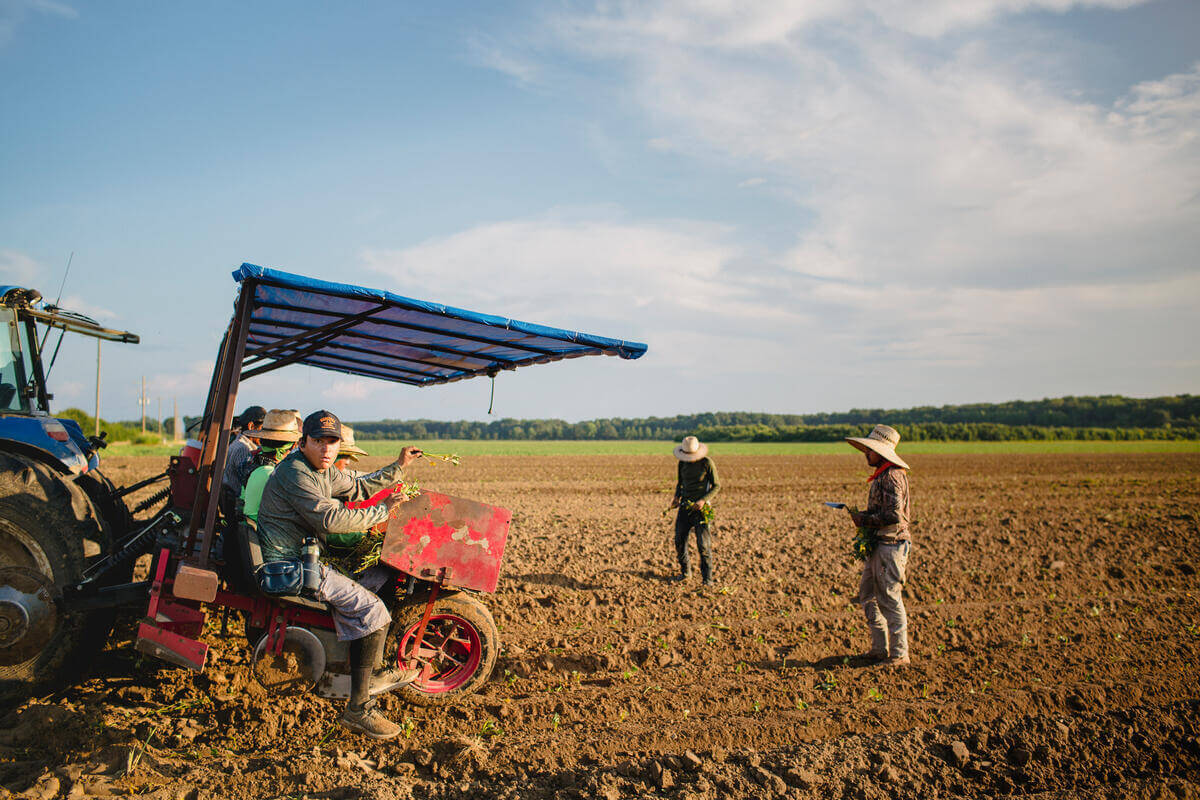
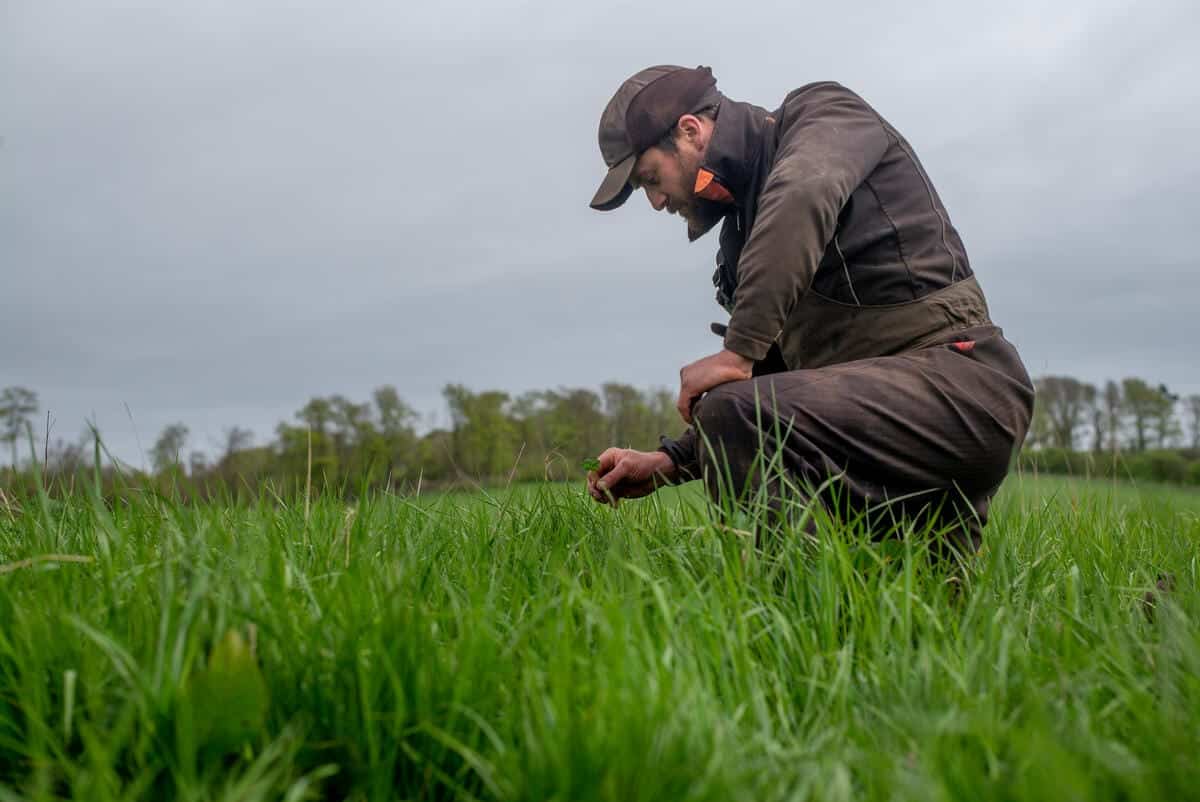
The agriculture and global food system is a key driver of biodiversity loss. It is responsible for 70% of freshwater use and 90% of global tropical deforestation. Along with freshwater depletion, food production has resulted in the widespread modification of river systems by agricultural infrastructure (e.g., irrigation dams), conversion of wetlands for agriculture and aquaculture, and pollution. Loss of natural habitats driven by agricultural expansion threatens over 80% of all threatened terrestrial bird and mammal species while overfishing is the leading cause of biodiversity loss in marine ecosystems. Agriculture and food systems also contribute a third of global greenhouse gas emissions.
Most food produced today uses significant amounts of chemicals and resources (e.g. fertilizer, pesticides, energy, land and water), is produced via unsustainable practices like monocropping and heavy tilling, and drives the destruction of vital ecosystems like forests, grasslands, and peatlands. Simultaneously, it is estimated that between 638 and 720 million people (7.8 to 8.8 percent of the global population) faced hunger in 2024. Two billion have micronutrient deficiencies, while the same number are overweight or obese. Additionally, as much as 40% of food produced is lost or wasted.
Meanwhile, climate change impacts – including extreme temperatures, floods, droughts and changing rainfall patterns – are already reducing the capacity of our food systems, particularly in climate vulnerable regions. The hidden environmental, health and economic costs of current food systems are estimated at nearly USD 12 trillion per year and are expected to rise to USD 16 trillion per year by 2050.
As defined by the Intergovernmental Science-Policy Platform on Biodiversity and Ecosystem Services (IPBES), “agroecology is the science and practice of applying ecological concepts, principles and knowledge (i.e. the interactions of, and explanations for, the diversity, abundance and activities of organisms) to the study, design and management of sustainable agroecosystems. It includes the roles of human beings as a central organism in agroecology by way of social and economic processes in farming systems. Agroecology examines the roles and interactions among all relevant biophysical, technical and socioeconomic components of farming systems and their surrounding landscapes.”
Transitioning to sustainable and resilient food systems can help address climate change, biodiversity loss and food security and nutrition. To successfully make this transformative shift in our food systems, policymakers, practitioners and other stakeholders must consider key agroecology principles to mainstream agroecology in planning, managing and evaluating agriculture and food system policies.


While agroecology is founded on principles that are implemented in diverse ways depending on local contexts, UN Food and Agriculture Organization’s 10 Elements of Agroecology and the High Level Panel on Experts on Food Security and Nutrition’s 13 principles of agroecology provide guidance on how governments can operationalize agroecology at the policy and farm level. These principles relate to agricultural and ecological management of agriculture and food systems as well as some wider ranging socio-economic, cultural, and political principles. Based on local policy contexts, the following measures, among others, can be implemented to operationalize and mainstream these agroecological principles:
- Mainstream and strengthen knowledge on agroecology:
- Integrate and mainstream agroecology values, knowledge, and skills across educational institutions (i.e. in teaching, research incentives and curricula): Transformation of food systems through agroecology requires changing the approaches used to study, measure and assess agricultural performance, and shifting from uniformity of indicators (often narrowly based on “yield” and “productivity”) to a diversity of multi-dimensional indicators to address at least three core dimensions of sustainability – sociocultural, economic and ecological.
- Foster transdisciplinary, participatory and structured co‑creation of innovation by engaging farmers, smallholder organizations, Indigenous Peoples and other stakeholders alongside ecological, social science, rural development, sociology, gender, community health and political science specialists, collaborating to co‑design, test, evaluate and re‑design solutions, recognize and address power imbalances in knowledge creation processes, and support genuinely inclusive partnerships that empower smallholders and their organizations. Breaking down institutional silos and enhancing system thinking in research and training is crucial. Interdisciplinary courses at the graduate and undergraduate levels should include non-academic actors. Knowledge on agroecological innovations requires research that combines “know-how” and “do-how”.
- Provide support to further develop agroecological curricula at colleges and universities — and foster exchange among experienced and interested stakeholders (from research, civil society, donor organizations and the private sector) — building on emerging initiatives such as the EU‑funded Regional Multi‑actor Research Network on Agroecology (RMRN) projects in Africa, which promote co‑creation, capacity‑building and multi‑actor collaboration. Establishing decentralized networks for studies in agroecology would further reinforce system thinking and enhance exchanges between different knowledge holders.
- Align extension services with agroecological principles: Reform knowledge and extension systems to place greater emphasis on participation and social learning (e.g. farmer-to-farmer learning and on-farm demonstrations). Expand the use of low-cost information and communication technology (e.g. interactive radio, social media, other apps and videos) to reach large numbers of people, including youth. Innovative delivery of information can strengthen partnerships with the private sector, farmer groups, volunteers, social workers and youth entrepreneurs in extension and advisory systems. Focus should be placed on the inclusive participation, central role, and leadership of women, Indigenous Peoples, youth and local communities.
- The recognition and interaction between traditional and scientific knowledge as the foundation of agroecology. Recognition that farmers’ movements and networks, NGOs, and Indigenous Peoples’ and local communities’ grassroots organizations also hold valuable know-how and contribute to the systematization of knowledge, which can be further amplified through support from academia, experts, and national research institutions.
- The promotion of farmer networks of experimenters, particularly those who maintain agrobiodiversity and on-farm conservation, through seed exchanges and seed banks.
- Promote the synthesis of, enhance accessibility to, and encourage the utilization of findings from studies that provide transdisciplinary empirical evidence on the various sociocultural, economic, environmental, agronomic and production benefits of agroecology on national and local levels. Promote stand-out projects and individuals that successfully combine academia, tradition knowledge, inclusive approaches and practical research components that provide a benefit to society.
- Raise awareness among financial agents to unlock credit on the ground for agroecological production by providing strong evidence of how risks are reduced both at the farm-gate and territorial levels, and, additionally, how it ensures financial returns.
- Develop agricultural insurance schemes tailored to diversified agroecological crops, ensuring fair risks sharing.
- Provide technical assistance for farmers to improve access to subsidized credit via banking system, credit cooperatives or microcredit.
- Support the transition of conventional farmers to agroecology through non-repayable investments or subsidized credit, tailored to the profile and needs of farmers.
- Support the development of holistic performance measurements for agroecology and metrics for capturing policy alignment with the SDGs, building on FAO’s Tool for Agroecology Performance Evaluation (TAPE), the growing body of work on ‘true cost accounting’ and other metrics.
- Use assessment methodologies to inform evidence-based policymaking for agroecology and demonstrate how agroecology can enhance ecosystem and climate resilience while also contributing to food security and nutrition (see Assessing agriculture and food system impacts). These research efforts should be paired with promotional campaigns to spread awareness of the research results and findings among policymakers and the public.
- Integrate agroecology in public finance:
- Harness large finance mechanisms for agroecology (e.g. Global Environment Facility funds, the Green Climate Fund and the Adaptation Fund and Biovision’s AE investment guide) by developing and submitting funding proposals for research projects and programs for agroecological transition.
- Support donors that provide flexibility in program planning and funding to earmark funding for agroecology projects and programs, including the removal of obstacles to funding subsequent phases of the same project or program.
- Establish mechanisms to track, measure and ensure transparency in global investment flows and subsidies in food systems, including funding to agroecology (e.g., using Agroecology Coalition’s framework for assessing donor portfolios).
- Ensure that financing instruments lead to access to capital (e.g. mobile microfinance, peer-to-peer lending platforms and crowdfunding) that transform their practices based on agroecological principles for farmers (particularly smallholders, women, Indigenous Peoples and youth), producer organizations, input providers and businesses.
- Showcase and scale best practices for financing agroecology, including existing innovative funding mechanisms that support both local/grassroot initiatives and government efforts ensuring participatory decision-making and monitoring of projects.
- Rethink traditional forms of measuring economic success in agriculture in favor of alternative approaches which account for factors such as reduced risks, cost savings, continuity of yields and income diversification.
- Remove subsidies that encourage the unsustainable use of natural resources, particularly those linked to environmental harm, such as synthetic fertilizers and pesticides, and establish positive incentives that support transitions to sustainable, agroecological practices. Increase taxes/adequate fees on use of finite resources (e.g. water) in agricultural production.
- Introduce true pricing and other related assessment methodologies (e.g., true cost accounting, life cycle assessment) to better account for the externalities associated with agricultural production. See Assessing agriculture and food system impacts.
- Reform public procurement policies to incentivize the adoption of agroecological practices, including guaranteed premium prices and minimum purchase quotas for organic and agroecological products. See Integrating healthy and sustainable diets in public procurement.
- Support local/territorial markets:
- Support local, territorial, and regional markets, processing hubs and transportation infrastructures that provide greater processing and handling capacities for fresh products from small and medium-sized farmers who adopt agroecological and other innovative approaches, and to improve their access to local food markets and supply chains. Cities play a key role in organizing the supply and demand of agroecological production. They can stimulate the adoption of agroecological practices, provide incentives for value addition, and build interfaces between farmers and consumers (such as farmers’ markets, CSAs, and product-specific markets), prevent food waste and loss.
- Enhance direct connection between producers and consumers, provide public facilities, extension workers, support farmers´ associations and cooperatives in building strong local marketing networks, and certification of agroecological producers. See Improving equitable access to healthy and sustainable foods.
- Push for fair remuneration for farmers and other food system workers.
- Amplify successful business models aligned with the elements and principles of agroecology, such as those supported by the CGIAR Food Systems Accelerator under the Ukama Ustawi program.
- Build and strengthen multistakeholder platforms and initiatives:
- Build and coordinate platforms to enable interactions among farmers and other stakeholders and networks including local governments, investors, donors, knowledge and research institutions, and consumers to develop collective awareness, identity and agency around agroecological management issues.
- Convene inclusive multi-stakeholder dialogues built on evidence-based and traditional knowledge arguments to help to bring together different perspectives including women, youth, Indigenous Peoples and other marginalized people.
- Support the development and functioning of bottom-up alliances with the involvement and ownership of farmer groups, researchers, NGOs and social movements, and use these alliances as a key partner in knowledge generation and sharing.
- Promote South-South collaboration, long-term partnerships and coalitions with a focus on agroecology, e.g. the Agroecology coalition. Local ownership and the meaningful involvement of social movements and farmers’ organizations is equally important.
See concrete measures to implement
Key tools and guides to support the mainstreaming of agroecology principles for food governance can include:
Tools
Agroecology Coalition Agroecology Finance Assessment and Tracking Tool (AFA)
This is a tool to evaluate projects/initiatives/calls for proposal for their support to agroecological transformations by rating their contribution to the implementation of each of the 13 principles of agroecology.
Biovision Agroecology Check for Enterprises (ACE)
Enables users to conduct a preliminary assessment of an enterprise’s alignment with the principles of agroecology. It is for investors, financiers and entrepreneurs seeking to identify agroecological enterprises. Enterprises with passing grades can go through the more extensive B-ACT assessment (see below). The assessment should therefore be understood as an initial screening before an in-depth analysis with the more substantial B-ACT.
Biovision Agroecology Criteria Tool (ACT) methodology
ACT is based on FAO’s 10 Elements of Agroecology and Gliessman’s five levels of food system change.
Biovision Business Agroecology Criteria Tool (B-ACT)
A tool to assess and identify inspiring and promising agroecological enterprises that contribute to sustainable food systems. The extent to which an enterprise ‘inspires’ is reflected in its alignment with the 13 agroecology principles, while the aspect ‘promising’ is reflected in its business model, value-generating activities and scalability. Examples of the use of B-ACT can be found here.
Biovision Farm-level Agroecology Criteria Tool (F-ACT)
A digital decision-making tool that enables farmers to identify ways for making their farms more efficient, resilient, equitable and ultimately agroecological. The tool guides users through a series of questions to identify to what extent each of the 13 principles of agroecology are reflected through activities related to relevant components of farm and food systems. An application of the framework can be seen here.
Climate Risk Planning & Managing Tool for Development Programmes in Agrifood Systems (CRISP)
An interactive tool that supports decision-making about mainstream climate risk considerations for project design and implementation. It specifically addresses practitioners and project managers in agriculture, rural development, and food and nutrition security projects.
CFS 13 Principles of Agroecology
These are developed by the High-Level Panel of Experts on Food Security and Nutrition (HLPE), a part of the United Nations Committee on World Food Security. These principles aim to provide a comprehensive framework for transforming agricultural and food systems to enhance sustainability, resilience, and social equity. They emphasize the importance of utilizing natural processes, reducing reliance on external inputs, promoting biodiversity, and fostering participatory governance in food production. The overarching goal is to create food systems that are not only environmentally sustainable but also socially just and economically viable.
FAO The 10 elements of agroecology: Guiding the transition to sustainable food and agricultural systems
It serves as a comprehensive framework aimed at guiding the transition to sustainable food and agricultural systems. Developed through a multi-stakeholder process from 2015 to 2019, these elements emphasize both ecological and social dimensions essential for fostering resilient agricultural practices.
FAO Tool for Agroecology Performance Evaluation (TAPE)
A comprehensive tool that aims to measure the multi-dimensional performance of agroecological systems across different dimensions of sustainability. It provides evidence to policymakers and other stakeholders on how agroecology can contribute to sustainable food and agricultural systems. It can also provide a framework for governments and other public actors for the adaptation and re-design of research and development programs, rural advisory services and extension programs.
Guides
Agroecology Coalition Connecting People, Land, Climate and Biodiversity – Recommendations on the Road to Belém
These recommendations were developed after the Rio Convention COPs in 2024 and in preparation of UNFCCC COP 30 in Brazil. Agroecology is a promising approach that simultaneously contributes to the goals of the UNFCCC, CBD, and UNCCD. By adopting a systemic approach to food system transformation based on agroecological principles, countries can achieve multiple socio-ecological and economic benefits while fulfilling their commitments to the Rio Conventions.
Boosting Biodiversity Action through Agroecology: Guidance for Developing and Updating National Biodiversity Strategies and Action Plans
This guidance – launched at the CBD COP16 in Cali, Colombia, in October 2024 – aims to integrate agroecology and sustainable food systems into National Biodiversity Strategies and Action Plans (NBSAPs) to support the implementation of the Kunming-Montreal Global Biodiversity Framework while enhancing coherence with international goals such as SDG 2 and the UN Food Systems Summit pathways. Developed collaboratively by the Global Alliance for the Future of Food, Biovision Foundation, WWF International, the Alliance of Biodiversity International and CIAT, and the Agroecology Coalition, it incorporates insights from diverse stakeholders across 22 countries. The document is tailored for NBSAP national focal points and food system actors, offering tools to address biodiversity loss and advance agroecological approaches.
GIZ Factsheet “Agroecology – From Principles to Transformative Pathways”
The factsheet gives an insight into how the 13 principles of agroecology can be used to shape a pathway for food and agriculture systems transformation. It compiles five good practices from GIZ projects in India, Mali and Mexico as well as two Global Programs in Africa and Asia on holistic agroecological approaches, e.g. women self-help groups, multi-stakeholder dialogues, aquaculture, rural youth employment and biodiversity protection.
GIZ On the Economic Potential of Agroecology
This factsheet gives an overview of the economic potential of agroecology and shows that agroecological systems can be more profitable than conventional systems, depending on the context. Findings from an exemplary GIZ project underline that agroecology can lead to economic benefits.
UNEP Municipal Agendas for Urban and Peri-Urban Agriculture: A Guide to Integrating Agriculture into Urban Planning Processes – Executive Summary
This guide was developed in response to requests from Brazilian municipalities for conceptual and methodological support on Urban and Peri-Urban Agriculture (UPA). It emphasizes UPA’s role in addressing urban challenges across social, economic, and environmental domains, and outlines six key steps for building municipal UPA agendas, from mobilizing stakeholders and defining priorities to implementing, institutionalizing, and monitoring progress.
UNEP Urban Agriculture as Potential to Advance Multiple Sustainability Goals – Policy Guidance from the International Resource Panel
This policy guidance highlights key features of urban agriculture from an urban–rural systems perspective and offers a roadmap for designing context-specific policies that advance sustainability goals such as nutritional equity, environmental health, economic development, and community well-being.
Integrating agroecological principles into food governance frameworks can enable food systems transformation and contribute to the global climate and biodiversity goals under the Paris Agreement, the UAE Framework for Global Climate Resilience, the Kunming-Montreal Global Biodiversity Framework (KM-GBF), and promote progress toward the Sustainable Development Goals (SDGs).
Climate change mitigation benefits
Mainstreaming agroecology in food systems can generate multiple climate change mitigation benefits through a shift in agriculture practices, including:
- Carbon sequestration through agroforestry practices. See Implementing agroforestry systems.
- Agro-silvo-pastoral and silvo-pastoral systems can increase carbon sequestration and reduce the emission generated by animal production. See Implementing silvo-pastoral practices.
- Conservation tillage, organic inputs and cover crops can help to sequester carbon in soils. See Sequestering carbon in soil and enhancing soil health in crop systems.
- Using organic nutrient sources and organic farming can avoid increased nitrous oxide emissions compared to use of synthetic nitrogen fertilizer.
Climate change adaptation benefits
Mainstreaming agroecology principles into food governance can enhance climate-resilient food systems and directly contribute to the following key adaptation priorities outlined in the UAE Framework for Global Climate Resilience:
- Target 9a (Water & Sanitation): Agroecological methods improve water use efficiency through soil health restoration, mulching, and rainwater harvesting. They reduce water pollution by minimizing synthetic fertilizer and pesticide runoff, thus protecting water bodies and groundwater. Healthier soils retain more water, reducing the risk of drought and improving water availability for both agriculture and communities, which is vital for climate adaptation.
- Target 9b (Food & Agriculture): Agroecological practices increase productivity while reducing environmental impacts and dependency on chemical inputs. This ensures a stable and secure food supply, even under changing climate conditions, and helps communities achieve food sovereignty and improved nutrition.
- Target 9c (Health): Agroecological systems support healthier diets by increasing the diversity and nutritional quality of food produced. Reduced use of chemical pesticides and fertilizers lowers the risk of exposure to harmful substances for both farmers and consumers. By fostering local food systems and reducing food miles, agroecology also helps communities adapt to disruptions in global supply chains, supporting public health and food security.
- Target 9d (Ecosystems): Agroecology helps restore natural habitats and maintain ecosystem services such as pollination, soil fertility, and carbon sequestration. Agroecological farms often incorporate trees, hedgerows, and wetlands, which enhance landscape connectivity and resilience. These practices support the conservation and sustainable use of terrestrial and aquatic ecosystems, making them more robust in the face of climate stressors.
- Target 9f (Livelihoods): Agroecology reduces the dependence on costly external inputs and fostering local knowledge and innovation. It creates diversified income streams through mixed farming systems and value-added products. Social equity is promoted by encouraging participatory decision-making and fair labor practices, resulting in more resilient and inclusive rural economies.
Biodiversity benefits
Action under this policy option can help to deliver on several KM-GBF targets, in particular:
- Target 1 (Plan and Manage all Areas To Reduce Biodiversity Loss): The policy Agroecology could be seen as a necessary step a promising policy approach to make progress toward this target, since agriculture and exploitative practices adopted in food production are recognized as major drivers of biodiversity loss. By integrating for agroecological principles into food governance, policies can be designed to mitigate threats such as habitat destruction and pollution of water and soils.
- Target 2 (Restore 30% of all Degraded Ecosystems): Agroecology-aligned policies play a central role in fostering ecosystem restoration by integrating agricultural productivity with restoration efforts. This approach harnesses the ecological and socio-economic potential of restoration activities, promoting broader acceptance among policymakers and local communities alike.
- Target 3 (Conserve 30% of Land, Waters and Seas): Mainstreaming agroecology principles into food governance can reduce tensions between agricultural production and conservation goals by supporting biodiversity-friendly buffer zones, ecological corridors, and sustainable livelihoods in and around protected areas and OECMs.
- Target 4 (Halt Species Extinction, Protect Genetic Diversity, and Manage Human-Wildlife Conflicts): Agroecological principles promote biodiversity and soil health, among others, as strategies for enhancing resilience in food agricultural systems. Mainstreaming this approach in food policies can enhance agricultural biodiversity by promoting the maintenance and restoration of genetic diversity within and between populations of wild, native, and domesticated species, including through on-farm conservation of traditional varieties that safeguard vital germplasm for future challenges.
- Target 5 (Ensure Sustainable, Safe and Legal Harvesting and Trade of Wild Species): By promoting practices that respect and protect customary sustainable use by indigenous peoples and local communities, agroecology fosters a holistic approach to resource management that minimizes overexploitation and reduces impacts on non-target species and ecosystems. This approach emphasizes the importance of local knowledge and participatory decision-making, which are essential for implementing effective conservation strategies that align with ecological principles. Furthermore, agroecological practices can mitigate the risk of pathogen spillover by maintaining healthy ecosystems, which are critical for preventing zoonotic diseases.
- Target 6 (Reduce the Introduction of Invasive Alien Species by 50% and Minimize Their Impact): By adopting an ecosystem approach, agroecology emphasizes the importance of managing the pathways through which invasive alien species (IAS) are introduced, thereby reducing the risk of their establishment. This proactive strategy includes implementing practices that enhance ecosystem resilience, such as promoting biodiversity through crop diversification and integrating native species and locally adapted varieties/breeds (landraces) into agricultural systems. These methods can help prevent the introduction of priority IAS and contribute to reduce the rates of introduction and establishment.
- Target 7 (Reduce Pollution to Levels That Are Not Harmful to Biodiversity): Agroecology principles emphasize the importance of reducing the reliance on external chemical inputs such as chemical fertilizers and pesticides, and of recycling, to improve resource efficiency. Both these approaches have the potential to substantially reduce pollution to level that are not harmful to biodiversity. A wealth of practices could be boosted at the governance level to concretize this potential. For instance, crop rotation, intercropping, and use of organic farming fertilizers could enhance nutrient cycling and improve soil health, thereby reducing excess nutrient runoff into waterways. Moreover, integrated pest management (IPM) strategies diminish the reliance on harmful chemicals by utilizing biological controls and natural pest resistance. Additionally, agroecological practices encourage waste reduction and recycling within farming systems, which can help address plastic pollution through initiatives such as composting organic waste instead of relying on synthetic materials.
- Target 8 (Minimize the Impacts of Climate Change on Biodiversity and Build Resilience): Mainstreaming agroecology principle can deliver multiple climate mitigation and adaptation benefits. See dedicated sections for details. Techniques covered in organic farming such as such as cover cropping, reduced tillage, and use of organic farming fertilizers enhance soil health and increase carbon sequestration, effectively reducing the carbon footprint of farming operations. In addition to mitigation, agroecology enhances ecological resilience within production systems, making them better equipped to adapt to climate variability. Diverse cropping systems, agroforestry, and polyculture practices promote biodiversity, which is crucial for maintaining ecosystem functions and services in the face of climate stressors. By fostering a rich array of species, agroecological systems can better withstand pests, diseases, and extreme weather events, thus safeguarding food security and livelihoods.
- Target 9 (Manage Wild Species Sustainably to Benefit People): Agroecology principles promote responsible harvesting practices that respect ecological balance, that are fair, and that recognize the social values of diets. Doing so, agroecology protects and encourages customary sustainable use by Indigenous Peoples and local communities. Thus, mainstreaming agroecology principles in food governance is expected to empower people, especially those in vulnerable situations and those most dependent on biodiversity, to regain access to and ownership of natural resources that, traditionally, are responsibly used.
- Target 10 (Enhance Biodiversity and Sustainability in Agriculture, Aquaculture, Fisheries, and Forestry): Agroecological principles inherently focus on increasing biodiversity within agricultural systems. The inclusion of such rationale in food governance may be regarded as a necessary step to make progress toward this Target.
- Target 11 (Restore, Maintain and Enhance Nature’s Contributions to People): Agroecology focuses on leveraging ecosystem functions and services – instead of chemical inputs and disruptive practices – for sustaining agricultural production. As such, mainstreaming its principles in food governance implies the restoration, maintenance and enhancement of ecosystem services such as water regulation, soil health, pollination and reduction of disease risk pest and diseases, as well as protection from natural hazards and disasters, for the benefit of all people and nature.
- Target 14 (Integrate Biodiversity in Decision-Making at Every Level): The principles of agroecology aim to, directly or indirectly, steer policies, regulations, planning and development processes, poverty eradication strategies, strategic environmental assessments, environmental impact assessments at all levels so that these account for and leverage ecological processes, especially biodiversity as one of its principles, for food production. As such, agroecology principles are fully aligned with the Target and mainstreaming these principles in food governance is crucial to advance towards this Target.
- Target 16 (Enable Sustainable Consumption Choices to Reduce Waste and Overconsumption): The agroecology principle of “connectivity” and “participation” aim to close the gap existing between producers and consumers by shortening distribution networks, re-embedding food systems into local economies, and fostering participation by both consumers and producers in decision-making processes. While doing so, consumers would be exposed to knowledge and experiences enabling them to make sustainable food consumption choices, and to reduce both pre- and past-harvest food waste and loss.
- Target 18 (Reduce Harmful Incentives by at Least $500 Billion per Year, and Scale Up Positive Incentives for Biodiversity): The implementation of the policy option explicitly aims to reduce harmful subsides in agriculture and repurposing them to biodiversity-positive practices such as those promoted in the agroecology framework.
- Target 19 (Mobilize $200 Billion per Year for Biodiversity From all Sources, Including $30 Billion Through International Finance): By mainstreaming agroecology principles, it is expected to also steer investments – both public and private – towards sustainable practices, nature-based and/or ecosystem-based solutions, marking progress toward the financial target of USD 200 billion per year.
- Target 20 (Strengthen Capacity-Building, Technology Transfer, and Scientific and Technical Cooperation for Biodiversity): Agroecology principles include the co-creation and horizontal sharing of knowledge including local and scientific innovation, especially through farmer-to-farmer exchange, which is aligned and contributes to progress toward this Target.
- Target 21 (Ensure That Knowledge Is Available and Accessible To Guide Biodiversity Action): Based on the principles “fairness” and “co-creation of knowledge” mainstreaming agroecology principles in food governance also implies that best available that data information and knowledge are available to all stakeholders – decision makers, practitioners and to the public, as set by this Target.
- Target 22 (Ensure Participation in Decision-Making and Access to Justice and Information Related to Biodiversity for all): The principles of agroecology include encouraging social organization and greater participation in decision-making by food producers and consumers to support decentralized governance and local adaptive management of agricultural and food systems, contributing to the dissemination of information related to agricultural biodiversity.
Other sustainable development benefits
Agroecological principles relate to all the SDGs. This report gives an overview how agroecology particularly contributes by:
- SDG 1 (No Poverty): improving the income of small-scale farmers by increasing yields and by the diversification of agriculture products.
- SDG 2 (Zero Hunger): improving food security by increasing the quantity and diversity of foods produced per household.
- SDG 3 (Good Health and Well-Being): improving nutrition by maintaining the genetic diversity of seeds, cultivated plants and domesticated animals.
- SDG 8 (Decent Work and Economic Growth): creating employment opportunities.
- SDG 10 (Reduce Inequalities): reducing inequalities due to its inclusive character and especially supporting women, youth and indigenous peoples.
- SDG 12 (Responsible Consumption and Production): reducing pesticide dispersion in the environment and reducing food waste by repurposing urban organic waste as fertilizer.
- SDG 13 (Climate Action): mitigating climate change by reducing greenhouse gas emissions from agriculture and enhancing carbon sequestration in soils.
- SDG 15 (Life on Land): enhancing biodiversity and ecosystem services through sustainable land management practices.
The successful mainstreaming of agroecological principles in food governance interventions and projects is contingent upon their sound design and effective implementation, which may be constrained by a range of technical and non-technical challenges, including:
- Vested political and economic interests in conventional food systems may oppose the mainstreaming of agroecology.
- Potential trade-offs must also be considered in each specific context. For instance, depending on quantity and type of inputs, reduced input use could lead to lower productivity and/or lower income in the short to medium term, and thus potentially to higher food insecurity. In addition, agroecological methods, if more labor-intensive, could increase women’s workload and diminished nutritional status of children (if gender relationships within households are not accounted for) through time constraints, caregiving disruptions, and unequal control over household resources.
The following measures, integrated within a comprehensive and holistic design for mainstreaming agroecological principles in food governance interventions, can help to mitigate trade-offs and address implementation challenges:
- Take advantage of highly visible global forums (e.g. UNFCCC COP meetings) to change the narrative around agroecology and spread awareness of agroecology principles, concepts and benefits among policymakers and other relevant food system stakeholders; use these forums to generate support and awareness for finance, initiatives and capacity-building programs.
- Reframe the concept of ‘feeding the world’ to prioritize nutritional intake over calorie production, recognizing that increased food production does not necessarily equate to improved food and nutritional security.
- Reform food system policies to further value the perspectives and interests of marginalized groups (e.g. Indigenous Peoples and Local Communities) who have shown capacity—given they have secure land tenure and other rights—to both produce food sustainably while also supporting achievement of government goals, such as on deforestation and biodiversity conservation. These groups can also form a vital component of agricultural research and monitoring efforts.
- During transition phases, build support by prioritizing “quick-win” or low-hanging fruit measures that demonstrate the benefits (e.g. cost-effectiveness) of agroecological approaches. For example, soil fertility improvement practices like mulching, composting and intercropping with legumes.
Reliable monitoring tools, well-defined indicators, and comprehensive frameworks are critical for effectively tracking the integration of agroecological principles into food governance and related biodiversity and climate outcomes.
Indicators to monitor biodiversity outcomes
The Parties to the Convention on Biological Diversity agreed to a comprehensive set of headline, component, and complementary indicators for tracking progress toward the targets of the KM-GBF. Some of these indicators could also be functional for monitoring the implementation of this policy option. These indicators are:
| KM-GBF Target | Headline or binary indicator | Optional disaggregations | Component indicator | Complementary indicator |
|---|---|---|---|---|
| Target 1 | A.2 Extent of natural ecosystems 1.1 Percentage of land and sea area covered by biodiversity-inclusive spatial plans 1.b Number of countries using participatory, integrated and biodiversity-inclusive spatial planning and/or effective management processes addressing land- and sea-use change to bring the loss of areas of high biodiversity importance close to zero by 2030 | |||
| Target 2 | 2.1 Area under restoration | By ecosystem functional group (Global Ecosystem Typology levels 2 and 3 or equivalent), indigenous and traditional territories, protected areas or other effective area-based conservation measures, and type of restoration activity | 2.CT.1 Proportion of land that is degraded over total land area | |
| Target 3 | 3.1 Coverage of protected areas and other effective area-based conservation measures | By protected areas and other effective area-based conservation measures; By realm, biome and ecosystem functional group (Global Ecosystem Typology levels 2 and 3 or equivalent) By areas of importance for biodiversity By effectiveness (protected area management effectiveness) By governance type By indigenous and traditional territories | ||
| Target 4 | 4.CT.1 Number of (a) plant and (b) animal genetic resources for food and agriculture secured in either medium- or long-term conservation facilities 4.CT.2 Green status of species 4.CT.3 Human-wildlife conflict indicator 4.CT.4 Proportion of local breeds classified as being at risk of extinction | |||
| Target 5 | B.CT.2 Living Planet Index for utilized species | 5.CY.8 Biodiversity-based trade, growth rates | ||
| Target 6 | 6.1 Rate of invasive alien species establishment 6.b Number of countries adopting relevant regulations, processes and measures to reduce the impact of invasive alien species | For indicators 6.1 and 6.2: By taxonomic group By pathway | ||
| Target 7 | 7.2 Pesticide environment concentration and/or aggregated total applied toxicity | For indicator 7.2: By pesticide type By use of pesticide products in each sector | 7.CT.1 Cropland nutrient budget | 7.CY.1 Trends in loss of reactive nitrogen to the environment. 7.CY.6 Pesticide use per area of cropland |
| Target 8 | 8.b Number of countries with policies to minimize the impact of climate change and ocean acidification on biodiversity and to minimize negative and foster positive impacts of climate action on biodiversity | B.1 disaggregation: Total climate regulation services provided by ecosystems and by ecosystem type | 8.CT.2 Bioclimatic Ecosystem Resilience Index | |
| Target 9 | 9.1 Benefits from the sustainable use of wild species 9.2 Percentage of the population in traditional occupations 9.b Number or countries with policies to manage the use of wild species sustainably, providing social, economic and environmental benefits for people, and to protect and encourage customary sustainable use by indigenous peoples and local communities | For indicator 9.2: By type of occupations By indigenous peoples and local communities By gender By age category By rural versus urban category | 4.CT.1 Number of (a) plant and (b) animal genetic resources for food and agriculture secured in either medium- or long-term conservation facilities | |
| Target 10 | 10.1 Proportion of agricultural area under productive and sustainable agriculture | For indicator 10.1: By household and non-household sector farms By crops and livestock | 10.CT.1 Average income of small-scale food producers, by sex and indigenous status | 10.CY.1 Agrobiodiversity Index A.CY.19 Red List Index (wild relatives of domesticated animals) B.CY.2 Red List Index (pollinating species) 4.CT.4Proportion of local breeds classified as being at risk of extinction 2.CT.1Proportion of land that is degraded over total land area |
| Target 11 | B.1 Services provided by ecosystems | 11.CT.3 Level of water stress: freshwater withdrawal as a proportion of available freshwater resources | 11.CY.2 Proportion of local administrative units with established and operational policies and procedures for participation of local communities in water and sanitation management | |
| Target 14 | 14.b Number of countries integrating biodiversity and its multiple values into policies, regulations, planning, development processes, poverty eradication strategies and, as appropriate, national accounts, within and across all levels and across all sectors, and progressively aligning all relevant public and private activities and fiscal and financial flows with the goals and targets of the Framework | |||
| Target 16 | 16.b Number of countries developing, adopting or implementing policy instruments aimed at encouraging and enabling people to make sustainable consumption choices | 16.CT.1 Food Waste Index 16.CT.2 Material footprint, material footprint per capita, and material footprint per GDP 16.CT.3 Ecological footprint | 16.CY.1 Extent to which (i) global citizenship education and (ii) education for sustainable development are mainstreamed in (a) national education policies; (b) curricula; (c) teacher education and (d) student assessment | |
| Target 18 | 18.1 Positive incentives in place to promote biodiversity conservation and sustainable use 18.2 Value of subsidies and other incentives harmful to biodiversity | For indicator 18.1: By type of incentive (taxes, fees and charges, subsidies, tradable permits, payment for ecosystem services programmes and offset schemes) For indicator 18.2: By sector (agricultural, fisheries, fossil fuels and other sectors) | ||
| Target 19 | 20.CT.1Total amount of funding for developing countries to promote the development, transfer, dissemination and diffusion of environmentally sound technologies D.CY.6 International funding targeted at indigenous peoples and local communities within biodiversity-related activities D.CY.7 International funding targeted at youth within biodiversity-related activities D.CY.8 International funding targeted at gender equality and women’s rights policy objectives within biodiversity-related activities D.CY.9 Monetary value of the annual budget for biodiversity from total national budget D.CY.10 Percentage of annual biodiversity expenditure in total national government budgets D.CY.11 Domestic funding targeted at indigenous peoples and local communities within biodiversity-related activities D.CY.12 Domestic funding targeted at youth within biodiversity-related activities D.CY.13 Domestic funding targeted at gender equality and women’s rights policy objectives within biodiversity-related activities D.CY.14 Private funding targeted at indigenous peoples and local communities within biodiversity-related activities D.CY.15 Private funding targeted at youth within biodiversity-related activities D.CY.16 Private funding targeted at gender equality and women’s rights policy objectives within biodiversity-related activities D.CY.17 Private funding mobilized for indigenous peoples and local communities, women and youth | |||
| Target 20 | 20.b Number of countries that have taken significant action to strengthen capacity-building and development and access to and transfer of technology, and to promote the development of and access to innovation and technical and scientific cooperation | 20.CT.1 Total amount of funding for developing countries to promote the development, transfer, dissemination and diffusion of environmentally sound technologies | 20.CT.1 Total amount of funding for developing countries to promote the development, transfer, dissemination and diffusion of environmentally sound technologies | |
| Target 21 | 21.CT.1 Species Information Index 21.CT.2 Participation of indigenous peoples and local communities in decision-making related to the implementation of the Convention at all levels | |||
| Target 22 | Land-use change and land tenure in the traditional territories of indigenous peoples and local communities 22.b Number of countries taking action towards the full, equitable, inclusive, effective and gender‑responsive representation and participation in decision-making, and access to justice and information related to biodiversity by indigenous peoples and local communities, respecting their cultures and their rights over lands, territories, resources and traditional knowledge, as well as by women and girls, children and youth, and persons with disabilities, and the full protection of environmental human rights defenders | 21.CT.2 Participation of indigenous peoples and local communities in decision-making related to the implementation of the Convention at all levels 22.CT.1 Proportion of total adult population with secure tenure rights to land, (a) with legally recognized documentation, and (b) who perceive their rights to land as secure, by sex and type of tenure | 22.CY.2 Proportion of countries with systems to track and make public allocations for gender equality and women’s empowerment 22.CY.3 (a) Proportion of total agricultural population with ownership or secure rights over agricultural land, by sex; and (b) share of women among owners or rights-bearers of agricultural land, by type of tenure 22.CY.4 Proportion of countries where the legal framework (including customary law) guarantees women’s equal rights to land ownership and/or control |
Tools to monitor biodiversity outcomes
BioMonitor4CAP
This EU-funded project develops both simple and advanced monitoring and surveillance systems for agro-biodiversity. It combines traditional field surveys with innovative technologies such as remote sensing, eDNA sampling, optical methods, acoustic sensors, drones, and satellite earth observation. The project focuses on four main areas: remote sensing, soils, insects, and birds, providing a holistic approach to biodiversity monitoring in agricultural landscapes
Biovision Agroecology Criteria Tool (ACT)
ACT is based on FAO’s 10 Elements of Agroecology and Gliessman’s five levels of food system change. It provides a structured assessment of agroecological transition, emphasizing the integration of ecological functions and biodiversity at the farm level.
FAO Tool for Agroecology Performance Evaluation (TAPE)
Developed by FAO, TAPE is a comprehensive, stepwise tool designed to measure the multidimensional performance of agroecological systems, including biodiversity outcomes. It assesses farms and communities using indicators aligned with the Sustainable Development Goals (SDGs), specifically targeting biodiversity (SDG 8.6.1). TAPE is user-friendly, requires minimal training, and is being continuously improved (e.g., TAPE+) to incorporate digital features and refined metrics.
Tools to monitor climate outcomes
FAO SHARP+ (Self-evaluation and Holistic Assessment of climate Resilience of farmers and Pastoralists)
The tool assesses household climate resilience based on the knowledge and priorities of Crop, livestock and forest producers using an integrated approach, and can be used to build evidence for informed policy- and decision-making.
No estimate was found in the literature.
Practical examples of integrating agroecological principles into food governance across different countries include:
- The Swiss Research Institute of Organic Agriculture (FiBL), along with other partners, have implemented four long-term trials comparing organic and conventional farming in Kenya, India and Bolivia. Results from 2007 to 2019 show that moving away from input substitution to a diversified farming system using an agroecological approach led to similar or higher crop yields than a conventional production system. These agroecological approaches led to reduced incidence/impact of pests, improved soil conditions and an overall improvement in resource efficiency.
- Since 2009, the NGO Partenariat du Developpement Local has been supporting the implementation of agroecological practices in Haiti’s Northern Plateau region. The Economics of Land Degradation (ELD) produced an assessment of how agroecological farming in Haiti has performed. The analysis found that agroecological farming methods earned higher net-income per hectare even with higher production costs. Moreover, agroecological practices increased carbon sequestration and water retention in the soil, reducing erosion, and bolstering food security.
- In response to a global price increase of chemical fertilizers between 2020 and 2022, the Government of Ethiopia set up a task force to assess technical, policy and social measures that could be rapidly implemented to alleviate fertilizer scarcity. Measures included: accelerating the registration/commercialization of domestically produced alternative organic fertilizers; the mobilization of extension agents to promote the organic fertilizers and build capacity for their production; the maintenance of subsidies for farmer organizations and cooperatives to help cover transport/distribution costs; and a production safety net for poor farmers, with the government and NGOs supplying fertilizer and seeds for free.
- Beginning in 2008, the Ecovillages Program in Senegal was established to provide aid for developing low-carbon, climate-resilient agroecology villages. In addition to training villagers in the principles of agroecology/agroforestry and environmental education, the program supports access to solar hydro pumps for irrigation, improved energy efficient cookstoves, land development for agriculture, and other initiatives. It is overseen by the Ministry of the Environment and Sustainable Development, with funding from 14 national and international partners, including the Senegalese government, UNDP, the Japanese government, and private sector actors. In 2019, some 400 ecovillages had been established or were in the process of being established.
- In 2013, the Brazilian government launched the first phase of the National Plan of Agroecology and Organic Production (PLANAPO), a comprehensive initiative involving 125 distinct actions across various ministries. One part of the initiative, the Ecoforte Program, supports territorially-based programs in transitioning to agroecological production and sustainable farming practices by transferring funds to active social organizations in the field. Projects have focused primarily on expanding practices related to agricultural production, food processing, ecological seed production, certification, commercialization, animal husbandry, water security technologies, and other measures. Through the mechanisms of the program, foundations can direct finance towards assets (e.g., machinery, facilities) and services (e.g. technical assistance, training, education).
- Tanzania launched its National Ecological Organic Agriculture Strategy (NEOAS) in late 2023. This is based on the contribution of agroecological approaches to food security, farm incomes, environmental conservation, climate resilience and opportunities for youth and women. It also mainstreams organics and agroecology as a cross-cutting policy initiative in the coming national biodiversity strategy (NBSAP). The strategy was developed with the involvement of a wide group of stakeholders.
- 13 Principles of Agroecology|. (2023, July 26). Agroecology Info Pool. Retrieved February 13, 2024, from https://www.agroecology-pool.org/13aeprinciples/.
- ACE: Agroecology Check for Enterprises. (2023, July 4). Agroecology Info Pool. Retrieved February 13, 2024, from https://www.agroecology-pool.org/ae-check-for-enterprises/
- Agroecology Case Studies. (n.d.). Oakland Institute. Retrieved February 13, 2024, from https://www.oaklandinstitute.org/agroecology-case-studies
- Agroecology finance assessment tool. (n.d.). Agroecology Coalition. Retrieved February 13, 2024, from https://agroecology-coalition.org/agroecology-finance-assessment-tool/
- Agroecology Info Pool (2018). Brazil’s national plan for agroecology and organic food production (PLANAPO). Retrieved from https://www.agroecology-pool.org/wp-content/uploads/2018/10/Brazil-Factsheet-1.pdf
- Agroecology Info Pool (2019). Modelling Results. Retrieved February 13, 2024, from https://www.agroecology-pool.org/modelling-results/.
- Agroecology Info Pool. (2018, October 2). Retrieved February 13, 2024, from https://www.agroecology-pool.org/showcases/.
- Alliance of Bioversity International and CIAT. (2024). The CGIAR Food Systems Accelerator Cohort 2 Pitch Day Report. https://alliancebioversityciat.org/publications-data/cgiar-food-systems-accelerator-cohort-2-pitch-day-report
- B-ACT: Business Agroecology Criteria Tool. (2023, February 23). Agroecology Info Pool. Retrieved February 13, 2024, from https://www.agroecology-pool.org/b-act/.
- Barrios, E., Gemmill-Herren, B., Bicksler, A., Siliprandi, E., Brathwaite, R., Moller, S., et al. (2020). The 10 Elements of Agroecology: enabling transitions towards sustainable agriculture and food systems through visual narratives. Ecosystems and People. Retrieved February 13, 2024, from https://www.tandfonline.com/doi/abs/10.1080/26395916.2020.1808705
- Bezner Kerr, R., Postigo, J. C., Smith, P., Cowie, A., Singh, P. K., Rivera-Ferre, M., et al. (2023). Agroecology as a transformative approach to tackle climatic, food, and ecosystemic crises. Current Opinion in Environmental Sustainability, 62, 101275.
- Biovision Foundation for Ecological Development. (2025). The Why Investing in Agroecological Enterprises makes sense: Investment guide summary brief. https://www.biovision.ch/wp-content/uploads/2025/03/Infopool_AIG-Brief_Biovision_202502.pdf
- Biovision Foundation. (2023). Agroecology: A Transformative Opportunity for Biodiversity and the Rio Conventions. Retrieved from https://www.agroecology-pool.org/wp-content/uploads/2023/06/Bio3Rio_Brief.pdf
- Boost NBSAPs through Agroecology. (2023, September 29). Agroecology Info Pool. Retrieved February 13, 2024, from https://www.agroecology-pool.org/national-biodiversity-strategies-and-action-plans/
- Clark, M. A., Domingo, N. G. G., Colgan, K., Thakrar, S. K., Tilman, D., Lynch, J., et al. (2020). Global food system emissions could preclude achieving the 1.5° and 2°C climate change targets. Science. Retrieved February 13, 2024, from https://www.science.org/doi/10.1126/science.aba7357.
- Darmaun, M., Chevallier, T., Hossard, L., Lairez, J., Scopel, E., Chotte, J.-L., et al. (2023). Multidimensional and multiscale assessment of agroecological transitions. A review. International Journal of Agricultural Sustainability. Retrieved February 13, 2024, from https://www.tandfonline.com/doi/abs/10.1080/14735903.2023.2193028
- Deutsche Gesellschaft für Internationale Zusammenarbeit (GIZ) GmbH. (2024). On the economic potential of agroecology. https://www.giz.de/en/downloads/giz2024-en-on-the-economic-potential-of-agroecology.pdf
- Deutsche Gesellschaft für Internationale Zusammenarbeit (GIZ) GmbH. (2024). Agroecology – From principles to transformative pathways. https://www.giz.de/fachexpertise/downloads/giz2024-en-agroecology-from-principles-to-transformative-pathways.pdf
- Economics of Land Degradation. (2023). An assessment of the economics of agroecological farming in Haiti. Retrieved June 11, 2024, from https://www.eld-initiative.org/fileadmin/ELD_Filter_Tool/Case_Study_Haiti_2023/Haiti_2023_Agroecology_ELD_Report_EN.pdf
- ElDidi, H., et al. (2025). Multi-stakeholder platforms for enabling agroecological transitions: Configurations and lessons from seven agroecological living landscapes. Agroecology and Sustainable Food Systems, 49(1), 1–24. https://doi.org/10.1080/21683565.2025.2556433
- Ellis, E. C., Klein Goldewijk, K., Siebert, S., Lightman, D., & Ramankutty, N. (2010). Anthropogenic transformation of the biomes, 1700 to 2000. Global Ecology and Biogeography, 19(5), 589–606.
- F-ACT: Farm Level Agroecology Criteria Tool. (2021, August 6). Agroecology Info Pool. Retrieved February 13, 2024, from https://www.agroecology-pool.org/fact/.
- FAO, Biovision Foundation, Food Policy Forum for Change & Agroecology Coalition. (2023). Agroecology dialogue series: Outcome brief no. 3. – Agroecology as a response to agri-input scarcity. Retrieved from https://www.agroecology-pool.org/wp-content/uploads/2023/02/Outcome-brief-3-1.pdf
- FAO. (2020). CFS Policy Recommendations on Agroecological and Other Innovative Approaches for Sustainable Agriculture and Food Systems that Enhance Food Security and Nutrition: Draft One. Retrieved from https://www.fao.org/fileadmin/templates/cfs/Docs1920/Agroecology_an_other_innovative/23_July_2020/1CFS_Agroecological_innovative_approaches.pdf
- FAO. (2022). The State of Food Security and Nutrition in the World 2022: Repurposing food and agricultural policies to make healthy diets more affordable. Rome: FAO. https://openknowledge.fao.org/items/ea9cebff-306c-49b7-8865-2aef3bfd25e2
- FAO. (n.d.-a). Responsible governance: sustainable food and agriculture requires responsible and effective governance mechanisms at different scales – from local to national to global. Agroecology Knowledge Hub. Retrieved February 13, 2024, from https://www.fao.org/agroecology/knowledge/10-elements/land-natural-resources-governance/en/?page=79&ipp=5&tx_dynalist_pi1%5Bpar%5D=YToxOntzOjE6IkwiO3M6MToiMSI7fQ%3D%3D
- FAO. (n.d.-b). The 10 Elements of Agroecology Guiding the Transition to Sustainable Food and Agricultural Systems. Retrieved from https://www.fao.org/3/i9037en/i9037en.pdf.
- FAO. (n.d.-c). Tool for Agroecology Performance Evaluation (TAPE). Agroecology Knowledge Hub. Retrieved February 13, 2024, from https://www.fao.org/agroecology/tools-tape/en/.
- FAO. (n.d.). Tool for Agroecology Performance Evaluation (TAPE). https://www.fao.org/agroecology/tools-tape/en/
- Galgani, P., van Veen, B., Kanidou, D., de Adelhart Toorop, R., & Woltjer, G. (2023). True price assessment method for agri-food products. Retrieved from https://edepot.wur.nl/585906.
- Geck, M. S., Crossland, M., & Lamanna, C. (2023). Measuring agroecology and its performance: An overview and critical discussion of existing tools and approaches. Outlook on Agriculture, 52(3), 349-359. https://doi.org/10.1177/00307270231196309
- GEF (2022). In Senegal ecovillage, children learn about nature alongside their ABCs. Global Environment Facility (GEF). Retrieved from https://www.thegef.org/newsroom/news/senegal-ecovillage-children-learn-about-nature-alongside-their-abcs.
- GIZ (2024). Position Paper: Agroecology. Deutsche Gesellschaft fur Internationale Zusammenarbeit (GIZ) Retrieved from https://www.giz.de/expertise/downloads/giz2024-en-position-paper-agroecology.pdf.
- Hernández Lagana, M., Philips, S., & Poisot, A. S. (2022). Self-evaluation and holistic assessment of climate resilience of farmers and pastoralists (sharp+) – A new guidance document for practitioners. Retrieved from https://www.fao.org/3/cb7399en/cb7399en.pdf.
- HLPE. (2017). Nutrition and food systems. A report by the High Level Panel of Experts on Food Security and Nutrition of the Committee on World Food Security. Retrieved December 13, 2024, from https://openknowledge.fao.org/server/api/core/bitstreams/4ac1286e-eef3-4f1d-b5bd-d92f5d1ce738/content.
- HLPE. (2019). Agroecological and other innovative approaches for sustainable agriculture and food systems that enhance food security and nutrition. A report by the High Level Panel of Experts on Food Security and Nutrition of the Committee on World Food Security. Retrieved from https://www.fao.org/3/ca5602en/ca5602en.pdf.
- IFPRI (2024). Grappling with compounding crises in domestic fertilizer markets in Africa: The case of Ethiopia. International Food Policy Research Institute (IFPRI), from https://www.ifpri.org/blog/grappling-compounding-crises-domestic-fertilizer-markets-africa-case-ethiopia/.
- International Centre of Insect Physiology and Ecology. (2024, December). Major boost for agroecology in Africa. https://www.icipe.org/news/major-boost-agroecology-africa
- IPBES. (2019, May 17). Global Assessment Report on Biodiversity and Ecosystem Services | IPBES secretariat. Retrieved November 29, 2024, from https://www.ipbes.net/node/35274.
- Kuria, A. W., et al. (2024). Understanding farmer options, context and preferences leads to the co-design of locally relevant agroecological practices for soil, water and integrated pest management: A case from Kiambu and Makueni agroecology living landscapes, Kenya. Frontiers in Sustainable Food Systems, 8, Article 1456620. https://doi.org/10.3389/fsufs.2024.1456620
- Lamine, C., & Dawson, J. (2018). The agroecology of food systems: Reconnecting agriculture, food, and the environment. Agroecology and Sustainable Food Systems. Retrieved February 13, 2024, from https://www.tandfonline.com/doi/abs/10.1080/21683565.2018.1432517
- Leippert, F., Darmaun, M., Bernoux, M., & Mpheshea, M. (2020). The potential of agroecology to build climate-resilient livelihoods and food systems. Retrieved February 13, 2024, from https://www.fao.org/documents/card/en/c/cb0438en.
- Millennium Institute. (2018). The Impact of Agroecology on the Achievement of the Sustainable Development Goals (SDGs) – An Integrated Scenario Analysis. Retrieved from https://www.biovision.ch/wp-content/uploads/2024/08/Infopool_iSDG-Report-on-Agroecology-and-SDGs.pdf.
- Mockshell, J., et al. (2023). Transitioning to agroecological food systems: A review of incentives for adoption of agroecological practices and outcomes (Working Paper). Bioversity International & CIAT. https://cgspace.cgiar.org/items/b6c95f37-1683-4a51-a397-1127514cffe5
- Moeller, N. I., Geck, M., Anderson, C., Barahona, C., Broudic, C., Cluset, R., et al. (2023). Measuring agroecology: Introducing a methodological framework and a community of practice approach. Elementa: Science of the Anthropocene, 11(1). Retrieved February 13, 2024, from https://online.ucpress.edu/elementa/article/11/1/00042/197669/Measuring-agroecology-Introducing-a-methodological
- Nehring, R. (2025). A critical approach to co-producing knowledge for development. Development Policy Review. https://doi.org/10.1111/dpr.70025
- Niggli, U., Sonnevelt, M., & Kummer, S. (2023). Pathways to Advance Agroecology for a Successful Transformation to Sustainable Food Systems. In Science and Innovations for Food Systems Transformation (pp. 341–359). Retrieved February 13, 2024, from https://link.springer.com/chapter/10.1007/978-3-031-15703-5_18
- Sinclair, F., Wezel, A., Mbow, C., Comba, S., Robiglio, V., & Harrison, R. (2019). The Contributions of Agroecological Approaches to Realizing Climate-Resilient Agriculture. Retrieved February 13, 2024, from https://gca.org/reports/the-contributions-of-agroecological-approaches-to-realizing-climate-resilient-agriculture/
- Snapp, S. S., Kebede, Y., Wollenberg, E. K., Dittmer, K. M., Brickman, S., Egler, C., et al. (2021). Agroecology and climate change rapid evidence review: Performance of agroecological approaches in low- and middle- income countries. Retrieved February 13, 2024, from https://hdl.handle.net/10568/113487.
- Swiss National FAO Committee. (2019). Agroecology as a means to achieve the Sustainable Development Goals A discussion paper. Retrieved from https://www.blw.admin.ch/dam/blw/de/dokumente/International/Institutionen/CNS%20FAO/Agroecology.pdf.download.pdf/AgroecologySDGs_final_28_02_2019_accepted_English.pdf
- Tataridas, A., Travlos, I., & Freitas, H. (2023). Agroecology and invasive alien plants: A winner-take-all game. Frontiers in Plant Science, 14, 1143814.
- UNEP, International Resource Panel. (2022, February). Urban agriculture’s potential to advance multiple sustainability goals: Policy guidance from the International Resource Panel. https://wedocs.unep.org/20.500.11822/38399
- UNEP. (2024, September). Municipal agendas for urban and peri-urban agriculture: A guide to integrating agriculture into urban planning processes – Executive summary. United Nations Environment Programme. https://wedocs.unep.org/20.500.11822/46272
- Wanyama, R. (2024). Agroecological green leafy vegetable business models in Kenya. CGIAR. https://cgspace.cgiar.org/items/d42a8095-4361-4c43-8452-68681f498e0e
- Wezel, A., Herren, B. G., Kerr, R. B., Barrios, E., Gonçalves, A. L. R., & Sinclair, F. (2020). Agroecological principles and elements and their implications for transitioning to sustainable food systems. A review. Agronomy for Sustainable Development, 40(6), 1–13.
- WWF. (2021). Farming with Biodiversity. Towards nature-positive production at scale. Retrieved from https://wwfint.awsassets.panda.org/downloads/farming_with_biodiversity_towards_nature_positive_production_at_scale.pdf