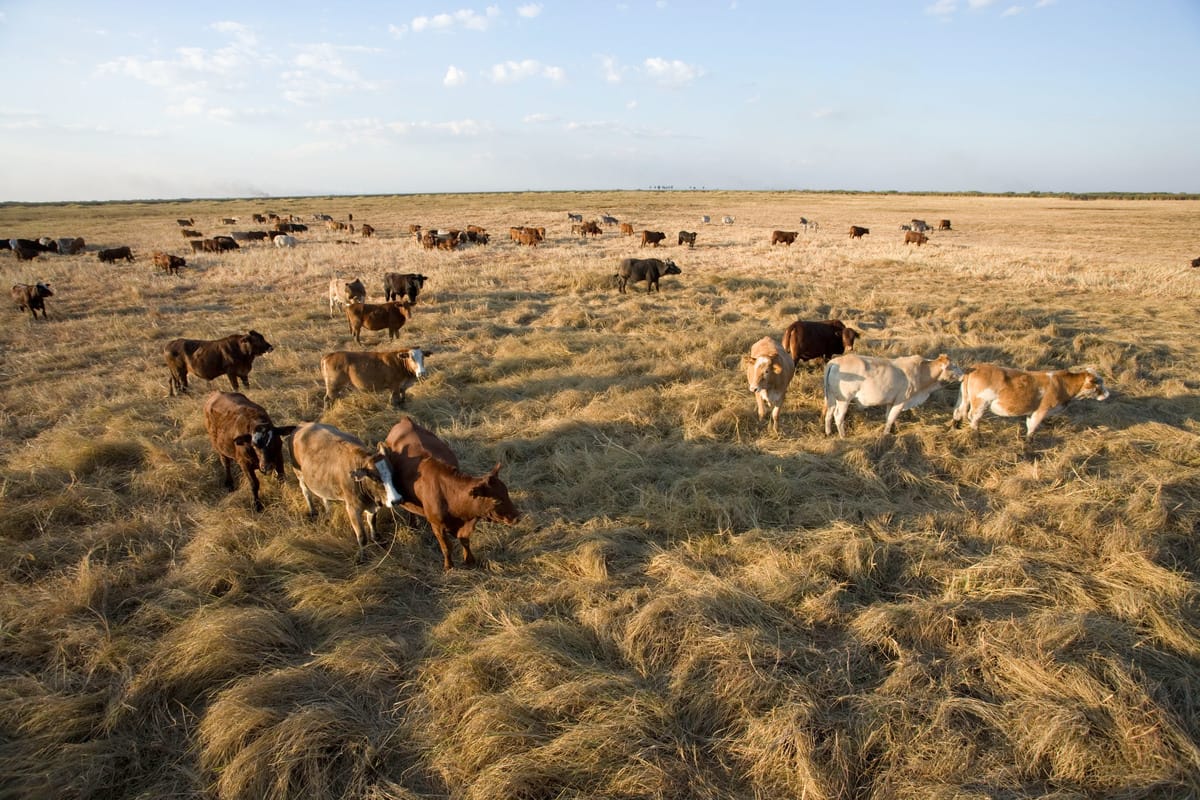
Agriculture accounts for around 70% of global freshwater use, and is responsible for a profound modification of river systems by agricultural infrastructure (e.g. irrigation dams, levees to secure floodplain fields), conversion of wetlands for agriculture and aquaculture, and pollution. Due to the negative impact of food production on freshwater ecosystems – alongside other natural and anthropogenic stressors – populations of freshwater species have dropped by a staggering 85%, on average, since 1970. Furthermore, wastewater is a main driver of biodiversity loss and a major threat to human health, particularly affecting the most vulnerable people and ecosystems. However, if wastewater is treated adequately, it can become a valuable resource.
Using water efficiently and reducing, optimizing and reducing water pollution due to agricultural activities is essential for water and food security, as well as human and ecosystem health. Transforming agricultural systems to regenerate hydrological processes and aquatic ecosystems, improve water availability and quality, and reduce soil erosion and nutrient loss due to agricultural run-off are important opportunities in transitioning to nature-positive and climate-resilient freshwater management. Food and water resilience are dependent upon one another, and farmers are among the world’s most important managers of water systems catchments – which are areas of land that collect and drain the rainwater that falls on it (e.g. the area around a lake or the basin of a river). Hence, the protection, management and restoration of freshwater ecosystems and water resources is fundamental to combating biodiversity loss, pollution, and climate change.
There are several concrete measures that can advance nature-positive and climate-resilient freshwater management:
- Improve rainwater harvesting and storage, e.g. in ponds, reservoirs, soils and vegetation (green water). Traditional technologies like harvesting rainwater or directing water towards crops using contour bunds, terracing, ridges, half-moon shaped plant basins and others can be supported and further developed.
- Reduce the vulnerability of water storage (e.g. in dam reservoirs) to evaporation losses and eutrophication, both of which are linked to higher temperatures in a changing climate. Eutrophication is the process in which a body of water becomes overly enriched with nutrients which encourages the growth of algae and kills other aquatic organisms.
- Improve rain-fed agricultural interventions to retain moisture and increase soil organic carbon by improving infiltration and soil water retention rates. Adopting farming practices that support water conservation, such as using organic mulch and cover crops to retain soil moisture, and breeding or using locally adapted crop varieties that are tolerant to heat, drought, and floods, can help improve crop performance under changing weather conditions. However, these measures offer only limited protection in extreme situations; for example, even tolerant varieties may not survive prolonged flooding or complete lack of water during critical growth stages such as germination.
- Improve irrigation performance and efficiency by:
- Using culturally and context-appropriate irrigation techniques that deliver resilience for farmers. For example, drip irrigation can help to achieve higher yields using less water.
- Scheduling irrigation at optimal timings to reduce evaporation losses or waste, such as watering in the evening or nighttime, using data collection and monitoring tools for support where appropriate.
- Aligning irrigated agriculture area and practices with water catchment integrated water resources management and sustainable extraction limits.
- Improving soil moisture monitoring to optimize water resource management.
- Support the use of renewable energies (e.g. solar power) for operating irrigation equipment such as pumps. See Shifting to clean energy at the farm level.
- Utilize agro-climatic forecasts, water measurements, and other climate information at various levels (e.g. field, farm and catchment) to better inform adaptation responses to changing rainfall patterns.
- Expand agricultural water management to include measures such as the following:
- Identify and use safe sources of treated wastewater that are appropriately treated for the water’s intended use: For example, grey water, treatment of excess manure (e.g. from large-scale livestock breeding) and stabilization of sludge before application on agricultural land.
- Green infrastructure such as buffer strips and wetlands delivering benefits both for pollution control and by providing habitat for freshwater species.
- Water retention in ponds and large reservoirs.
- Establish equitable policies that set clear limits for water extraction and that promote aquifer recharge through natural or managed replenishment.
- Implement projects and activities that work to replenish aquifers and/or restore wetlands, floodplains and watersheds. Use aquatic ecosystems such as wetlands sustainably, e.g. applying paludiculture (see Restoration of wetland ecosystems).
- Improve protection and maintenance of sustainable inland fisheries and aquaculture. See Implementing sustainable aquaculture management and Implementing sustainable fisheries management.
- Implement safe, sustainable and circular sanitation systems linked to agricultural production. Such systems can help close the nutrient loop between the agriculture and sanitation sectors while addressing global water, food security, and energy issues.
- See Strengthening land-use and freshwater governance for more.
Effective governance policies that enhance institutional capacity are critical to advancing the transition toward nature-positive and climate-resilient freshwater management.
- Adopt inclusive governance and participation across scales:
- Adopt governance with well-defined roles and responsibilities and communication among stakeholders, with particular attention to the inclusion of traditionally marginalized groups (i.e., Indigenous Peoples, women), to foster resilience across the interconnected social-ecological systems within water and food sectors.
- Apply the principles of Integrated Water Resources Management for the coordinated development and management of water, land and related resources to maximize economic and social welfare in an equitable manner. See Strengthening land-use and freshwater governance.
- Enable adaptive water management through:
- Incorporating continual learning and associated feedback mechanisms into water governance arrangements to encourage improvements and course adjustments.
- Proactively planning for and adapting to climate and water system shifts over both short and long timescales.
- Maintaining natural water cycles and systems to promote resilience.
- Incorporating biodiversity and social-ecological complexity in agricultural production techniques that incorporate broad and nimble adaptive capacity and build resilience.
- Introduce financial incentives that promote equitable, sustainable water use, particularly in water-intensive sectors like agriculture and energy, while eliminating harmful subsidies that work against these goals. See Reforming harmful subsidies in agriculture and food systems.
- Ensure that a shared evidence base (e.g. water dashboards and databases) is accessible to all water users and informs responsive management.
Key tools and guides to support the successful transition toward and adoption of nature-positive and climate-resilient freshwater management can include:
Tools
WWF Water Risk Filter
A free online corporate and portfolio-level screening tool for assessing and responding to water-related risks across corporate operations, value chains, and investments.
Guides
CGIAR International Water Management Institute (IWMI) Report Database
Includes several publications relevant to nature-positive and climate-resilient freshwater management, with specific approaches or country data.
FAO Future Proofing Agriculture Systems: Circular Sanitation Economies for More Resilient and Sustainable Food Systems
This document includes a section on connecting sanitation with the water-energy-food (WEF) nexus and sustainable agriculture, highlighting the complex interactions between global resource systems. It demonstrates how this approach can help identify cross-sector needs, manage trade-offs, and support more cost-effective planning and implementation, with case studies showcasing circular sanitation systems within a WEF nexus framework.
FAO Water for Sustainable Food and Agriculture
This report provides recommendations on water policies within the agricultural domain such as water supply enhancement, water loss reduction, water re-allocation, and options for rainfed agriculture, as well as beyond the agriculture sector.
GIZ Water – Key Towards Resilient Livelihoods in Rural Areas
This document explores effective water management in rural areas to support the future resilience of rural livelihoods, offering key overviews and insights.
The Emergency Recovery Plan for Freshwater Biodiversity
The Emergency Recovery Plan for Freshwater Biodiversity, developed by a team of scientists from WWF, IUCN, Conservation International, and Cardiff University, serves as a guidance tool for addressing the decline in freshwater ecosystems. This outlines priority actions aimed at reversing the rapid decline in freshwater ecosystems and safeguarding critical habitats essential for biodiversity and human well-being.
UNEP-DHI Primer on Nature-based Solutions for Water Management
This publication by UNEP-DHI, UNEP and IUCN provides water managers in national, local and catchment authorities of developing countries with entry points for scaling up implementation of nature-based solutions for water management, based on existing integrated approaches to stakeholder participation.
World Overview of Conservation Approaches and Technologies (WOCAT) Database
This database documents case studies good practices in land and freshwater management.
The transition to nature-positive and climate-resilient freshwater management can generate wide-ranging benefits across multiple sectors, as demonstrated by its contributions to the targets of the UAE Framework for Global Climate Resilience, the Kunming-Montreal Global Biodiversity Framework (KM-GBF), and the Sustainable Development Goals (SDGs).
Climate change mitigation benefits
Shifting to nature-positive and climate-resilient freshwater management can play a key role in mitigating climate change in the following manner:
- Improved carbon storage in biomass and soil carbon due to interventions that also enhance soil moisture, such as cover cropping.
- Reduced emissions from fertilizer application and fossil fuel-powered water pumps.
- Reduced emissions from fossil fuel-dependent infrastructure for moving agricultural water.
- Avoided emissions from land conversion through maintenance of inland aquaculture/fisheries and associated food and income opportunities. See Implementing sustainable aquaculture management and Implementing sustainable fisheries management.
Climate change adaptation benefits
Among the seven thematic targets in the UAE Framework for Global Climate Resilience, transitioning to nature-positive and climate-resilient freshwater management can directly contribute to the following targets:
- Target 9a (Water & Sanitation): Climate-resilient freshwater management ensures reliable, safe, and affordable water for drinking, hygiene, and sanitation, even under changing climate conditions. Nature-based solutions (e.g., constructed wetlands and other green infrastructure) can improve water quality and reduce pollution, supporting public health and well-being.
- Target 9b (Food & Agriculture): Practices like wetland restoration and sustainable watershed management improve soil moisture and fertility, reducing the risk of crop failure and enhancing food security for communities.
- Target 9c (Health): Resilient freshwater systems reduce the risk of disease outbreaks after floods or droughts, protect vulnerable populations (e.g., children, elderly), and support overall community health. Integrating ecosystem-based approaches further reduces exposure to environmental health hazards.
- Target 9d (Ecosystems): Adopting nature-positive approaches like restoring riparian buffers and protecting wetlands can safeguard habitats, support species adaptation, and maintain ecosystem services such as water purification and flood regulation. This strengthens the resilience of both natural and human systems to climate impacts.
- Target 9e (Infrastructure): Nature-positive management, including the use of natural buffers (e.g., wetlands, floodplains), helps protect critical infrastructure, reduces maintenance costs, and ensures the continuity of essential services during climate events.
- Target 9f (Livelihoods): By securing water resources through sustainable management, communities can better withstand climate shocks, diversify income sources, and reduce poverty. Nature-positive approaches also create green jobs in ecosystem restoration and water management.
Biodiversity benefits
Action under this policy option can help to deliver on several KM-GBF targets, in particular:
- Target 1 (Plan and Manage all Areas To Reduce Biodiversity Loss): Nature-positive freshwater management supports biodiversity-inclusive spatial planning by ensuring that inland water ecosystems are explicitly considered in decision-making processes. This approach promotes the integration of freshwater conservation and restoration into broader landscape management strategies and helps address the cumulative impacts on freshwater systems through collaborative, landscape-scale action.
- Target 2 (Restore 30% of all Degraded Ecosystems): Transitioning to nature-positive freshwater management also includes the restoration of degraded inland water ecosystems, such as wetlands and rivers, by addressing specific threats like water depletion and pollution, as well as the fragmentation of conversion of freshwater ecosystems. These efforts are valuable to biodiversity conservation as they improve habitat quality, connectivity, and promote the recovery of ecosystem functions.
- Target 7 (Reduce Pollution to Levels That Are Not Harmful to Biodiversity): Freshwater management practices that focus on reducing toxic pollutant release into freshwater and coastal environments can reduce eutrophication in inland and coastal waters and the ocean, improve water quality, lead to the recovery of freshwater and marine biodiversity, and support human activities such as fisheries.
- Target 8 (Minimize the Impacts of Climate Change on Biodiversity and Build Resilience): Transitioning to climate-resilient freshwater management directly increases the resilience of freshwater ecosystems and species to climate change through adaptation and disaster risk reduction actions. It would leverage nature-based solutions in freshwater systems to contribute to climate mitigation and adaptation efforts and help minimize negative impacts and foster positive outcomes of climate action on freshwater biodiversity.
- Target 10 (Enhance Biodiversity and Sustainability in Agriculture, Aquaculture, Fisheries, and Forestry): Transitioning to nature-positive and climate-resilient freshwater management promotes the adoption of practices that enhance the overall sustainability of the agricultural sector, as well as inland aquaculture. The policy options contributes to the long-term resilience and productivity of these systems while conserving and restoring biodiversity in freshwater ecosystems.
Other sustainable development benefits
Transitioning to nature-positive and climate-resilient freshwater management systems can support the delivery of multiple SDGs in the following ways:
- SDG 2 (Zero Hunger): ensure water access for small-scale farmers and resilient food production systems.
- SDG 3 (Good Health and Well-Being): prevent health issues from arising, such as water-borne diseases.
- SDG 5 (Gender Equality): reduce water insecurity, which disproportionally affects women.
- SDG 6 (Clean Water and Sanitation): improve availability, quality and sustainable management of water.
- SDG 8 (Decent Work and Economic Growth): Good access to drinking water and sanitation promotes an educated and healthy workforce, allowing sustained economic growth.
- SDG 10 (Reduced Inequalities): reduce the disproportionate impact of climate change on vulnerable communities.
- SDG 13 (Climate Action): help adapt water management to climate change impacts.
- SDG 15 (Life on Land): provide sustainable use and protection of terrestrial ecosystems.
The success of interventions and projects focused on transitioning to nature-positive and climate-resilient freshwater management relies on robust design and effective implementation, which may be constrained by a range of technical and non-technical challenges, including:
- Increasingly shifting and erratic rainfall due to climate change, prolonged droughts and other extreme weather events occurring with more regularity.
- Profound and non-predictable shifts in local and regional water cycles due to climate change.
- Irrigation constraints related to implementation costs.
- Competing economic uses of water for inland fisheries, agriculture, human consumption, power generation and waste disposal.
- High coordination efforts due to the often transboundary nature of water resources and catchments.
- Power imbalances between different stakeholders involved in water management, often resulting in marginalization of less empowered groups.
- Insufficient consideration of inland fisheries/aquaculture in impact assessments related to inland water bodies.
- High complexity of protecting inland fisheries/aquaculture because of management and governance of shared waters. See Implementing sustainable aquaculture management and Implementing sustainable fisheries management.
- Barriers in access to information about rain-fed agriculture.
- Net costs for agricultural producers associated with some nature-based solutions for agriculture water management (e.g. buffer strips and ponds).
- Difficulties in building consensus on design of sustainable transition pathways for food systems due to complexity and contextuality of water systems, insufficient knowledge about impacts of transitions across economies, and diverse and potentially competing incentives among stakeholders.
- Optimizing for single outcomes will fail if wider contextual factors are not considered.
- Trade-offs from some nature-based solutions: Farmers, who are the principal land managers in catchments, can provide a public service by implementing nature-based solutions for water resilience and disaster risk reduction. However, this may lead to trade-offs in terms of marginal land use.
Incorporating the following measures within a comprehensive and holistic framework for transitioning to nature-positive and climate-resilient freshwater management interventions can help mitigate trade-offs and overcome implementation challenges:
- Regular funding for implementation and management of nature-based solutions for agricultural water management. This may include financial support from public budgets in the form of subsidies to support the provision of these public goods through schemes like payments for ecosystem services.
- Considering contextual factors (e.g. rainfall patterns, implementation and maintenance costs and rights systems).
- Ensuring water availability and use measurements at farm, field and catchment level.
- Support the development of innovative techniques to harvest water, e.g. atmospheric water harvesting. Increase green infrastructure to retain water.
- Support the breeding and use of adapted, heat, drought, flood tolerant crop species and varieties.
- Considering qualitative measurements of farmers’ conditions.
The transition to nature-positive and climate-resilient freshwater management requires effective monitoring instruments, clearly defined performance indicators, and integrated evaluation frameworks. These should be designed to measure implementation progress, as well as biodiversity and climate-related outcomes.
Indicators to monitor biodiversity outcomes
The Parties to the Convention on Biological Diversity agreed to a comprehensive set of headline, component, and complementary indicators for tracking progress toward the targets of the KM-GBF. Some of these indicators could also be functional for monitoring the implementation of this policy option:
| KM-GBF Target | Headline or binary indicator | Optional disaggregations | Component indicator | Complementary indicator |
|---|---|---|---|---|
| Target 1 | 1.1 Percentage of land and sea area covered by biodiversity-inclusive spatial plans 1.b Number of countries using participatory, integrated and biodiversity-inclusive spatial planning and/or effective management processes addressing land- and sea-use change to bring the loss of areas of high biodiversity importance close to zero by 2030 | 1.CY.1 Proportion of transboundary basin area with an operational arrangement for water cooperation | ||
| Target 2 | 2.1 Area under restoration | By ecosystem functional group (Global Ecosystem Typology levels 2 and 3 or equivalent) By indigenous and traditional territories By protected areas or other effective area-based conservation measures By type of restoration activity | ||
| Target 7 | 7.1 Index of coastal eutrophication 7.2 Pesticide environment concentration and/or aggregated total applied toxicity | For indicator 7.1: By type of nutrient By subbasin For indicator 7.2: By pesticide type By use of pesticide products in each sector | 7.CT.1 Cropland nutrient budget 7.CT.2 Proportion of domestic and industrial wastewater flows safely treated | 7.CY.1 Trends in loss of reactive nitrogen to the environment. 7.CY.2 Trends in nitrogen deposition 7.CY.6 Pesticide use per area of cropland |
| Target 8 | 8.CT.1 Number of countries that adopt and implement national disaster risk reduction strategies in line with the Sendai Framework for Disaster Risk Reduction 2015–2030 8.CT.2 Bioclimatic Ecosystem Resilience Index | |||
| Target 10 | 10.1 Proportion of agricultural area under productive and sustainable agriculture | For indicator 10.1: By household and non-household sector farms By crops and livestock |
Tools to monitor biodiversity outcomes
Freshwater Health Index
Evaluates ecosystem health and governance effectiveness in freshwater systems.
Global Biodiversity Information Facility (GBIF)
Provides data and tools to monitor biodiversity trends across land and water ecosystems.
Integrated Biodiversity Assessment Tool (IBAT)
A decision-support tool for understanding biodiversity risks and opportunities associated with land-use and freshwater management, and track progress against international goals like the KM-GBF and the SDGs.
IUCN Assessing the state of freshwater biodiversity monitoring: A global perspective
The IUCN SSC Global Freshwater Macroinvertebrate Sampling Protocols Task Force (GLOSAM) has reviewed the current state of freshwater biodiversity monitoring programs, focusing on benthic macroinvertebrates as indicators. This approach can help standardize monitoring efforts across different regions.
Tools to monitor climate outcomes
Global Water Watch
Using advanced Earth Observation data and algorithms, the platform monitors water availability globally and provides insights on climate risks and extreme weather events, helping monitor groundwater-related climate change adaptation strategy outcomes. This free and globally accessible platform makes locally-relevant near-real-time data accessible to farmers.
Gravity Recovery and Climate Experiment (GRACE)
Links local monitoring with remotely sensed data for soil moisture and water storage, helping monitor groundwater-related climate change adaptation strategy outcomes.
Estimated costs depend on the interventions planned and the local context. However, examples include:
- An analysis of the Water Smart Agriculture (WSA) project involving 3,000 smallholder farmers in El Salvador, Guatemala, Honduras and Nicaragua from 2015-2020 estimated the total project cost at USD 21.1 million. The project involved building farmer capacity to implement practices to restore soil, conserve water and increase agricultural productivity.
- A study published in 2023 estimated that the investment cost in rainwater harvesting systems for smallholder farms in the Kysylsu River Basin in Tajikistan was around USD 200 and resulted in annual savings of USD 1100 per family.
A notable example of successful implementation includes:
- In Strategic Water Source Areas in South Africa, partners work with commercial and communal farmers in the headwater of South Africa’s important river basins. Public and private finance supports improved land and water management by farmers and communities, particularly removing vegetation from water-intensive, invasive species and reducing livestock and their overgrazing. These practices help to retain topsoil and water in these important upper-water catchments. The program supports enterprises, like charcoal production, which helps to diversify the incomes of local communities. Additionally, food standards that reflect the stocking practice and biodiversity stewardship by farmers bring a higher value to food products.
- An Introduction to Drip Irrigation. (2019, December 30). Retrieved February 26, 2026, from https://agsci.oregonstate.edu/mes/irrigation/introduction-drip-irrigation
- Chart: Globally, 70% of Freshwater is Used for Agriculture. (n.d.). World Bank Blogs. Retrieved February 26, 2026, from https://blogs.worldbank.org/en/opendata/chart-globally-70-freshwater-used-agriculture
- Cooke, S. J., Harrison, I., Thieme, M. L., Landsman, S. J., Birnie-Gauvin, K., Raghavan, R., et al. (2023). Is it a new day for freshwater biodiversity? Reflections on outcomes of the Kunming-Montreal Global Biodiversity Framework. PLOS Sustainability and Transformation, 2(5), e0000065.
- CBD. (n.d.). 2030 Targets (with Guidance Notes). Retrieved December 10, 2024, from https://www.cbd.int/gbf/targets.
- Domullodzhanov, D., & Rahmatilloev, R. (2023). Development of low-cost rainwater harvesting to support on-site water supply in rural Tajikistan. Central Asian Journal of Water Research, 9(2), 103–120.
- FAO (2021). Future proofing agriculture systems: Circular sanitation economies for more resilient and sustainable food systems. Retrieved from https://openknowledge.fao.org/server/api/core/bitstreams/feaa4ee5-a5c2-4462-b5c4-43c85b51b0f8/content
- GIZ. (2023). Water – key towards resilient livelihoods in rural areas. Eschborn, Germany: GIZ. from https://www.giz.de/en/downloads/giz-2023-en-water-key-towards-resilient-livelihoods-in-rural-areas.pdf
- Grafton, R. Q., McLindin, M., Hussey, K., Wyrwoll, P., Wichelns, D., Ringler, C., et al. (2016). Responding to Global Challenges in Food, Energy, Environment and Water: Risks and Options Assessment for Decision-Making. Asia & the Pacific Policy Studies, 3(2), 275–299
- Matthews, N., Dalton, J., Matthews, J., Barclay, H., Barron, J., Garrick, D., et al. (2022). Elevating the role of water resilience in food system dialogues. Water Security, 17, 100126
- Mhizha, A., & Ndiritu, J. G. (2013). Assessing crop yield benefits from in situ rainwater harvesting through contour ridges in semi-arid Zimbabwe. Physics and Chemistry of the Earth, Parts A/B/C, 66, 123–130.
- OECD. (2021). Agricultural Policy Monitoring and Evaluation 2021: Addressing the Challenges Facing Food Systems (Text) [Text]. Retrieved February 6, 2024, from https://www.oecd-ilibrary.org/agriculture-and-food/agricultural-policy-monitoring-and-evaluation-2021_2d810e01-en
- Pistocchi, A. (2022, December 15). Nature-based solutions for agricultural water management. JRC Publications Repository. Retrieved February 6, 2024, from https://publications.jrc.ec.europa.eu/repository/handle/JRC131465
- Roberts, W. M., Couldrick, L. B., Williams, G., Robins, D., & Cooper, D. (2021). Mapping the potential for Payments for Ecosystem Services schemes to improve water quality in agricultural catchments: A multi-criteria approach based on the supply and demand concept. Water Research, 206, 117693.
- Salvadoran Foundation for Economic and Social Development. (2021). Final Results Report: Study Of Costs, Cost-Performance, and Cost-Benefit: Water-Smart Agriculture in Mesoamerica (Guatemala, El Salvador, Honduras, Nicaragua and Southern Mexico). Retrieved February 26, 2026, from https://www.crs.org/sites/default/files/documents/2025-11/20230531%20-%20Water%20Smart%20Ag%20Costing%20Study%20-%20Design%20-%20Updated.pdf
- socio-ecological systems | IPBES secretariat. (n.d.). Retrieved February 26, 2026, from https://www.ipbes.net/glossary-tag/socio-ecological-systems
- Sustainable Practices for Enhancing Soil Health and Crop Quality in Modern Agriculture: A Review | MDPI. (n.d.). Retrieved February 26, 2026, from https://www.mdpi.com/2077-0472/15/9/998#Abstract
- SUN4Water; GIZ; Margraf Publishers. (2025). SPIS Toolbox: Solar Powered Irrigation Systems. https://spis-toolbox.org/
- Twenty years of putting rural communities first. (n.d.). Retrieved February 26, 2026, from https://www.wwf.org.za/?39908/Twenty-years-of-putting-rural-communities-first
- UNEP. (2017, September 22). What is Integrated Water Resources Management? | UNEP – UN Environment Programme. Retrieved February 26, 2026, from https://www.unep.org/explore-topics/disasters-conflicts/where-we-work/sudan/what-integrated-water-resources-management
- US Department of Commerce, N. O. and A. A. (n.d.). What is eutrophication? Retrieved February 26, 2026, from https://oceanservice.noaa.gov/facts/eutrophication.html
- Wang, M., Liu, E., Jin, T., Zafar, S., Mei, X., Fauconnier, M.-L., & De Clerck, C. (2024). Towards a better understanding of atmospheric water harvesting (AWH) technology. Water Research, 250, 121052.
- Water is central in achieving all 17 SDGs. But how? (n.d.). SIWI – Leading expert in water governance. Retrieved April 14, 2025, from https://siwi.org/latest/water-is-central-in-achieving-all-17-sdgs-but-how/.
- Water source areas. (n.d.). Retrieved February 26, 2026, from https://www.wwf.org.za/our_work/initiatives/water_source_areas
- WOCAT. (n.d.). Database listing – water. https://wocat.net/en/database/list/?q=water
- WWF, & ZSL. (2024). Living Planet Report 2024. Retrieved from https://www.wwf.org.uk/sites/default/files/2024-10/living-planet-report-2024.pdf.
- WWF Living Planet Report 2024 A system in peril (1. unveränderte engl.-sprachige Gesamtausgabe 2024). (2024).
- Yan, X., & Gong, W. (2010). The role of chemical and organic fertilizers on yield, yield variability and carbon sequestration— results of a 19-year experiment. Plant and Soil, 331(1–2), 471–480.