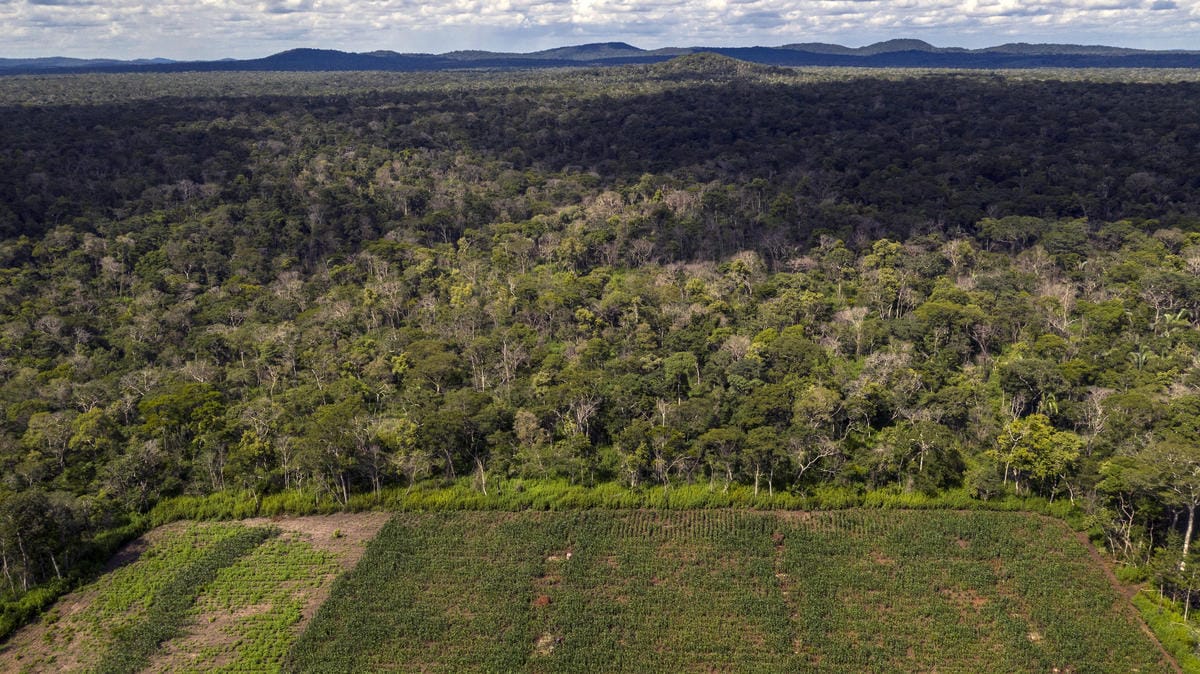
Grasslands can be defined as landscapes with vegetation dominated by grasses, with little or no tree cover. Savannahs are a grassland ecosystem. Grasslands and savannahs cover about some 26 to 40 per cent of the planet’s total land, representing 80 per cent of the world’s agricultural area with managed grasslands used worldwide to support livestock production by grazing. The biodiversity of grassy biomes is often underestimated. Studies show that tropical grassy biomes can be as species-rich as tropical forests when considering specific taxa, such as vascular plants, amphibians, birds, and mammals. Examples of high species diversity include 89 plant species per square meter identified in a mountain grassland in Argentina and 98 plant species per ten square meters in a semi-dry grassland in Romania.
Grasslands also store about 34 percent of global terrestrial carbon, 90 percent of which accumulates in their soils. Furthermore, the high reflectance of grasslands, known as the albedo effect, allows them to reflect sunlight and heat back into the atmosphere, contributing to temperature regulation. Grasslands also play a central role in water retention and can show great resilience to drought when well managed. However, if degraded or converted to other land uses, grasslands may cause a detrimental effect on the climate and even become a net source of greenhouse gas emissions, since managed grasslands systems emit methane (CH4) from grazing livestock and nitrous oxide (N2O) from soils and animal manure, besides absorbing and releasing CO2.
Currently, grasslands are undergoing land-use conversion and severe degradation (about 50% of global grassland area has been degraded), which reduces their capacity to provide ecosystems services – such as climate mitigation and water retention – and impacts the resilience of grasslands to climate instability.
Protecting grasslands and savannahs and the ecosystem services they provide requires conscious management and a mixture of protected areas, sustainable management, and focused restoration.
- Assess drivers of loss and degradation of natural grassland and savannah, including the adverse impacts of climate change on natural and semi-natural grasslands.
- Avoid conversion of grasslands into cropland, afforestation sites, or intensive land uses. Grasslands host a wealth of biodiversity and their conversion is recognized as a major driver of biodiversity loss worldwide. Moreover, grassland soils store a large amount of organic carbon that, if exposed to the atmosphere (e.g., through tillage), is mostly released to the atmosphere in form of CO2 emissions. Avoiding conversion of grasslands into croplands is therefore the foremost strategy to avoid CO2 emissions from these lands.
- Transition from ‘grassland degradation’ to ‘grassland restoration.’ Degraded grasslands are usually characterized by reduced vegetation, declines in soil organic matter, soil erosion, decreased productivity, and/or loss of biodiversity. Restorative interventions include activities that aim to recover native grass cover through revegetation, natural regeneration, and assisted natural regeneration. These interventions aim to recover or enhance ecosystem functions and services, such as carbon storage and water regulation, among others. Trees also play an integral role in many traditional grassland management systems, and their integration may offer opportunities for sustainable management depending on the context. See Implementing silvo-pastoral practices.
- Improve animal grazing. Over-grazing (e.g., too many grazing animals per hectare, or continuous-grazing management) is a major driver of grassland degradation, which reduces ecosystems’ productivity and increases GHG emissions. Improved grazing strategies are context dependent, but optimizing grazing intensity (e.g., rotational grazing) has been shown to be effective, especially in Latin America, Africa, and Asia. Rotational grazing, as opposed to continuous grazing, allows the vegetation to recover between grazing events. Optimal use of grasslands for animals can be achieved by varying the species, number, or distribution of animals on the land.
- Improve fire regimes. Proactive fire management can increase carbon sequestration and reduce GHG emissions. This can be achieved by prescribing burning, animal grazing, or mechanical vegetation thinning to reduce biomass-fuel loads and thus the risk of uncontrolled wildfires. However, fire management practices for climate mitigation are context-specific and can entail trade-offs (e.g., on biodiversity), and their effectiveness is still under scrutiny by the scientific community.
Enabling governance measures such as those below are essential for facilitating the implementation of improved grassland management practices:
- Adopt a more cohesive national policy framework and a robust ecosystem classification system to successfully conserve and restore grasslands. A cohesive framework would consider grasslands’ carbon sequestration potential, emissions arising from their conversion, and roles for biodiversity protection before targeting grasslands as sites for afforestation.
- Recognize and respect the role of traditional governance structures, customary law, and practices by Indigenous Peoples and local communities for managing grasslands in ways that build resilience to extreme events.
- Recognize and enable pastoral mobility as a strategy for climate change adaptation and sustainable land management by Indigenous Peoples, local communities, farmers, and herders.
- Implement capacity building support for Indigenous Peoples, local communities, farmers and herders to adopt sustainable livestock grazing and management practices. Invest in decent employment and livelihood opportunities, especially for women and youth – for instance, through investment in entrepreneurship, enterprise, smallholders and family operations – to ensure the existence of inclusive, equitable, diversified, and decent opportunities to generate income, including outside of livestock grazing.
- Assess the economic value and benefits of ecosystem services delivered through a shift to more sustainable grazing practices, such as soil carbon storage, climate change adaptation potential, and diversity of pollinator communities increasing crop productivity in adjacent agricultural areas.
- Promote payments for ecosystem services for the conservation and sustainable management of grasslands through public-private partnerships.
- Implement agricultural subsidies that support and incentivize less intensive, sustainable agricultural use of grassland practices, recognizing the rights of Indigenous Peoples and local communities and collaborating with these groups in inclusive ways.
- Promote product certification and labelling schemes for nature-positive agricultural grassland management practices.
- Promote and strengthen value chain development for sustainably generated grassland products such as pastoral products.
Key tools and guides to support the successful implementation of improved grassland management can include:
Tools
Data to estimate grasslands livestock carrying capacity
Data to reproduce maps estimating grasslands livestock carrying capacity, from Piipponen et al. (2022).
GrassSignal
GrassSignal is a decision-making support tool for sustainable grassland management. It helps predict biomass and overgrazing, plan grazing rotations, optimize irrigation and fertilizer scheduling, manage sustainability metrics and forecast market demand.
Interreg Europe Integrated planning tool to ensure viability of grasslands (LIFE Viva Grass)
This grassland management planning tool is a web-based application designed to help land managers and farmers optimize their grassland management practices. The tool offers guidance on grazing schedules, stocking rates, and fertilizer applications to balance productivity with biodiversity conservation.
Guides
GIZ Pastoralism and resilience of food production in the face of climate change
This paper aims to draw attention to the lessons pastoral systems offer in the face of climate change, in particular regarding the challenge of achieving global resilience to climate variability without depending on unsustainable energy inputs. Visit URL
Implementing improved grassland management can play a critical role in addressing climate change, while directly supporting the UAE Framework for Global Climate Resilience, advancing the Kunming-Montreal Global Biodiversity Framework (KM-GBF), and contributing to the achievement of the Sustainable Development Goals (SDGs).
Climate change mitigation benefits
Enhanced grassland management can play a key role in mitigating climate change:
- According to FAO, improving management practices on grasslands via incorporation of organic manures, some types of agroforestry practices, and rotational grazing could sequester 0.3 tonnes of carbon per hectare per year in top soils.
- The mitigation potential between 2020 and 2050 has been estimated at 0.13-2.56 GtCO2 per year for enhancing soil carbon sequestration in grasslands; 0.03-0.12 GtCO2 per year for reducing conversion of savannas and natural grasslands; and an additional 0.01 GtCO2 per year for reduced emissions from manures on pastures.
Climate change adaptation benefits
Among the seven key areas of adaptation put forward in the UAE Framework for Global Climate Resilience, implementing improved management practices in grasslands can directly contribute to:
- Target 9a (Water & Sanitation): Healthy grasslands act as natural sponges, improving water infiltration and storage in soils. This reduces surface runoff, prevents soil erosion, and helps maintain clean water sources by filtering pollutants. Improved grassland management can also protect and regulate watersheds, improving resilience to drought and flooding and ensuring reliable and clean water supplies for both people and wildlife.
- Target 9b (Food & Agriculture): Improved grassland management-such as rotational grazing, reseeding native species, and reducing avoiding overgrazing-enhances soil fertility, increases forage availability, and boosts livestock productivity. This leads to more resilient food systems, higher yields, and greater food security for communities.
- Target 9d (Ecosystems): Restoring and maintaining healthy grasslands helps conserve biodiversity, protect endangered species, and maintain ecosystem services such as carbon sequestration and pollination. These practices also reduce land degradation and desertification, which are critical for ecosystem-based adaptation to climate change.
- Target 9e (Infrastructure): Well-managed grasslands can act as buffers against extreme weather events, by stabilizing soils and protecting roads, bridges, and rural settlements from erosion, landslides, and flooding.
- Target 9f (Livelihoods): Many rural and Indigenous communities rely on grasslands for grazing, agriculture, and other forms of income. By improving grassland health, these communities can sustain and diversify their livelihoods, reduce vulnerability to climate shocks (such as droughts), and build long-term economic resilience.
Biodiversity benefits
Sustainable grasslands management practices can contribute to several KM-GBF targets, particularly:
- Target 1 (Plan and Manage all Areas to Reduce Biodiversity Loss): Implementing improved grassland management practices can help reduce threats to biodiversity by mitigating the impacts of land-use conversion and intensive agriculture. Research shows that both highly intensive management and removal of grazing can lead to reductions in plant species richness. Regional planning that leverages large spatial datasets and digital tools can also help reduce potential trade-offs between conservation and agricultural use.
- Target 2 (Restore 30% of all Degraded Ecosystems): Improved grassland management practices can serve as effective restoration strategies in grassy degraded ecosystems. Reducing mowing frequency and implementing appropriate grazing strategies, for instance, can increase plant species richness and help in restoring natural ecological processes in grasslands.
- Target 3 (Conserve 30% of Land, Waters and Seas): Grasslands worldwide are under threat from climate change, overgrazing, and excessive use of synthetic fertilizer, which is undermining their capacity to support biodiversity, ecosystem services and human well-being. Only 14 of the world’s 70 grassland ecoregions are at least 60% intact. Implementing improved management practices in protected areas can mitigate impacts of human activities on ecosystems of high conservation values, enabling local communities to sustainably benefit from their enhanced productivity and other ecosystem services.
- Target 4 (Halt Species Extinction, Protect Genetic Diversity, and Manage Human-Wildlife Conflicts): Reducing or halting the conversion of grasslands, along with their sustainable management, would directly contribute to halting species extinction – particularly in view of the high endemism rate found in grasslands – and to preserve genetic diversity by maintaining natural or semi-natural gene flows.
- Target 8 (Minimize the Impacts of Climate Change on Biodiversity and Build Resilience): Given the central role of grasslands in water retention, carbon storage and in delivering other climate-related ecosystem services, the sustainable management of these ecosystems presents huge opportunities for minimizing the impacts of climate change on biodiversity, through maintaining and enhancing ecological resilience and potentially reducing the frequency and/or intensity of natural disasters associated with climate change.
- Target 10 (Enhance Biodiversity and Sustainability in Agriculture, Aquaculture, Fisheries, and Forestry): Improved grassland management practices contribute to more sustainable agricultural systems. By balancing biodiversity conservation with agricultural production, these practices help maintain ecosystem services provided by grasslands while supporting food security.

Other sustainable development benefits
Implementing improved management practices in grasslands can support the delivery of multiple SDGs by:
- SDG 1 (No Poverty): improving livelihoods, for which more than 1.5 billion people are estimated to depend on grasslands globally. Of these, 200 and 600 million people are estimated to be from pastoral communities.
- SDG 2 (No Hunger): sustaining local agriculture and general food security by enhancing soil fertility, increasing forage availability, and boosting livestock productivity.
- SDG 13 (Climate Action): increasing carbon sequestration, helping reduce overall GHG emissions and providing adaptation benefits such as soil erosion control and water supply and flow regulation.
- SDG 15 (Life on Land): providing resilient habitats that provide a range of ecosystem functions supporting biodiversity, including pollination and pest control.
The success of interventions and projects aimed at implementing improved management practices in grasslands depends on their sound design and effective execution, which may be impeded by various technical and non-technical challenges, including:
- Grassland conservation and restoration might lead to conflicts with other land uses, such as agriculture or infrastructure expansion. This might be reflected in the different perceived values of grasslands by different stakeholder groups (e.g., pastoralists and other local communities, foresters and other decision makers).
- Avoiding grassland conversion could be tackled by intensifying productivity on current croplands. However, agricultural intensification might lead to increasing emissions from, for example, higher fertilization rates.
Integrating the following measures into a comprehensive and holistic design for implementing improved management practices in grassland interventions can help minimize trade-offs and overcome implementation challenges:
- Conservation and restoration initiatives that might generate trade-offs need to first build a common understanding of the value of grasslands among stakeholders, ensuring inclusive and participatory approaches with local and Indigenous groups.
- Conservation and restoration efforts need to be designed as part of comprehensive sustainable development plans that also consider the effects on other land uses and possible trade-offs. For example, to ensure the long-term sustainability of interventions such as increasing cropland productivity to prevent the conversion of grasslands, it is important to adopt sustainable intensification strategies such as regenerative or climate-smart agriculture practices.
The effective implementation of sustainable grassland management requires the use of effective monitoring instruments, clearly defined performance indicators, and integrated evaluation frameworks, including those used to measure progress on biodiversity and climate-related outcomes.
Indicators to monitor biodiversity outcomes
The Parties to the Convention on Biological Diversity agreed to a comprehensive set of headline, component, and complementary indicators for tracking progress toward the targets of the KM-GBF. Some of these indicators could also be functional for monitoring the implementation of this policy option. These indicators are:
| KM-GBF Target | Headline or binary indicator | Optional disaggregations | Component indicator | Complementary indicator |
|---|---|---|---|---|
| Target 1 | A.2 Extent of natural ecosystems 1.1 Percentage of land and sea area covered by biodiversity-inclusive spatial plans 1.b Number of countries using participatory, integrated and biodiversity-inclusive spatial planning and/or effective management processes addressing land- and sea-use change to bring the loss of areas of high biodiversity importance close to zero by 2030 | |||
| Target 2 | 2.1 Area under restoration | By ecosystem functional group (Global Ecosystem Typology levels 2 and 3 or equivalent) By indigenous and traditional territories By protected areas or other effective area-based conservation measures By type of restoration activity | ||
| Target 3 | A.CT.6 Protected Connected Index 3.CT.1 Protected Area Connectedness Index | |||
| Target 4 | A.3 Red List Index | A.CT.10 Living Planet Index 4.CT.1 Number of (a) plant and (b) animal genetic resources for food and agriculture secured in either medium- or long-term conservation facilities 4.CT.4 Proportion of local breeds classified as being at risk of extinction | 4.CY.1 Species Threat Abatement and Restoration metric | |
| Target 8 | 8.b Number of countries with policies to minimize the impact of climate change and ocean acidification on biodiversity and to minimize negative and foster positive impacts of climate action on biodiversity | B.1 disaggregation: Total climate regulation services provided by ecosystems and by ecosystem type | 8.CT.2 Bioclimatic Ecosystem Resilience Index | 8.CY.2 National greenhouse gas inventories from land use, land-use change and forestry |
| Target 10 | 10.1 Proportion of agricultural area under productive and sustainable agriculture | For indicator 10.1: By household and non-household sector farms By crops and livestock | 10.CY.1 Agrobiodiversity Index 10.CY.2 Soil organic carbon stocks 4.CT.4 Proportion of local breeds classified as being at risk of extinction 2.CT.1 Proportion of land that is degraded over total land area |
Tools to monitor biodiversity outcomes
BioDT Prototype Biodiversity Digital Twin (pDT)
The pDT on Grassland Biodiversity Dynamics is an advanced modelling tool that simulates and predicts grassland productivity and biodiversity under various management and climate scenarios.
Explainable AI for Grassland Monitoring
Researchers are developing AI-based methods to detect indicator species in grasslands, which is crucial for biodiversity assessment.
Tools to monitor climate outcomes
CGIAR Livestock Monitoring, Reporting and Verification (MRV) of greenhouse gas emissions in Ethiopia
A report summarizing innovations in MRV of livestock greenhouse gas emissions tested in Ethiopia, including an inventory of emissions based on IPCC Tier 2 methodology.
The cost of implementation varies by country and local context, but estimates include:
- Restoration costs of grasslands in 200 European projects (including different restoration techniques) were estimated to be on average EUR 1,227 per hectare.).
- Calculations of the economic viability of interventions should also consider the massive costs that grassland degradation has on livestock production, which over the period of 2001-11, was estimated at around at USD 6.8 billion globally. The impacts of grassland degradation on livestock are particularly severe in regions where most of the population is below the poverty line.
A notable example of the successful implementation of improved grassland management includes:
- In the Inner Mongolia Autonomous Region (China), an increasing rural population and number of domestic livestock was putting the land under intense pressure, with increasing degradation and desertification of grasslands. Restoration efforts focused on planting trees had proven mostly unsuccessful. A pilot study tested the potential for natural revegetation by protecting the land from grazing, while planting forage crops on smaller plots to sustain local livestock. Only a few years after the project started, the grassland restoration has proven so successful that the Chinese government has revised its policies in favour of grassland protection. More information and projects can be retrieved from the Society for Ecological Restoration’s project database.
- Bai, Y., & Cotrufo, M. F. (2022). Grassland soil carbon sequestration: Current understanding, challenges, and solutions. Science, 377(6606), 603–608.
- Bardgett, R. D., Bullock, J. M., Lavorel, S., Manning, P., Schaffner, U., Ostle, N., et al. (2021). Combatting global grassland degradation. Nature Reviews Earth & Environment, 2(10), 720–735.
- Bengtsson, J., Bullock, J. M., Egoh, B., Everson, C., Everson, T., O’Connor, T., et al. (2019). Grasslands—more important for ecosystem services than you might think. Ecosphere, 10(2), e02582.
- Bennett, J., Marandure, T., Hawkins, H.-J., Mapiye, C., Palmer, A., Lemke, S., et al. (2023). A conceptual framework for understanding ecosystem trade-offs and synergies, in communal rangeland systems. Ecosystem Services, 61, 101533.
- Bremer, L. L., Farley, K. A., DeMaagd, N., Suárez, E., Cárate Tandalla, D., Vasco Tapia, S., & Mena Vásconez, P. (2019). Biodiversity outcomes of payment for ecosystem services: lessons from páramo grasslands. Biodiversity and Conservation, 28(4), 885–908.
- Chang, J., Ciais, P., Gasser, T., Smith, P., Herrero, M., Havlík, P., et al. (2021). Climate warming from managed grasslands cancels the cooling effect of carbon sinks in sparsely grazed and natural grasslands. Nature Communications, 12(1), 118.
- China: Grassland Restoration in the Inner Mongolia Autonomous Region. (n.d.). Society for Ecological Restoration. Retrieved January 30, 2026, from https://app.ser-rrc.org/projects/china-grassland-restoration-in-the-inner-mongolia-autonomous-region
- Da Veiga, R. M., & Nikolakis, W. (2022). Fire Management and Carbon Programs: A Systematic Literature Review and Case Study Analysis. Society & Natural Resources, 35(8), 896–913.
- Eshete, S., Tadesse, M., Baker, D., Wilkes, A., & Solomon, D. (2021). Piloting innovations for improved data collection and management to support livestock monitoring, reporting, and verification (MRV) of greenhouse gas emissions in Ethiopia. Retrieved February 6, 2024, from https://hdl.handle.net/10568/116277.
- FAO. (2023). Global assessment of soil carbon in grasslands: From current stock estimates to sequestration potential. Retrieved from https://www.fao.org/documents/card/en/c/cc3981en.
- GIZ (2022). Pastoralism and Resilience of Food Production in the Face of Climate Change. Deutsche Gesellschaft für Internationale Zusammenarbeit (GIZ). Retrieved from https://www.giz.de/de/downloads/giz2022-en-technical-background-paper-climate-resilience-and-pastoralism.pdf
- Grassland of the world. (2005). Retrieved from https://www.fao.org/documents/card/en?details=71c9e309-7d69-57c1-8915-f159643349ee/
- GrassSignal – ESA Space Solutions. (n.d.). Retrieved February 6, 2024, from https://business.esa.int/projects/grasssignal.
- Griscom, B. W., Adams, J., Ellis, P. W., Houghton, R. A., Lomax, G., Miteva, D. A., et al. (2017). Natural climate solutions. Proceedings of the National Academy of Sciences, 114(44), 11645–11650.
- Hasler, N., Williams, C. A., Denney, V. C., Ellis, P. W., Shrestha, S., Terasaki Hart, D. E., et al. (2024). Accounting for albedo change to identify climate-positive tree cover restoration. Nature Communications, 15(1), 2275.
- HLPE (2023). Reducing inequalities for food security and nutrition. Rome, CFS HLPE-FSN. Available from https://www.fao.org/cfs/cfs-hlpe/insights/news-insights/news-detail/reducing-inequalities-for-food-security-and-nutrition/en.
- Honfy, V., Dobó, M., & Szabó, A. (2025). Agroforestry: A holistic approach at the forest–grassland interface in the context of adaptation to climate change. Grassland Research, 4(4), 366–375.
- Isselstein, J. (2024). Enhancing grassland biodiversity and its consequences for grassland management and utilisation. Grassland: A Global Resource. Retrieved from https://brill.com/edcollchap/book/9789086865512/BP000024.xml.
- Kwon, H.-Y., Nkonya, E., Johnson, T., Graw, V., Kato, E., & Kihiu, E. (2016). Global Estimates of the Impacts of Grassland Degradation on Livestock Productivity from 2001 to 2011. In E. Nkonya, A. Mirzabaev, & J. von Braun (Eds), Economics of Land Degradation and Improvement – A Global Assessment for Sustainable Development (pp. 197–214). Retrieved January 30, 2026, from https://doi.org/10.1007/978-3-319-19168-3_8
- Lahiri, S., Roy, A., & Fleischman, F. (2023). Grassland conservation and restoration in India: a governance crisis. Restoration Ecology, 31(4), e13858.
- Liu, L., Sayer, E. J., Deng, M., Li, P., Liu, W., Wang, X., et al. (2023). The grassland carbon cycle: Mechanisms, responses to global changes, and potential contribution to carbon neutrality. Fundamental Research, 3(2), 209–218.
- Lüscher, A., Barkaoui, K., Finn, J. A., Suter, D., Suter, M., & Volaire, F. (2022). Using plant diversity to reduce vulnerability and increase drought resilience of permanent and sown productive grasslands. Grass and Forage Science, 77(4), 235–246.
- Meli, P., Schweizer, D., Winowiecki, L. A., Chomba, S., Aynekulu, E., & Guariguata, M. R. (2023). Mapping the information landscape of the United Nations Decade on Ecosystem Restoration Strategy. Restoration Ecology, 31(1), e13810.
- Murphy, B. P., Andersen, A. N., & Parr, C. L. (2016). The underestimated biodiversity of tropical grassy biomes. Philosophical Transactions of the Royal Society B: Biological Sciences, 371(1703), 20150319.
- Pakeman, R. (2016). Grassland Biodiversity. Retrieved from https://www.hutton.ac.uk/sites/default/files/files/publications/Grassland%20booklet%20reduced%20size_web.pdf.
- Perkins, L. B., Ahlering, M., & Larson, D. L. (2019). Looking to the future: key points for sustainable management of northern Great Plains grasslands. Restoration Ecology, 27(6), 1212–1219.
- Petermann, J. S., & Buzhdygan, O. Y. (2021). Grassland biodiversity. Current Biology, 31(19), R1195–R1201.
- Piipponen, J., Jalava, M., Leeuw, J. de, Rizayeva, A., Godde, C., Cramer, G., et al. (2022). Global trends in grassland carrying capacity and relative stocking density of livestock. Global Change Biology, 28(12), 3902–3919.
- Richter, F., Jan, P., El Benni, N., Lüscher, A., Buchmann, N., & Klaus, V. H. (2021). A guide to assess and value ecosystem services of grasslands. Ecosystem Services, 52, 101376.
- Roe, S., Streck, C., Beach, R., Busch, J., Chapman, M., Daioglou, V., et al. (2021). Land-based measures to mitigate climate change: Potential and feasibility by country. Global Change Biology, 27(23), 6025–6058.
- Schulz, D., Stetter, C., Muro, J., Spekker, J., Börner, J., Cord, A. F., et al. (2024). Trade-offs between grassland plant biodiversity and yields are heterogenous across Germany. Communications Earth & Environment, 5(1), 1–9.
- Seddon, N., Sengupta, S., García-Espinosa, M., Hauler, I., Herr, D., & Raza Rizvi, A. (2019). Nature-based Solutions in Nationally Determined Contributions: Synthesis and recommendations for enhancing climate ambition and action by 2020. Retrieved from https://portals.iucn.org/library/sites/library/files/documents/2019-030-En.pdf
- Sun, J., Wang, Y., Piao, S., Liu, M., Han, G., Li, J., et al. (2022). Toward a sustainable grassland ecosystem worldwide. The Innovation, 3(4), 100265.
- Sustainable Rice Platform. (n.d.). Retrieved February 6, 2024, from https://sustainablerice.org/.
- Wu, J., Sun, Z., Yao, Y., & Liu, Y. (2023). Trends of Grassland Resilience under Climate Change and Human Activities on the Mongolian Plateau. Remote Sensing, 15(12), 2984.
- WWF, & ZSL. (2024). Living Planet Report 2024. Retrieved from https://www.wwf.org.uk/sites/default/files/2024-10/living-planet-report-2024.pdf.