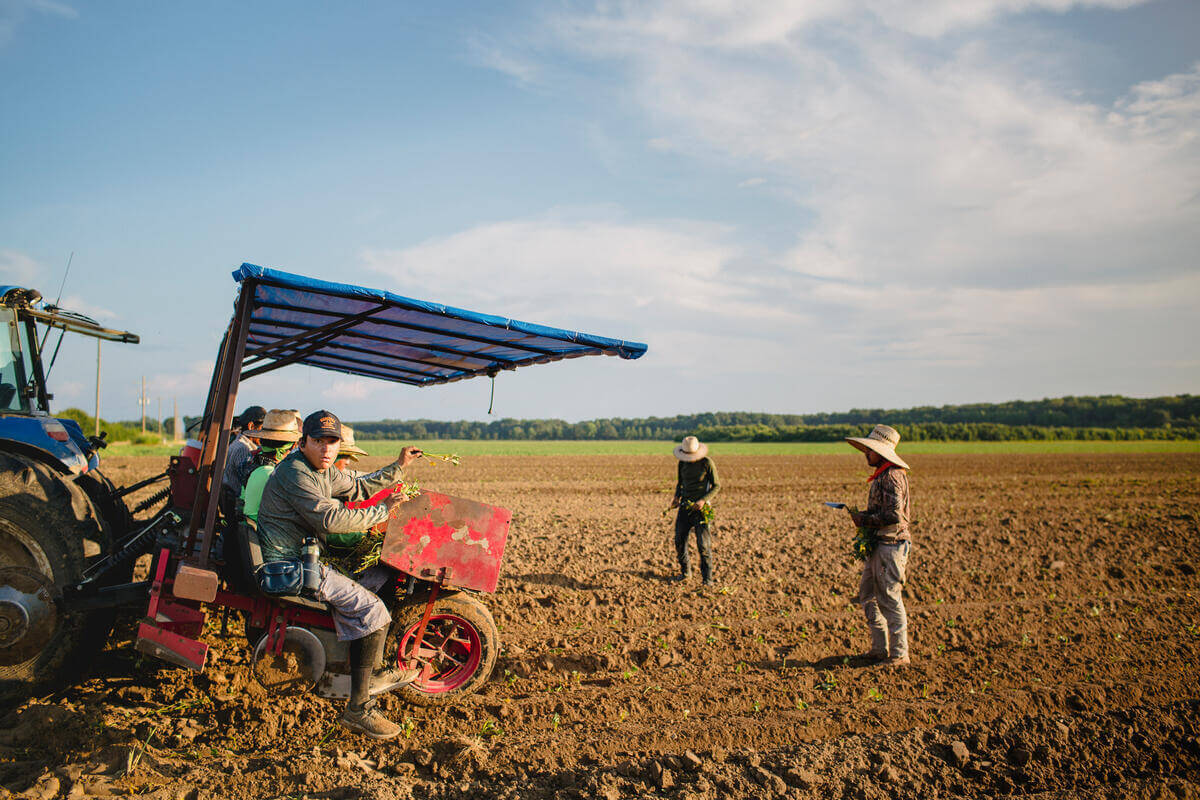
Water and land governance are crucial for transforming food systems because they address critical issues relating to agricultural production and ecosystem protection. Effective management of water resources and land use can mitigate risks such as human-induced land degradation, water scarcity and climate change. Furthermore, with about 37 percent of all land dedicated to agriculture, and food systems responsible of 70 percent of freshwater withdrawal, strengthening land-use and freshwater governance can positively contribute to the conservation of terrestrial and freshwater biodiversity.
Governance also plays a crucial role in ensuring equitable access to resources, promoting sustainable practices and safeguarding food safety and security. In many areas, technical solutions will not be enough to overcome the complex challenges faced by food systems, and inclusive, people-centric governance frameworks will be necessary to drive behaviour change and achieve a sustainable transition in the sector.
Measures to enable improved land and water governance include the following:
- Conduct governance analyses:
- Conduct analyses to uncover the root causes of governance problems and related socio-economic and political dynamics, and their implications on the management of natural resources. These analyses should facilitate understanding of existing institutions, their evolution, and how power and capacity asymmetries influence the work of those institutions in practice.
- Engage all stakeholders through an inclusive approach:
- Build multistakeholder collaboration to draw on various knowledge systems, values and experiences. The inclusion of diverse stakeholders in policy decisions about land and water governance contribute to the building of trust, social cohesion and the rule of law.
- Ensure a people-centered land governance approach that recognizes the importance of securing the rights of smallholders and family farmers to land, water, and other natural resources. Enable equitable access to water resources, with particular attention to ensuring access for marginalized groups, including Indigenous Peoples, local communities, women, and youth. This approach should also consider the reliance of these groups on natural ecosystems and the services they deliver.
- Include legal requirements for civic engagement and public consultation for land and water decision-making in environmental laws, water and land sectoral laws, and planning laws, as well as impact assessment requirements.
- Develop polycentric governance systems with shared responsibilities across decision-making at various levels, incorporating biodiversity considerations at every level of governance.
- Develop coordinated and coherent policies and approaches:
- Improve coordination on land and water management to identify and address overlaps and trade-offs, improve performance across multiple levels of government, reduce costs and identify areas where lines of authority can be better delineated. Improved coordination is also necessary to equitably distribute co-benefits from policies and decisions, especially for vulnerable populations.
- Identify areas for harmonization across key resource sectors (water, land, forests, fisheries, etc.).
- Accounting for biodiversity targets and climate commitments, alongside food security, in the context of coordination frameworks can ultimately result in more effective and efficient policy measures and processes. Improved coordination is also necessary to equitably distribute co-benefits from policies and decisions, especially for vulnerable populations.
- Include public consultation requirements in the environmental impact assessments of proposed projects, and ensure these requirements are implemented and enforced appropriately.
- Strengthen and harmonize land and water tenure systems:
- Develop tools and capacity for the integration of tenure assessments in water governance systems. Integrate biodiversity metrics into tenure assessment tools, ensuring protection of areas of high conservation value.
- Secure tenure rights and recognize and protect local land rights that people consider socially legitimate, including customary rights where relevant.
- Take a “bundle of rights” approach to tenure systems to to ensure effective enjoyment of rights of access, use and management in the absence of ownership rights.
- Develop policy actions that encourage collective ownership, support Indigenous Peoples’ land rights and regulate access to and use of resources such as land, water and biodiversity.
- Ensure Indigenous Peoples’ and local communities’ land rights in carbon offset markets to avoid “green grabbing,” where large investments by international actors in carbon offset projects can prompt the forceful relocation of local communities.
- Improve employment, livelihoods and gender equity:
- Empower women by ensuring legislation enables them to seek and acquire formal rights to land and water, as well as participate in future planning and decision-making.
- Improve women producers’ access to water and economic resources, ensure their participation in water management decisions, and establish fair working conditions by requiring systematic disaggregation of gender data at the national level. This requires appropriate coordination between institutions from the agricultural and water sectors, and national statistical services.
- Implement integrated water resource management and sustainable and circular sanitation solutions.
- Promote sustainable management of land resources and landscapes, including through local territorial or catchment planning and appropriate governance approaches. See Reducing land-use change and conversion of natural ecosystems for food production, Implementing integrated crop-livestock systems and Implementing nature-positive food production practices.
- Implement the necessary legal frameworks for integrated land use planning, including land use planning laws, zoning laws and planning provisions within relevant sectoral legislation to mainstream sustainable management across diverse frameworks and governance levels.
- Implement requirements to conduct robust environmental impact assessments. Strategic environmental assessments can help to address existing or future landscape degradation and provide opportunities for public participation.
- Align incentives for integrated landscape management through redirecting or removing harmful subsidies and payment for ecosystem services (PES) schemes. The former is particularly relevant for countries where land and water resources are dominated by industrial food production.
- Adopt land use planning based on systematic assessment and comparison of alternative land-use options, with the aim of selecting and implementing land uses that improve socio-economic conditions while conserving natural resources and ecosystems.
- Optimize land use through agroecological practices that efficiently use water and fertilizers, preserve ecosystem functions, and contribute to resilient landscapes. See Implementing nature-positive food production practices.
- Restore biodiversity: Develop and implement food production practices that restore biodiversity in active agricultural land. Restore less productive areas to natural habitat for biodiversity conservation. This is particularly relevant for countries where land and water resources are dominated by industrial food production.
- Adopt management approaches that consider entire ecosystems, promoting sustainable use of natural resources and maintaining ecological balance.
- Sustainably manage and protect groundwater resources. Set sustainable extraction limits, enhance aquifer recharge through natural or managed replenishment and reduce overall water use.
- Allocate water in a fair, equitable, flexible and locally appropriate manner.
- Promote water user associations (WUAs). WUAs are organizations which allow water users to govern collective water use, water allocation and water preservation autonomously at the local level.
- Use Indigenous solutions in water management, including:
- Rainwater harvesting: collection of rainfall runoff from roofs or ground surfaces for subsequent use in agricultural production (e.g. crop irrigation or soil conservation). Different storage options include soil moisture storage (in structures facilitating infiltration), groundwater storage (in structures facilitating infiltration) and surface storage (in artificial structures such as tanks, ponds, dams or reservoirs).
- Step wells: Step wells are a specific type of underground reservoir and water storage system commonly used in ancient India. They have a flight of stairs designed to reach the water table, and entrap rainwater and replenish groundwater levels over time. Step wells can help local communities to sustain their supply and sanitation needs.
- Persian wheels: The Persian wheel is a mechanical water lifting device for lifting water from water sources, typically open wells. The wheel is usually powered by draught animals and traditionally used in South Asia. The wheel offers a carbon-free way of allocating water efficiently and sustainably.
- Adopt nature-based solutions (NbS) and agroecological approaches: Measures include restoration and protection of freshwater ecosystems such as rivers, lakes, wetlands, floodplains and watersheds. For more information, see Transitioning to nature-positive and climate-resilient freshwater management, Implementing improved management practices in grasslands, Mainstreaming agroecology principles for food goveranance, and Implementing nature-positive food production practices.
- Implement integrated water resource management: This involves increased collaboration and coordination by water users across sectors and borders.
- Adapt (direct and indirect) water pricing mechanisms:
- Phase out subsidies that encourage unsustainable water use and water withdrawals and pollution.
- Adopt pricing mechanisms that encourage water-efficient practices and sustainable use of freshwater ecosystems.
Enabling governance measures are key to strengthening land-use and freshwater governance, and can include the following:
- Support national and decentralized institutions (including provincial and local planning bodies and municipalities) in the development of integrated spatial and participatory planning tools.
- This includes the use of remote sensing and diagnostic tools on the ground, and stakeholder analysis to integrate biodiversity and socioeconomic development goals and address rural–urban interactions.
- Invest in management practices and equity-sensitive research for more efficient use of natural resources in food production.
- Invest in technology, research and infrastructure for locally appropriate seeds and breeds.
- Improve access to productive inputs that enable efficient and sustainable resource use (e.g., machinery or seeds).
- Build sustainable local supply chains through investment and financial incentives, adopting inclusive approaches and developing policies, programs, and strategies for labour protection of food workers.
- Attract responsible investment in rural infrastructure, logistics, technologies, services, and supply chains for sustainable, equitable food development.
- Attract responsible investment in small enterprise development – for example, through skills development, vocational programs, mentorship, job pairing, business education, and entrepreneurship – with a focus on connecting populations who face inequalities, particularly Indigenous Peoples, local communities, women, and youth, to markets.
- Adopt a systems approach to governing natural for food production in an equitable and sustainable manner.
- This involves creating inclusive platforms and partnerships that bring together practitioners and experts from agriculture, the environment, energy, land use, water and food.
- Improve data collection and monitoring of terrestrial and freshwater ecosystems and biodiversity to inform policymaking.
- Ensure system preparedness, which requires improved data availability on water and terrestrial systems, e.g. through citizen science or citizen-state interface in data collection.
Key tools and guides to support the successful implementation of strengthened land-use and freshwater governance may include:
Tools
Environmental Law Institute and Rights and Resources Institute Freshwater Tenure Methodology
Helps to assess whether community-based freshwater rights, including rights to surface and groundwater, are legally recognized, and how those rights are protected or addressed within national legal frameworks regulating and impacting freshwater resources.
FAO Land Resources Planning Toolbox
A freely accessible online resource base for stakeholders that are directly or indirectly involved in land-use planning. The toolbox presents existing tools for land-use planning to users and helps users to select and use tools based on their individual requirements.
Integrated Biodiversity Assessment Tool (IBAT)
A decision-support tool for understanding biodiversity risks and opportunities associated with land-use and freshwater management.
Natural Capital Project InVEST (Integrated Valuation of Ecosystem Services and Tradeoffs)
This tool helps in modelling and mapping ecosystem services, enabling the integration of biodiversity and ecosystem services into land-use planning.
OECD water governance indicator framework
Helps to assess and guide the design of improved water policies and reform.
Guides
FAO Future Proofing Agriculture Systems: Circular Sanitation Economies for More Resilient and Sustainable Food Systems
This document includes a section on connecting sanitation with the water-energy-food (WEF) nexus and sustainable agriculture. It demonstrates how this approach can help identify cross-sector needs, manage trade-offs, and support more cost-effective planning and implementation, with case studies showcasing circular sanitation systems within a WEF nexus framework.
GIZ Global Programme Responsible Land Policy
Policy brief on the Global Programme Responsible Land Policy describing country-specific projects implemented for improvement of land administration and land tenure systems.
GIZ Strengthening Advisory Capacities for Land Governance in Africa (SLGA)
Project which supports African institutions and professionals in implementing improved land policies which strengthen the rights of marginalized groups such as smallholder farmers, pastoralists and women.
GIZ Water – Key Towards Resilient Livelihoods in Rural Areas
Brief guide on building resilient livelihoods in rural areas through integrating water resource management and rural development.
IWMI Water Governance for Resilient Food Systems for Future Climates
Provides guidance on reducing water risks to food systems and building water-resilient food systems.
Land Portal Digital Innovations Global Programme Responsible Land Policy
Recent digital innovations for more efficient, effective, and transparent land management systems, with examples from Ethiopia, Peru, and Laos.
OECD Principles on Water Governance
A set of guidelines for governments, grouped around three dimensions: effectiveness, efficiency, and trust and engagement. These principles, developed with multi-stakeholder input, aim to help manage water sustainably and adapt to different national and local contexts by providing 12 “must-do’s” for water policy.
The Katoomba Group, UNEP and Forest Trends Payments for Ecosystem Services: Getting Started – A Primer
This primer covers understanding, developing and implementing PES schemes.
University of Reading Participatory Integrated Climate Services for Agriculture (PICSA)
A field guide on the PICSA approach, which is a participatory agricultural advisory and climate services approach that empowers smallholder farmers to make better decisions to address individual agricultural challenges.
Strengthening land-use and freshwater governance can also help advance the targets of the UAE Framework for Global Climate Resilience, the Kunming-Montreal Global Biodiversity Framework (KM-GBF), as well as those of the Sustainable Development Goals (SDGs).
Climate change mitigation benefits
Enhanced land-use and freshwater governance can play a key role in mitigating climate change. Improved and sustainable governance of land use and freshwater ensures that terrestrial and freshwater ecosystems can perform vital functions, including carbon sequestration.
Climate change adaptation benefits
Among the seven key areas of adaptation put forward in the UAE Framework for Global Climate Resilience, strengthening land-use and freshwater governance can directly contribute to:
- Target 9a (Water & Sanitation): Integrated water resource management ensures that water is distributed fairly and used efficiently, particularly during droughts or floods. Strong governance supports the development and maintenance of resilient water infrastructure and supplies, protects water quality, and ensures reliable access to safe drinking water and sanitation facilities for all communities.
- Targets 9a & 9b (Water & Sanitation and Food & Agriculture): Effective land-use and freshwater governance ensures that agricultural land is managed sustainably and that water resources are allocated efficiently. This supports climate-resilient farming practices, improves crop yields, and secures food supply chains. It also helps smallholder farmers adapt to changing rainfall patterns and water scarcity, reducing the risk of food insecurity.
- Targets 9a & 9c (Water & Sanitation and Health): Strong land-use and freshwater governance supports human health since it prevents pollution, supports sanitation, and ensures that communities are protected from waterborne diseases and the health impacts of climate change. It also supports the resilience of health infrastructure and services.
- Targets 9a & 9d (Water & Sanitation and Ecosystems): Robust governance frameworks protect natural habitats from overexploitation and degradation. By regulating land conversion and water extraction, these frameworks help maintain ecosystem services such as pollination, soil fertility, and water purification. This, in turn, enhances biodiversity and enables ecosystems to better withstand and recover from climate stresses.
- Target 9e (Infrastructure): Land-use planning that accounts for climate risks such as flooding, sea-level rise, or heatwaves can guide the placement and design of infrastructure. This reduces vulnerability to climate impacts, protects investments, and ensures that infrastructure systems (roads, bridges, utilities) remain functional and safe under changing conditions.
- Target 9f (Livelihoods): Clear governance structures secure land and water rights, reduce conflicts, and support sustainable resource use. This enables communities to diversify income sources, build resilience to climate shocks, and sustain their way of life.
Biodiversity benefits
Action under this policy option can also help to deliver on several KM-GBF targets, in particular:
- Target 1 (Plan and Manage all Areas To Reduce Biodiversity Loss): Improved land use and freshwater governance directly support this target by ensuring all areas are under participatory, integrated, and biodiversity-inclusive spatial planning. Effective management processes such as environmental impact assessments complement spatial planning in addressing land and water use changes.
- Target 3 (Conserve 30% of Land, Waters and Seas): Strengthened governance contributes to the effective conservation and management of terrestrial, inland water, and marine areas. It supports the implementation of ecologically representative, well-connected, and equitably governed systems of protected areas and other effective area-based conservation measures.
- Target 7 (Reduce Pollution to Levels That Are Not Harmful to Biodiversity): Strengthened governance can lead to better management of agricultural runoff and industrial discharges, which are significant sources of soil and freshwater pollution. Controlling pollutants can improve water quality, thereby supporting healthier ecosystems and reducing biodiversity loss.
- Target 10 (Enhance Biodiversity and Sustainability in Agriculture, Aquaculture, Fisheries, and Forestry): Enhanced land-use and freshwater governance ensures that areas under agriculture, aquaculture, fisheries, and forestry are managed sustainably. It promotes the application of biodiversity-friendly practices, such as agroecological approaches, which optimize land use through efficient water and fertilizer use while preserving ecosystem functions. This governance approach also supports the implementation of integrated water resource management, encouraging collaboration across sectors and borders.
- Target 11 (Restore, Maintain and Enhance Nature’s Contributions to People): Enhanced governance of land use and freshwater resources contributes to maintaining and enhancing nature’s contributions to people. This includes regulating air and water quality, pollination, and protecting against hazards and extreme events. Improved management of these resources ensures the continued provision of ecosystem services that are crucial for human well-being.
Other sustainable development benefits
This report and this article provide an overview of how strengthening land-use and freshwater governance can support delivery of multiple SDGs by:
- SDG 1 (No Poverty): fostering progress towards equal ownership and control of land and its resources.
- SDG 2 (Zero Hunger): contributing to enhancing land productivity and thus the provision of food.
- SDG 5 (Gender Equality): ensuring opportunities for women to participate in decision-making and to have equal rights to resources.
- SDG 6 (Clean Water and Sanitation): improving preservation of groundwater resources and water quality.
- SDG 10 (Reduced Inequalities): improving inclusion of women, youth, and marginalized groups.
- SDG 13 (Climate Action): reducing GHG emissions and promoting carbon sequestration and storage.
- SDG 15 (Life on Land): increasing biodiversity conservation and reducing land degradation.

The success of interventions and projects that strengthen land-use and freshwater governance depends on their design and effective implementation, which can be hindered by both technical and non-technical challenges, including:
- Negative effects of infrastructure for surface water storage: Construction of (large) artificial storage structures such as dams or reservoirs can involve the displacement of communities and disrupt local ecosystems. Such structures can also experience high water losses from evaporation.
- Economic development constraints: Implementing strong land-use regulations may influence investor behaviour, potentially discouraging those who prefer traditional or ‘business-as-usual’ models. Likewise, protecting freshwater ecosystems may limit certain economic activities, such as industrial agriculture or hydropower development.
- Resource allocation conflicts: Enhanced governance can lead to conflicts among stakeholders over resource allocation, especially when balancing agricultural needs with ecosystem preservation.
The following measures, as part of a comprehensive and holistic approach to improving land-use and freshwater governance interventions, can help reduce trade-offs and address implementation challenges:
- Promote nature-based solutions for increased natural water retention.
- Promote traditional or small-scale techniques for water harvesting and storage.
- Actively involve local communities, farmers, industries, and conservation groups in decision-making processes.
- Incorporate ecosystem services valuation into policy development to account for both economic and ecological benefits.
- Plan policies to create sustainable economic development and investment opportunities, and leverage the positive economic effects of stronger land management systems.
Effective tracking of the implementation of strong land-use and freshwater governance frameworks depends on strong monitoring tools, clear indicators, and structured frameworks that capture both implementation progress and related biodiversity and climate outcomes.
Indicators to monitor biodiversity outcomes
The Parties to the Convention on Biological Diversity agreed to a comprehensive set of headline, component, and complementary indicators for tracking progress toward the targets of the KM-GBF. Some of these indicators could also be functional for monitoring the implementation of this policy option. These indicators are defined as follows:
| KM-GBF Target | Headline or binary indicator | Optional disaggregation | Component indicator | Complementary indicator |
|---|---|---|---|---|
| Target 1 | 1.1 Percentage of land and sea area covered by biodiversity-inclusive spatial plans 1.b Number of countries using participatory, integrated and biodiversity-inclusive spatial planning and/or effective management processes addressing land- and sea-use change to bring the loss of areas of high biodiversity importance close to zero by 2030 | 1.CY.1 Proportion of transboundary basin area with an operational arrangement for water cooperation | ||
| Target 3 | 3.1 Coverage of protected areas and other effective area-based conservation measures | By protected areas and other effective area-based conservation measures; By realm, biome and ecosystem functional group (Global Ecosystem Typology levels 2 and 3 or equivalent) By areas of importance for biodiversity By effectiveness (protected area management effectiveness) By governance type By indigenous and traditional territories | ||
| Target 7 | 7.2 Pesticide environment concentration and/or aggregated total applied toxicity | For indicator 7.2: By pesticide type By use of pesticide products in each sector | ||
| Target 10 | 10.1 Proportion of agricultural area under productive and sustainable agriculture 10.2 Progress towards sustainable forest management | For indicator 10.1: By household and non-household sector farms By crops and livestock For indicator 10.2: By indigenous and traditional territories | 10.CY.1 Agrobiodiversity Index 4.CT.4Proportion of local breeds classified as being at risk of extinction 2.CT.1Proportion of land that is degraded over total land area | |
| Target 11 | B.1 Services provided by ecosystems | 11.CT.2 Proportion of bodies of water with good ambient water quality 11.CT.3 Level of water stress: freshwater withdrawal as a proportion of available freshwater resources | 11.CY.2 Proportion of local administrative units with established and operational policies and procedures for participation of local communities in water and sanitation management 11.CY.3 Proportion of population using safely managed drinking water services 11.CY.4 Mortality rate attributed to unsafe water, unsafe sanitation and lack of hygiene (exposure to unsafe Water, Sanitation and Hygiene for All (WASH) services) |
Tools to monitor biodiversity outcomes
Copernicus Global Dynamic Land Cover
Tracks land-use dynamics and their impacts on habitats and biodiversity.
Freshwater Health Index
Evaluates ecosystem health and governance effectiveness in freshwater systems.
Global Biodiversity Information Facility (GBIF)
Provides data and tools to monitor biodiversity trends across land and water ecosystems.
Integrated Biodiversity Assessment Tool (IBAT)
A decision-support tool for understanding biodiversity risks and opportunities associated with land-use and freshwater management, and track progress against international goals like the KM-GBF and the SDGs.
IUCN Species Threat Abatement and Restoration Metric (STAR)
Evaluates the impact of land-use practices on species recovery and biodiversity restoration.
WWF Living Planet Index (LPI)
Tracks the state of global biodiversity based on population trends of vertebrate species from terrestrial, freshwater and marine habitats, useful for evaluating the impact of governance changes.
Tools to monitor climate outcomes
EU Global Flood Awareness System (GloFAS)
Provides global-scale flood forecasts, river flow data, and precipitation information to monitor hydrological changes in wetlands, supporting climate change impact assessments.
MRV Platform for Agriculture Toolbox
The MRV Platform for Agriculture provides tools, approaches, and case studies for MRV of GHG emissions and mitigation actions in the agriculture sector.
Planet Global Tree-Scale Forest Monitoring for Climate Action
Global forest carbon data that captures nearly tree-scale forest change globally, providing quarterly updates of aboveground forest carbon at 3 meter resolution.
Some examples of project implementation costs include:
- Implementation of the World Bank’s Sustainable Landscape Management Project in Madagascar cost approximately USD 107 million over a seven-year period. The program seeks to establish an integrated, multi-stakeholder approach to governing natural resources.
- As part of the World Bank’s Indonesia Sustainable Landscape Management Program (SLMP), approximately USD 22 million was allocated for the Indonesia Forest Investment Program, approximately USD 6 million was allocated for the Dedicated Grant Mechanism for Indigenous Peoples and local communities, and approximately USD 14 million was allocated for the Social Forestry program.
Notable examples of measures to strengthen land-use and freshwater governance include:
- Freshwater Challenge: Championed by countries in the Global South, the Freshwater Challenge is the world’s largest-ever river and wetland restoration initiative – aiming to restore 300,000km of degraded rivers and 350 million hectares of degraded wetlands by 2030 and protect intact freshwater ecosystems. Countries must set national targets and multilateral and bilateral donors and funders must commit resources – not just from ‘environmental’ pots but from funds for climate adaptation, disaster-risk reduction, water security and so on – to help them achieve these ambitious targets. This initiative demonstrates how a combination of policy and governance measures (e.g. improved coordination, multistakeholder collaboration, data collection/monitoring, polycentric governance and commitment to climate goals) can be used to design policies and programs that address land and water governance issues.
- The following examples illustrate how targeted interventions in freshwater governance can align with biodiversity goals while addressing local environmental challenges.
- Colombia: Through UNEP’s Generation Restoration Cities project, Barranquilla is restoring the polluted Leon Creek with community participation. This initiative not only improves water quality but also enhances urban biodiversity by reviving natural habitats along the creek.
- Thailand: Indigenous P’ganyaw (Karen) communities have created over 50 “no-take river reserves” along the Mae Ngao River. These zones ban extractive activities to boost fish stocks and serve as a model for preventing biodiversity loss through community-led freshwater governance.
- Bangladesh: The city of Sirajganj is establishing a green corridor around its river to enhance biodiversity and improve water management. This initiative integrates urban development with ecological restoration, benefiting both people and nature.
- Somalia: In drought-prone Somalia, UNEP and the European Union are helping communities build boreholes, rehabilitate wells for irrigation, and implement drip irrigation systems. This approach conserves water resources while supporting agriculture and biodiversity in arid regions.
- Andre, R. de A. (n.d.). Indonesia – Sustainable Landscape Management Program [Text/HTML]. World Bank. Retrieved February 26, 2026, from https://documents.worldbank.org/en/publication/documents-reports/documentdetail/496171623092140593
- Arthington, A. H. (2021). Grand Challenges to Support the Freshwater Biodiversity Emergency Recovery Plan. Frontiers in Environmental Science, 9. Retrieved January 14, 2025, from https://www.frontiersin.org/journals/environmental-science/articles/10.3389/fenvs.2021.664313/full.
- Brander, L. M., de Groot, R., Schägner, J. P., Guisado-Goñi, V., van ’t Hoff, V., Solomonides, S., et al. (2024). Economic values for ecosystem services: A global synthesis and way forward. Ecosystem Services, 66, 101606.
- CBD. (n.d.). 2030 Targets (with Guidance Notes). Retrieved December 10, 2024, from https://www.cbd.int/gbf/targets.
- CGIAR. (2024). 2024 Breakthrough Agenda Report – Agriculture.
- Committee on World Food Security (CFS) (2024). CFS Policy Recommendations on Reducing Inequalities for Food Security and Nutrition (First draft). Available from https://www.fao.org/cfs/workingspace/workstreams/inequalities-workstream/en/
- Damania, R., Balseca, E., de Fontaubert, Charlotte, Gill, Joshua, Kim, Kichan, Rentschler, Jun, et al. (2023). Detox Development: Repurposing Environmentally Harmful Subsidies. Retrieved February 25, 2026, from https://openknowledge.worldbank.org/entities/publication/4217c71d-6cbc-46b6-942c-3e4651900d29
- Fader, M., Cranmer, C., Lawford, R., & Engel-Cox, J. (2018). Toward an Understanding of Synergies and Trade-Offs Between Water, Energy, and Food SDG Targets. Frontiers in Environmental Science, 6. Retrieved January 15, 2025, from https://www.frontiersin.org/journals/environmental-science/articles/10.3389/fenvs.2018.00112/full.
- Family farming and land governance: towards a people-centered approach. (2024) International Land Coalition. Retrieved from https://learn.landcoalition.org/en/resources/family_farming_and_land_governance_towards_a_people-centred_approach/.
- FAO (2021).Future proofing agriculture systems: Circular Sanitation economies for more resilient and sustainable food systems. Retrieved from https://openknowledge.fao.org/server/api/core/bitstreams/feaa4ee5-a5c2-4462-b5c4-43c85b51b0f8/content.
- FAO. (2019). Land and water governance to achieve the SDGs in fragile systems. Retrieved from https://openknowledge.fao.org/server/api/core/bitstreams/b13df363-c9c0-4628-b0d1-651891cacdb9/content; How Land and Water Management Can Help Accelerate Progress Towards SDG 15. (n.d.). SDG Knowledge Hub. Retrieved April 14, 2025, from https://sdg.iisd.org/commentary/guest-articles/how-land-and-water-management-can-help-accelerate-progress-towards-sdg-15/.
- FAO. (n.d.-a). Assessment, Tools, Indicators, and Monitoring. Land & Water. Retrieved February 20, 2024, from https://www.fao.org/land-water/land/land-assessment/assessment-and-monitoring-impacts/en/
- FAO. (n.d.-b). Land assessment & impacts. Land & Water. Retrieved February 20, 2024, from https://www.fao.org/land-water/land/land-assessment/en/
- FAO. (n.d.-c). Land resources planning. Land & Water. Retrieved February 20, 2024, from https://www.fao.org/land-water/land/land-governance/land-resources-planning/en/
- FAO. (n.d.-d). Land Resources Planning Toolbox. Land & Water. Retrieved February 20, 2024, from https://www.fao.org/land-water/land/land-governance/land-resources-planning-toolbox/en/
- FAO. (n.d.-e). SLM practices. Land & Water. Retrieved February 20, 2024, from https://www.fao.org/land-water/land/sustainable-land-management/slm-practices/en/
- FAO. (n.d.-f). Sustainable Land Management. Land & Water. Retrieved February 20, 2024, from https://www.fao.org/land-water/land/sustainable-land-management/en/
- FAO. (n.d.-g). Water Harvesting and Storage. Land & Water. Retrieved February 20, 2024, from https://www.fao.org/land-water/water/water-management/water-storage/es/
- FEBA. (2025). Targets 8 & 11 of the Kunming-Montreal Global Biodiversity Framework – FEBA. Retrieved January 15, 2025, from https://friendsofeba.com/working-group/targets-8-11-of-the-kunming-montreal-global-biodiversity-framework/.
- Forest Trends, The Katoomba Group, and UNEP. (2008). Payments for Ecosystem Services: Getting Started – A Primer. Retrieved from https://wedocs.unep.org/bitstream/handle/20.500.11822/9150/payment_ecosystem.pdf
- Garrick, D., Iseman, T., Gilson, G., Brozovic, N., O’Donnell, E., Matthews, N., et al. (2020). Scalable solutions to freshwater scarcity: Advancing theories of change to incentivise sustainable water use. Water Security, 9, 100055
- Global Resilience Partnership. (2021). Water governance for resilient food systems for future climates. Retrieved from https://www.globalresiliencepartnership.org/wp-content/uploads/2021/09/resilientfood_statement_final.pdf
- Global Water Partnership. (2014). Coordinating land and water governance – An essential part of achieving food security. Retrieved February 25, 2026, from https://www.gwp.org/globalassets/global/toolbox/publications/perspective-papers/07_perspectives_paper_land_water_governance.pdf
- How stronger land systems can spur economic growth and jobs. (n.d.). World Bank Blogs. Retrieved February 26, 2026, from https://blogs.worldbank.org/en/voices/how-stronger-land-systems-can-spur-economic-growth-and-jobs
- HLPE (2023). Reducing inequalities for food security and nutrition. Rome, CFS HLPE-FSN. Available from https://www.fao.org/cfs/cfs-hlpe/insights/news-insights/news-detail/reducing-inequalities-for-food-security-and-nutrition/en
- IIED. (2023). Food systems governance and the environmental agenda. Retrieved from https://www.iied.org/sites/default/files/pdfs/2023-09/21616IIED.pdf
- IPES-Food (2024). Land Squeeze: What is driving unprecedented pressures on farmland and what can be done to achieve equitable access to land? Retrieved from https://ipes-food.org/report/land-squeeze/.
- IWMI. (2018, June 13). Water user associations. International Water Management Institute (IWMI). Retrieved February 20, 2024, from https://www.iwmi.cgiar.org/blogs/water-user-associations/
- Köppen, S. (2024). Implementing GBF Target 16: Addressing biodiversity impacts of food consumption | BFN. Retrieved September 26, 2024, from https://www.bfn.de/en/publications/policy-brief/implementing-gbf-target-16-addressing-biodiversity-impacts-food.
- Largest river and wetland restoration initiative in history launched at UN Water Conference. (2023, March 23). UN Environment. Retrieved February 20, 2024, from https://www.unep.org/news-and-stories/press-release/largest-river-and-wetland-restoration-initiative-history-launched-un
- OECD. (2015). OECD Water Governance Indicator Framework. Retrieved from https://www.oecd.org/regional/OECD-Water-Governance-Indicator-Framework.pdf
- OECD. (n.d.). The OECD Principles on Water Governance. Retrieved February 20, 2024, from https://www.oecd.org/governance/oecd-principles-on-water-governance.htm
- OHCHR | Environmental impact assessments, strategic environmental impact assessments and the right to a clean, healthy and sustainable environment. (n.d.). OHCHR. Retrieved February 26, 2026, from https://www.ohchr.org/en/calls-for-input/2025/environmental-impact-assessments-strategic-environmental-impact-assessments
- Persian wheel | SSWM – Find tools for sustainable sanitation and water management! (n.d.). Retrieved February 25, 2026, from https://sswm.info/es/node/10036
- Porras, I. T., & Asquith, N. (2018). Ecosystems, poverty alleviation and conditional transfers. Retrieved February 20, 2024, from https://www.iied.org/16639iied
- Restoring Nature to Enhance Water Management and Retention – Environment. (n.d.). Retrieved February 26, 2026, from https://environment.ec.europa.eu/news/restoring-nature-enhance-water-management-and-retention-2024-12-04_en
- Rights and Resources Initiative and Environmental Law Institute. (2020). Whose Water? A Comparative Analysis of National Laws and Regulations Recognizing Indigenous Peoples’, Afro-descendants’, and Local Communities’ Water Tenure. Retrieved from 2. https://rightsandresources.org/wp-content/uploads/2020/02/WhoseWater.pdf
- Selvaraj, T., Devadas, P., Perumal, J. L., Zabaniotou, A., & Ganesapillai, M. (2022). A Comprehensive Review of the Potential of Stepwells as Sustainable Water Management Structures. Water, 14(17), 2665.
- Skinner, J. (n.d.). Watered Down? A review of social and environmental safeguards for large dam projects. Retrieved February 26, 2026, from https://www.iied.org/17517iied
- Sustainability Idea Labs. (n.d.). Persian Wheel. Retrieved from https://www.sustainabilityidealabs.org/innovation-stories/water/persian_wheel.php
- Sustainable Landscape Management Project – P154698 [Text/HTML]. (n.d.). World Bank. Retrieved February 20, 2024, from https://projects.worldbank.org/en/projects-operations/project-detail/P154698
- UNEP. (2024). Here’s how protecting freshwater ecosystems can help countries meet their biodiversity targets | UNEP – UN Environment Programme. Retrieved January 14, 2025, from https://www.unep.org/news-and-stories/story/heres-how-protecting-freshwater-ecosystems-can-help-countries-meet-their.
- United Nations Environment Programme, & International Resource Panel. (2016). Food Systems and Natural Resources. Retrieved February 20, 2024, from https://wedocs.unep.org/xmlui/handle/20.500.11822/7592
- Water – key towards resilient livelihoods in rural areas. (2023) Deutsche Gesellschaft für Internationale Zusammenarbeit (GIZ). Retrieved from https://www.giz.de/de/downloads/giz-2023-en-water-key-towards-resilient-livelihoods-in-rural-areas.pdf.
- What is Integrated Water Resources Management? (n.d.). UNEP. Retrieved February 25, 2026, from https://www.unep.org/explore-topics/disasters-conflicts/where-we-work/sudan/what-integrated-water-resources-management
- Wheeler, S. A., Nauges, C., & Grafton, R. Q. (2025). Water pricing and markets: Principles, practices and proposals. Applied Economic Perspectives and Policy, 47(2), 487–514.
- World Bank. (2021). Madagascar Additional Financing Sustainable Landscape Management Project (P176449). Combined Project Information Documents / Integrated Safeguards Datasheet (PID/ISDS). Retrieved February 26, 2026, from https://ewsdata.rightsindevelopment.org/files/documents/49/WB-P176449.pdf
- WWF and IUCN WCPA. (2023). A Guide to Inclusive, Equitable and Effective Implementation of Target 3. Retrieved from https://iucn.org/sites/default/files/2023-09/30×30-target-framework.pdf.
- WWF, & ZSL. (2024). Living Planet Report 2024. Retrieved from https://www.wwf.org.uk/sites/default/files/2024-10/living-planet-report-2024.pdf.
- WWF. (2022). Solving the Great Food Puzzle: 20 levers to scale national action. Retrieved from https://wwfint.awsassets.panda.org/downloads/solving_the_great_food_puzzle_wwf_2022.pdf